Ted Haydon


Ted Haydon
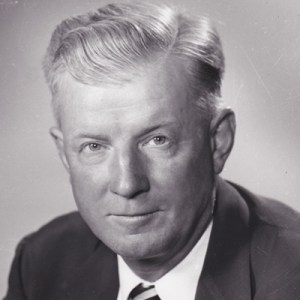
Ted M. Haydon, 1912 – 1985

On April 16, 1985, Ted Haydon suffered a brain hemorrhage after a track practice and died on May 3 in Billings Hospital at the age of 73.

With the death of Ted Haydon, pioneer in track and field and renown coach, we lose a great man. We’ll miss many things, but one in particular. With his unflappable manner and his quips, he helped athletes realize that sport was not the most important thing in life.


Many of his athletes preferred to be insulted by Ted rather than complimented by any other coach. Practices featured banter such as:

“Ted, could you recommend a pair of fast shoes?”

“Don’t worry, they’ll all keep up with you.”

“Ted, how can I improve my times?”

“Run shorter races.”

“Ted, should I do long, slow distance running?”

“Yes, but not during the race.”


Ted was born Edward Morgan Haydon on March 29, 1912, in Saskatoon, Saskatchewan, Canada. His father left Canada to study religion at the University of Chicago in 1914 and later became Professor of Comparative Religions there. As a student at the University of Chicago, Ted played football on the junior varsity squad for two years and then left the sport to concentrate on track and field. He specialized in the hammer throw and hurdles, and he was team captain his senior year. Ted graduated in 1933 with a bachelor’s degree in sociology and won an honors scholarship to attend graduate school at Chicago to study sociology. He left school after one year in order to get married and work a full-time job.

For the next sixteen years, he worked out of storefronts as a social worker for juvenile delinquents and helped organize self-help programs that later became models for some of the social activism of the 1960’s.

By 1967, Ted was smoking so many cigarettes the room would seem to spin around for him, so he went to see his doctor who told him he needed exercise. After a fourteen-year hiatus from track and field, he returned to the university fieldhouse to work out in the afternoons.

Soon track coach Ned Merriam asked him to help out on a voluntary basis. When Ned retired in 1950, the university asked Ted to take the job. During this era, the University of Chicago Track Club was formed.

Ted was the first to compete as a member of the University of Chicago “club” in AAU meets. “In social work, I ran around in circles,” Ted said. “Now I do the same thing on the track and get points for it.”

Eventually, the better runners in the area gravitated to the club. Lawton Lamb, who had graduated from the University of Illinois in 1952 and had run on the two-mile relay team that had set an American record at the Drake Relays, suggested to Ted that he be allowed to run for the University of Chicago even though he never attended school there. “I work out on your track every day,” Lawton said. “Why shouldn’t I represent you?” Ted agreed and handed him a Chicago singlet.

In those days out-of-college athletes could only continue their competing in exclusive, wealthy downtown athletic clubs which discriminated against Jews and Blacks. The Chicago club was open to everyone. “We do not discriminate on the basis of race, creed, or talent,” Ted said.

Although he dedicated most of his time to his coaching, Ted received a master’s degree in sociology from the University of Chicago in 1954.

When runner Hal Higdon returned to Chicago in the late fifties after serving in the Army, he felt there weren’t enough meets. “I nagged Ted to have more meets,” Hal said. “Ted was cooperative with us in our madness. We always looked up to the Boston Marathon, so we were looking for road races near home. That’s when we started the road races in Jackson Park.”

Ted showed up to time them, but only because someone wanted to race. “The road races got going without Ted,” Hal said, “but he would throw holy water on them. Ted was an athlete’s coach.”

When Frank Loomos tied the indoor world record for the sixty-yard low hurdles, Ted said, “The record is the result of an explosive start, fantastic acceleration, impeccable form over the hurdles, a driving finish, and a set of timers with poor reflexes. Let us know anytime you want another world record, Frank, and we’ll get the right timers out.”

Dick Gregory, who held the half-mile record at Southern Illinois University, asked Ted if he could perform stand-up comedy at the annual track club dinner in 1959. Ted said, “Why not?”

Dick bombed that year and the following year, but in 1961, he made everyone laugh very hard. A few weeks later, he performed at the Playboy Club and was soon a national success. Ted was always proud of the fact that Dick had gotten his start at the club dinner.

As coach to the U.S. Olympic track team at the 1968 Olympic Games Mexico City, Ted always made sure the athletes made their workouts. He was so busy coaching, his wife Goldie never saw him. But even at the Olympics, Ted never let his athletes take track and field too seriously. Before the final heat of the Mexico City 1500, a very nervous Jim Ryan asked Ted to say a prayer for him. Several minutes later Ted told Jim, “I decided not to say a prayer for you. I’ll save it for something that’s really important.”

Although Ted would relieve the pressure his athletes felt, he also encouraged them by supporting their efforts. When runner Ken Young (founder of the National Running Data Center along with his wife Jennifer) was browsing through the record books and discovered that the indoor twenty-five-mile world record was only 2:45, he asked Ted if he could help him stage an indoor marathon on the old clay track. Ted agreed.

“I knew I could break that record,” Ken said, “because I could run 2:45 for a marathon. That was 209 laps around a 220-clay track. We had seventeen runners. By the time we finished, the inside lane was smooth and shiny. It took about a week before it was powdery again. I finally brought the record down to 2:35:52.”

“With Ted everyone got a chance to run,” Ken said. “He gave as much attention to the slower runners as the record holders. He once told me he got more pleasure watching seven- or eight-minute milers improve than seeing people set records.”

“Ted’s strong point was his psychological treatment of runners,” Ken said. “He always knew the right thing to say to get you to perform. I’ve never seen anyone else who could do that. Most runners would work the meets, but we’d go to Ted’s house to eat before the meet. One time I really pigged out. Of course, I didn’t race too well. Ted came up to me and said, “The hungry wolf leads the pack.”

Ted could never understand how a coach could drive his athletes so hard. At one meet, another coach had been yelling at his runners on the track; this coach turned to Ted and said, “My runners are in good position.” Ted said, “Yes, they’re still upright.”

At another meet, one of the sprint races ended in a virtual dead heat. After a confused discussion, the officials picked a sprinter who was wearing bright orange as the winner. They sensed this would start a big argument with the coaches and runners, so they consulted Ted. Ted took the results card and wrote, “1, 2, 3, 4, 5…” right down the list of names. No one ever said anything else about the race.

When Wendy Miller wanted to start masters track competition in the Midwest, he went to Ted. “Ted was having his own track meets, so I was afraid he would think we would take away competition,” Wendy said. “But he gave us lists of runners and helped me out of those problems I had with the AAU. He has a real genius to exist with different factions. Ted was a master at being able to walk away with nobody mad at him.”

“He helped us at our very first meet. And he drove out to our last meet this year at Sterling on March 31st to watch some of his runners. We were short on volunteers, so I said, ‘Ted, we need another timer.’ He unzipped his jacket to show he had two stopwatches around his neck. He grinned and said, “You never know when you may have to time.”


Members of the University of Chicago Track Club have competed in every Olympics since 1956. Ted was inducted into the National Track and Field Hall of Fame in 1975. In 1982, the city of Chicago proclaimed his 70th birthday “Ted Haydon Day”.

“I have nothing but admiration for the man,” said Jack Bolton, coach for the Marquette Park Track Club and a UCTC member.

“You can trace most things back to Ted Haydon. We were pretty close. From the time I turned sixty-five, he always sent me a complimentary indoor pass. As busy as he was, he could still find time for a friend. To me, he was the greatest. He had a great sense of humor. That’s what endeared him to runners. To sum it up, he was a great man!”

This story was originally published in the June 1985 issue of the Illinois Runner.
caricature of author at end of post
DDR

My dinner with Ted Haydon


Ted Haydon
Ted M. Haydon, 1912 – 1985

Ted Haydon has coached countless track and field athletes at the University of Chicago since 1950, including many Olympic athletes, average, and not-so-average runners. Ted was elected to the Track and Field Hall of Fame for his promotion of track and field through an open club and open meets, thanks partially to Hal Higdon’s urging as a graduate student.

I felt Ted was truly concerned about me, a runner whom he hardly knew except by sight. I later learned that he took personal interest in everyone who ran for him. He coached me to new PR’s of various sorts. My favorite was my stand-up comedy performance at the annual University of Chicago Track Club Dinner in 1984, with George Young as the guest speaker.

Once on the way home from a track meet, a two-and-a-half-hour drive, someone in the van began telling jokes; Ted told a few himself. Then I told some. Everyone was surprised that the quiet guy around the track knew so many jokes. When they questioned me, I had to admit that I had read numerous joke books since I was in grade school. I also told them how I had performed stand-up comedy and would soon be appearing in a comedy revue.

At the next workout, I asked Ted what I should do.

“How about some stand-up comedy at the track club dinner this year?” he asked.

I wanted to turn him down, but a few months earlier I decided to accept every opportunity to perform standup comedy.

“How about if I do five to ten minutes of comedy?” I asked.

“But you have to tell jokes about track and field,” Ted said.

“Okay,” I said, trying to sound too enthusiastic about the whole thing in spite of not having a single track and field joke in my repertoire. “I’ll write something for the dinner.”

“Where have you performed before?” he asked.

“The Comedy Cottage, Comedy Womb, and Who’s on First.”

“I figure if I gave Dick Gregory a start,” he said, “I could help you out a little.”

I began telling members of the track club I would be performing for the dinner. Since it was only two weeks away, I felt nervous because I had no track and field jokes. I recruited Mark Wagner, the club clown who gave a humorous slide show at his house party, and his sidekick Chris Cole. Maybe they would help me write some running jokes. I thought of a few ideas I could develop, but somehow, they did not make me feel comfortable. I needed better material.

I told Pat Palmer, one of the track club members, that I would be performing at the track club dinner. He immediately began talking about Dick Gregory’s comedy debut at the dinner. “I was a freshman,” Pat said, “when I met him at the dinner in January of 1960. He was really funny. I had never heard of him before, but after that dinner he became famous.”

That was when I began to feel enormous pressure. When I performed in night clubs, I didn’t care if I bombed because I would never see the audience again anyway, but here I knew about half the audience. I never performed well before people who knew me. Was I ever nervous!

The reason I told everyone I would perform for the dinner was to put pressure on myself in order to accomplish what I had set out to do. Once enough people knew about my plans, I had to perform. Many club members were discovering for the first time my background in comedy. In real life, I don’t come across as a funny person. So, people are surprised when they learn that I’m a standup comedian.

Now I had one minor problem. I didn’t have any running jokes. Okay. One major problem. Comedians without jokes are not funny. I wouldn’t be the exception. Mentally, I began writing a running monologue for the track club dinner. When I told Mark Wagner and Chris Cole the next day, they were willing to help me write some jokes. I told them some ideas I had for jokes. Not only did they like them, but they guessed the punchline before I even said it. To jokes I had written! This would have upset other comedians, but they would be the perfect collaborators since we thought similarly. We agreed to meet the next Wednesday during a track meet. I worried that I did not see them at the workouts the next Monday or Tuesday. I wrote jokes in case I did not see them again before the dinner, which was only a week away now.

I had set a schedule for myself: the first week would be dedicated to writing material and the second week to rehearsing. So when I didn’t see my collaborators at the track, I thought I would get behind schedule.

In the meantime, I saw Ted every day. Whenever I asked him to tell me my workout, he would ask me how my comedy routine was coming along. I always told him I would be ready by the night of the dinner. I wondered if he sensed my insecurities. Ted had always seemed to know when I doubted myself. Once, he told me to run two quarters at my 800 pace, which I would race two days later. I asked how fast I should run.

“Run them under sixty seconds,” Ted said.

My PR for the 400 was sixty-one, so I didn’t think I could do his workout. He did not pressure me to try, although he did encourage me to do them. I wouldn’t have tried without his urging. I ran the first one in 58.2 and the second in 60.0. We were both pleased by the workout. But I was more surprised than pleased!

Prior to the track club dinner, Ted never stopped telling jokes or playfully insulting his runners, a favorite habit of his. I always enjoyed the good laughs Ted provided.

The Wednesday night I was meeting with my collaborators finally arrived. I was relieved to see Mark and Chris at the track meet. Since I had last talked to them, I had written five minutes of material, all of it untested on stage. There are no night clubs where comedians can try out running humor. We were to write during the meet, but we were too nervous because we were both racing. Following Ted’s workouts, I ran a PR of 2:02.8 in the 800. We both ran great races, so we thought we’d celebrate by having a beer at the Woodlawn Tap, otherwise known as Jimmy’s, the infamous bar on the corner of 1172 East 55th Street in Hyde Park.

I hardly considered the conditions conducive to creative thinking, but we began our comedy writing session there anyway. I told him what jokes I had in mind and how I would like to present them. Mark liked the section I had written about Jarmila Kratochvilova. At least we were off to a great start. After I told him the jokes about Ted Haydon, which were actually putdowns on me, we wrote jokes about various members of the track club, although there was nothing too caustic. By the end of our session, including interruptions from friends who asked us what we were doing, we had doubled my material. I really liked the jokes by Mark and Chris. Now all I had to do was polish them and rehearse them. Listening to some of my material, my friend Jim Harmon reworded some jokes which were not sharp enough. I trusted his judgment because he had performed standup comedy for about a year.

I rehearsed the routine, but did not memorize the jokes until four days before the dinner; I was afraid I might forget my lines by the night of the dinner·. As I rehearsed, flashbacks of bombing on stage kept haunting me. Determined to succeed, I worked at my routine that had added up to ten minutes.

Two days before the dinner, Ted asked me if my comedy routine was prepared, I told him I was ready to perform. He asked me in the same tone he used to ask his runners if they were ready to race. He told me a few quick jokes that made me laugh.

I was nervous the night of the dinner. The sight of Hal Higdon at the bar made me jittery even though the story about my bombing would not appear in The Runner. As I drank a beer to relax my nerves, Ted approached me.

“Are you ready?” he asked.

“Yes,” I said. “When will I go on?”

“Right after the jugglers, Zeus Preckwinkle and Mike Nair,” he said. “I’ve billed you as Third City Comedy.”

I laughed. Third City Comedy struck me as funny. I hoped to think of a funny response when I was introduced. Mark, my collaborator, was nervous for me. He could not think of a funny response to the introduction.

I was glad Ted did not wish good luck in the traditional show biz way by saying, “Break a leg.” He might make a habit of telling me that before every race.

The jugglers were great. I was apprehensive when I heard my name. Walking to the podium, I realized this was the most prepared I had ever been for a comedy performance. There were no excuses for bombing tonight.

I felt like a fool when I ad libbed something in response to the intro and no one responded. I stuttered my opening lines. The audience, my largest ever to that point in my comedy career, stared at me expectantly. A joke in which I complimented Carl Lewis only received a chuckle. I thought I was in trouble when I stuttered into the Jarmila Kratochvilova jokes, but then I pronounced her name correctly. I was shocked! I got a few laughs as I worked my way toward the punchline. After delivering the line that should get the Big Laugh, there was a slight pause. A slight pause that cause me to panic inside. A pause only a comedian would notice. But then I got the Big Laugh. Getting the Big Laugh rattled me a little. Looking at the audience I saw everyone laughing very loudly, too. I tried to spot Hal Higdon, but I could not find him in the audience. In the meantime, everyone applauded. I had never been applauded before. “What do I do now?” I asked myself. I looked back at the audience as if I were used to getting this sort of response. I stopped stuttering from that point on.

I continued to get laughter and applause. When I reached the Ted Haydon section of jokes, I looked at him to study his reactions. I planned to move on to another topic if Ted looked offended. I assumed he would not mind.

“I remember when I first met Ted Haydon,” I said. “He asked me what high school I ran for. I was insulted because at that time I was twenty-six. Laughter. “I said, ‘I’m not in high school.’”

“So then Ted said, ‘What high school will you run for?’ Laughter and applause.

“I wanted to join the track club and Ted said, ‘Membership is a state of mind.’ Laughter. When I told him how fast I ran…” Laughter. He said, ‘In that case, membership is a state of mind. And a small contribution.” Laughter and applause.

Ted seemed pleased. These were the jokes I had written. I received a better response from Mark’s jokes about Ted. I continued until I finally ran out of material about fifteen minutes later. The laughter and applause had expanded my routine in a good way. I returned to my seat and chugged a beer quickly, feeling relieved now that the pressure was off me. The podium remained empty for about two minutes–or at least it felt that long. Finally, Ted approached the microphone and said, “Dave’s a tough act to follow!”

I could not help feeling proud of myself. After the dinner, people complimented me on my performance. Many were surprised to discover I was a comedian. Some of the older club members compared me with Dick Gregory. I was flattered to hear that some liked me better. To think I might not have performed this well had it not been for Ted’s encouragement, the same encouragement that allowed me to run a sub-five-minute mile.

I shook Ted’s hand. “Thanks for letting me perform,” I said.

“You’re very funny,” Ted said.

Ted Haydon sure knows how to make his runners perform up to their potentials on and off the track.

caricature of author at end of post
DDR

95.1 degrees


That’s close enough to 98.6

What is the normal body temperature? 98.6 degrees Fahrenheit. Right? Well, I’m not always normal. At least that’s what I learned when I was transferred to Camp Pendleton, California, and I went to the medical section. My temperature was 95.1 degrees.

In the United States Marine Corps, we had to have a physical exam every time we were transferred. I was examined many times by doctors and nurses since the first day I enlisted. We were examined before we left Chicago for boot camp. Then we were examined when we arrived at boot camp. Then we continuously went to the medical section to get a battery of vaccines in case we were ever deployed overseas. I was examined again when I arrived in 29 Palms, California, in the middle of the Mohave Desert.

When I was in the Marines (1978-1981), I went boot camp at MCRD San Diego California. Then I was stationed at 29 Palms in the middle of the Mohave Desert for one year while I attended electronics school. Needless to say, the weather is “warm” year-round. I was surprised to learn that I would be stationed in the middle of the Mohave Desert to train for electronics repair. 29 Palms in the desert does not sound extremely exciting, even if they said there was a girl behind every tree. Plus, there weren’t many trees at the base!

I was stationed there for about one year while I studied for my MOS of 28 something or other–I can’t recall the rest of the number now. I learned electronics and how to repair the field radio PRC-77. There wasn’t much entertainment on base, and daylight hours were usually hot. You know how they say, “It’s not the heat, it’s the humidity”? Well, when it’s 120 degrees, it’s extremely hot even without the humidity! And they had heat warnings with different colored flags. The only one I remember is the Black Flag: Do not go outside for anything!

Luckily, I enjoyed reading and running. So, when I wasn’t in class or studying for class, I would read or run a lot. I also started writing regularly. I had started running in high with the cross country team. I wasn’t very fast and I didn’t have much long-distance endurance, but I really enjoyed running! Since I arrived at base in December, the temperaure was usually in the 90s when I went running. I ran six miles almost everyday, which was the distance I ran before going to boot camp. As the thermometer continued to climb, I kept running, acclimating to the heat. Almost everyone thought I was crazy for running, not just because of the heat, but also because no one required that we run. So I kept running even with the Black Flag warning. The runs were challenging and I did have to drink a lot of water afterward. I was so proud of myslef because I was the only runner–strike that–the only living being outside in the sun in the afternoon. I though I had acclimated exceptionally well to the desert and its heat.

One day, on one of my runs, I felt like I was running in slow motion, but I completed my six miles anyway. When I returned to the barracks, I drank water from the water cooler repeatedly for about ten minutes. I felt very dehydrated, I must have drunk about a gallon. One of my fellow Marines saw me drinking water, and asked me, “You didn’t go running today, did you?” I nodded my head yes. He said, “Are you crazy? Today the Mohave Desert broke the record for the hottest day. Death Valley Desert did, too!” No wonder I felt hot!

So, when the medical section at Camp Pendleton is shocked that my temperature is 95.1 degrees, they ask me how I feel. I tell them that I feel fine, but they don’t seem convinced. They take my vitals again. My temperature is still 95.1. “Did you drink cold water recently?” the nurse asked. “No,” I replied. They asked a lot of questions about how I felt at the moment asked me questions about my family’s health history. They were mistified.

The nurse made a few phone calls about my “condition,” but I couldn’t make out the whole conversation. Previously, when I tried to posit my theory as to why my temperature was so low, they cut me off. They were the medical experts! They asked me if I was trying to get a medical discharge. Of course, not!

Finally, about thirty minutes later, they took my temperature again. 95.1 degrees! “Why do you think your temperature is so low?” they finally asked. They had no explanation. I explained that I had lived in the Mohave Desert for the last year and that I had acclimated to the desert heat very well. They just shook their heads. I told them that I had run six miles almost everyday for the last year, no matter how hot it was. That sounded impossible to them.

They made a few more phone calls. They wrote some notes in my medical folder. Finally, they told me, “Go back to your unit.” The ordeal made me question what is normal? No one has ever accused me of being normal. Whatever that is.

DDR

Sightseeing


Glen Ellyn, Illinois

Yesterday, I had a good run. It was the easiest run, but I was sightseeing while running. I always sees new things when I run and that’s why I enjoying running without the distraction of listening to music. Running through Glen Ellyn is very interesting because of the old buildings from the 1800s. I enjoy looking at the expansive mansions and fantasize about what it would have been like living there. Or what it would have been like living in that era.

Yesterday, when I had to wait for red light at Main Street and St. Charles, I decided to check out Stacy’s Tavern. I always run past it, but I never really saw it until yesterday. Just by chance, I saw that the museum for Stacy’s tavern would be open that day from 1:30 to 4:30. So I returned later that afternoon for a visit. I really enjoyed the guided tour. I also felt grateful to live in our present age with all the modern conveniences.

Well, I’m off to run and see what new sights are in store for me today.

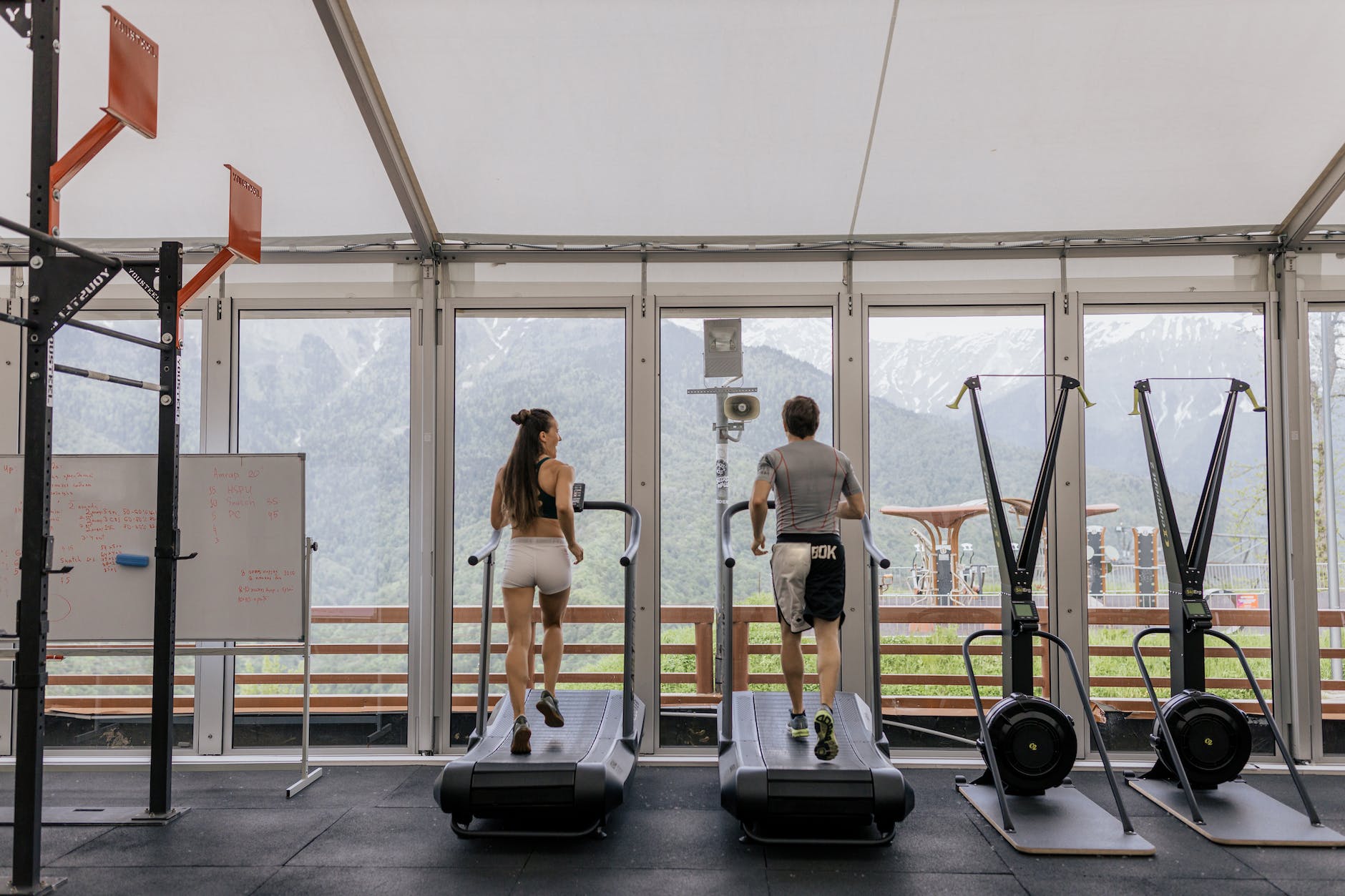
Treadmill


Photo by Anastasia Shuraeva on Pexels.com

One thing I hate more than running laps is running on a treadmill. I had always been curious about treadmills and stationary bicycles. For the longest time, I thought I would be interested in riding a stationary bike during the winter when I didn’t want to run in the snow and ice. It would be nice, I thought, to get an aerobic workout without braving extreme winter weather. I often thought about buying a stationary bicycle until I heard about treadmills. Then, I wondered what it would be like to run on a treadmill indoors instead of running through the snow, slush, and ice on a wintry day. I suppose I could have joined a health club instead of buying a stationary bicycle or a treadmill, but somehow, I thought I would use the stationary bicycle or treadmill if I owned one.

The more I ran outdoors, the less I thought about buying either apparatus. I hate the repetitiveness of running laps because I keep seeing the same scenery repetitively. However, running and cycling in one place would be even worse because of the lack of change of scenery. But I never actually ran or cycled in one place.

A few years back when I was in México, my cousin suggested that I go to the health club with her. I have never been a fan of health clubs, but I was curious to see what a health club in México was like, so I went with her. Well, it didn’t look much different than a health club in Illinois or California. Anyway, I decided to run on the treadmill just to finally see what it’s like to run a treadmill. I had not run for about a month prior because of constant pain in my right foot, so I wasn’t sure how fast or how long I could run, but I was running alongside my cousin Jaqueline. She was happy that she didn’t have to miss her workout on account of my visit. I told her I could handle running even though I had not run recently.

So, I felt a little pressure to show her that I was a real runner. I set a goal of running for thirty minutes, which I was confident I could complete. We were able to watch TV while we ran. It had never occurred to me before to watch TV while I ran. I don’t even listen to music when I run.

Well, running on a treadmill did not seem like real running to me. I jumped in the air and the belt beneath me moved my foot back. So, I was running without going anywhere. It seemed absurd to me. I sped up the belt slowly, but it still didn’t feel like real running. My cousin was enjoying her workout. She kept asking me how I liked it and I would just say it was great and smile back at her. Then I thought of increasing the incline that is supposed to simulate hills. Well, running on a steeply inclined treadmill is nothing like running hills. All I had to do was raise my foot a little higher and the belt would move it backwards. When I run up a hill, I can feel my legs carrying my entire body weight up the hill, not so with the treadmill.

Well, I managed to run for thirty minutes comfortably, but I didn’t feel like I really exerted myself very much. The pain in my right foot didn’t bother me at all. After that, I lost all desire to buy a treadmill. I’ll just stick to running on the road and running hills without watching TV or listening to music. Well, I must run now.