Cheating


Cheating may be hazardous to your health

Well, this last semester was full of surprises for me. For some reason, students opened up to me a little more than usual. Partly because I’m very friendly and partly because I encourage them to express themselves, but I do maintain control of the class for the most part. I always encourage students to study for all their classes. I tell them that if they cheat, they’re only cheating themselves. A university education teaches them how to think. If they cheat, they are depriving themselves of a valuable education. However, one student told me that this semester all he learned was how to cheat. He really believed that graduating only involved passing courses, and that could easily be done by cheating. I told him that he was cheating himself because he wasn’t developing valuable cognitive abilities, but he didn’t seem to care.

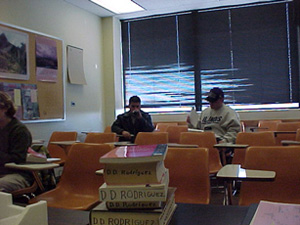
When I was a student, I only cheated three times in my entire life. The first time was in eighth grade. We were doing an English grammar quiz in which we had to match columns. I was almost done except for two answers. I was very sure that the rest of the answers were correct. My friend Robert K. who sat in the next row looked at my paper and shook his head. He lifted his paper so that I could copy his answers, but I shook my head no and looked away. He insisted that I copy his answers, so I did because I didn’t want to lose him as a friend. I wanted him to think I was as cool as him. Well, it turns out that I changed my correct answers to his wrong answers, and I failed the quiz. I had learned my lesson, and I didn’t cheat anymore. I realized then that I was much smarter than I thought I was.

My parents always taught me to second guess my intelligence. But after that, I never cheated again. Until high school. I didn’t do my homework in physics class, and I was failing the course. Toward the end of the year, Mr. W. said I could pass the course if I made up the homework. However, when I tried to do the homework, I couldn’t because Mr. W. never actually taught us physics, and on those rare occasions when he did, I was too busy playing chess with my friend Jim Harmon. So, I talked to my friend Bill Pappas who had done all the homework. He lent it to me, and I copied all of it. I passed physics with a C, although I still feel guilty about it to this day.

In college, I only cheated once because we received a take-home final exam for Latin American literature class in Spanish and I didn’t have time to answer one question before the due date. My friend Ernesto Mondragon let me read his answer and then I wrote my own original answer. When classmates tried to copy off of me, I would always cover my paper and not give them my answers. I had studied very hard. Why should I help them out? I only helped one student once, but we were very close friends. We were in a literature class that focused on the works of James Joyce. I believe I was the only student in the whole class who actually read Finnegan’s Wake in its entirety. Well, we had a take-home final exam and one of the questions was on Finnegan’s Wake. Daniel Buckman couldn’t find the passage in the novel that we had to analyze for the final. Well, since I had read the whole book, I was determined to find it. And I did! I had to help my friend out, so I told him on what page the passage was. He was so grateful to me, and I was so proud of myself for having found it in the first place. He did go on to publish several books.

DDR

XX


Stay thirsty, my friends!

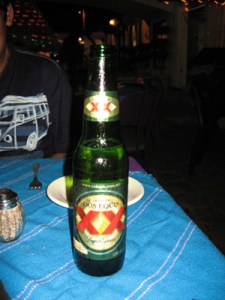
Sometimes we read Spanish texts in Spanish class. Often, the historical time period is referred to as siglo XX, pronounced siglo veinte in Spanish, which means twentieth century. Usually, they read, “siglo dos equis.” Some students actually think the text is referring to Dos Equis the Mexican beer! Thus, I learn about their weekend extra-curricular activities. Rarely do the students read the phrase correctly. Maybe I’m too literal when I read a text, but I never even thought of Dos Equis beer whenever I saw siglo XX. I really read it as the Roman numeral 20. And I love beer!

Anyway, this got me to thinking about Dos Equis beer a lot. But I managed to refrain myself from drinking any. And now they have a Dos Equis commercial that they play during the Ten O’clock News that always makes me laugh. They show an obviously macho machísimo man who I like to think is obviously Mexican. They show him walking into a pool hall, surfing under a huge wave, and surrounded, of course, by several señoritas, implying that he’s a lady’s man. Then the narrator says: “He’s been known to cure narcolepsy just by walking into a room. His donor donation card also lists his beard. He’s a lover not a fighter. But he’s also a fighter so don’t get any ideas. He is … the World’s Most Interesting Man.

The World’s Most Interesting Man

Then this macho machísimo man says with a thick, yet virulent, Mexican accent, “I rarely drink beer. But when I do, I drink Dos Equis. Stay thirsty, my friends.” I mean this guy makes being Mexican look cool! Some of my Spanish students mentioned this commercial to me because they also thought this guy was really cool. I can only hope to someday be half as cool as his beard!

DDR

Carol


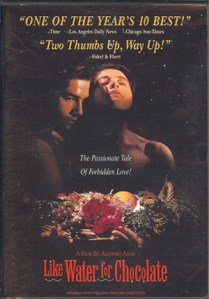
Como agua para chocolate.

Some Spanish students just amaze me with some of the things they tell me, particularly when it comes to criticism about teaching. Some students are very blunt and opinionated when criticizing teachers. Most often, they don’t tell me what they think about me or my style of teaching, but they will tell me how they changed to my class because they couldn’t understand the other instructor because he or she spoke Spanish too quickly. Sometimes students will tell me that my Spanish class is their favorite class, which makes me a bit uncomfortable. Then, some will even add that my Spanish class has been the best class of their entire college education.

I can honestly say that most of my students are happy to come to class and we often have fun together and laugh a lot during class. However, I don’t feel that I deserve all the compliments that I receive. When I used to teach at Morton College, an instructor who taught in the classroom next to mine commented about all the laughter she heard emanating from my classroom. “You must teach a fun class,” she said. “What do you teach?” “Spanish,” I said. She gave me this look of disbelief. Normally, most students dread studying a foreign language and only do so to fulfill the mandatory general education requirements. But most of my students love coming to class! This last semester, many students told me that this was the most Spanish they had ever learned. And they had fun in class.

When I first started teaching Spanish at UIC, I wasn’t sure what to expect of the students. Overall, they were certainly a notch above community college students because of stricter admissions standards. The main difference was in the attitude toward me as a Spanish teacher by the two school administrations. At the community colleges where I had taught, I was in charge. They would give me a textbook and tell me that I had to cover a certain number of chapters, which I always did. But I had a lot of freedom in the classroom. Then, I started teaching at UIC, which is a research university, where most of the 100-level Spanish classes were taught by teaching assistants. Since there are hundreds of 100-level classes and the possibility of cheating increases exponentially, the classes are more controlled and there is less freedom for the instructor in the classroom. Plus, the administration wanted all the classes to be equally fair to all the students. So, it took me a while to adjust.

I’ve always liked showing movies in Spanish class. At UIC, I once asked if it would be okay to show a movie if we had time and I was told no. So, I didn’t show a movie. I recalled how students liked watching a movie, in Spanish, set in a Spanish-speaking country. I always picked a movie that demonstrated some cultural aspects of Spanish or Latin American society. Anyway, I decided that I would show a movie to my classes the next semester. How did I get around getting permission? Simple! I just didn’t ask for permission to show the movie. If I had asked, I would have been told no. And then I wouldn’t be able to show a movie because I was ordered not to. So, I just showed it. If anyone of my superiors would have told me anything, I would have said, “But no one told me that I couldn’t show a movie.” Of course, none of my students ever mentioned watching movies in Spanish class.

So, one day at UIC, one of my students tells me that I’m a very good Spanish teacher. I said, “Muchas gracias” and left it at that because I don’t take compliments very well. She was a good student who always paid attention in class and always did the homework and participated in class. Another day, she told me that her friend was also in the same Spanish 103 class as her, but in a different section. Her friend wasn’t happy with her Spanish instructor. A couple of weeks later, she told me how her friend had transferred to UIC from Daley College and how her Spanish instructor at Daley College was so much better than the one she presently had at UIC. She just went on and on about how her friend had learned so much Spanish at Daley College and how her instructor was so enthusiastic and always answered all her questions. I must admit that I got very bit uncomfortable by all this talk. I wondered who this super Spanish instructor was. I was also afraid that my students would be disappointed to have to settle for me as their Spanish teacher instead of having that teaching wonder from Daley College. One day, I’m leaving Lincoln Hall where I teach Spanish 103. The student who always talked about her friend at Daley College is exiting alongside me. Well, who do see on our way out? Her friend. “Carol!” my student shouts at her. Carol and I looked at each other and we immediately recognized each other. I used to teach at Daley College and Carol was my student back then. The Spanish instructor she was talking about was me!

Medieval road trip


Evanston, Illinois

One of the most memorable Spanish classes I ever took was a Medieval seminar on Spanish literature at UIC. There were only four students in the seminar. The professor, Reinaldo Ayerbe-Chaux, taught the course with great enthusiasm. So much so that I wanted to write my doctoral dissertation on some Medieval text. One of our writing assignments involved transcribing a Medieval text written on parchment into Spanish. I don’t know why, but I was truly fascinated by this project. The language of the parchment was archaic but comprehensible. The alphabet was moderately different from the modern Spanish alphabet. Some parts of the text taxed my brain for me to decipher the writing and then comprehend what was stated. Little did I realize that this was good training for me as a Spanish professor when I would have to decipher student compositions with illegible handwriting before I could interpret the student’s intended message. But, hey, I love puzzles!

Well, the highlight of our seminar came at the end when we went on our field trip to the University of Wisconsin, Madison. Their Spanish department had the largest collection of Medieval Spanish texts in the world. However, most of them were on microfilm. Professor Ayerbe-Chaux said we just had to go to the university and see the collection for ourselves. I offered to drive our class to Madison, Wisconsin, in my minivan, which he thought was a good idea. Of course, UIC paid for my gas.

Professor James Compton, who is now retired, also wanted to go with us since he had graduated from there. Maybe I’m just too easily amused, but I had a lot of fun on this trip. I enjoyed looking at all the Medieval texts even if they were only on microfilm. Professor John Nitti gave us copies of two of their publications, which I shall someday read. But the highlight of the trip for me was meeting the faculty. Professor Compton was happy to see his dissertation adviser Lloyd Kaston once again. He was now professor emeritus, but he still had an office in the Spanish department, and he still was actively transcribing Medieval texts. When we went to his office, he just happened to be napping. He was ninety-something years old, so he was entitled to nap whenever he wanted! Well, I got to see four generations of faculty in the same room!

I will always remember this seminar because Professor Ayerbe-Chaux gave the entire class, all of us, copies of a book by Don Juan Manuel that he had published. He had read the original texts by Don Juan Manuel and then transcribed them. He was even gracious enough to autograph the book for me!

DDR

Let’s all go to class


Morton College

That sounds like a very good idea, in theory anyway. The first day of the semester, I always give The Speech about how to excel in my Spanish class. Number One on the list is coming to class each and every day. Why? Well, class, you should come to class because attendance is 15% of your overall grade. I like seeing my students in class, and if you come to class, you might actually learn something. Most students do come to class just because it’s required. Others, however, think attendance should be optional and nothing I say will persuade them to come to class more frequently.

A few years back, a student enrolled in my class who took skipping class to a new level. He showed up the first day of class and then I didn’t see him again for two weeks. I couldn’t figure out why he would miss so many classes.

One day, as I was reading the university newspaper, I noticed a guest opinion piece in the editorial section titled, “Let’s all go to class,” in which the author stresses the importance of attending class. In fact, he keeps harping on it even though he missed a lot of classes the previous semester to sleep, play video games, and almost finish writing late papers for his English class.

In principle, I agreed with the idea that all students should attend class, but something about this piece made me suspicious. The author was named Patrick. So I immediately remembered him. That’s one thing you should know about me. I don’t often remember names unless your name is David, Catherine, Adam, Yolanda, Patrick, Poindexter, or Allouissius.

So I suddenly realized that the author Patrick was the student whom I had only seen on the first day of class and then never again. About two weeks later, he showed up to class again and I asked him if he was the author of the guest opinion. He blushed and admitted that he was, in fact, the author. I asked him if he had ever considered following his own advice. He looked at me as if it had never occured to him! I didn’t see him in class again for another two weeks. His attendance the rest of the semester was very sporadic and somehow he managed to pass the course!

DDR