Spanish textbooks


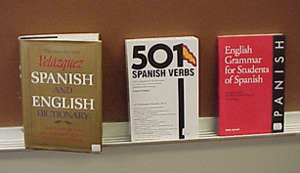
Spanish books

Sometimes Spanish textbooks inadvertently include words that invoke negative connotations or just plain poor choices.

For example, I’ve seen some books include “tonto” in the glossary as meaning, “silly” or “foolish.” Yes, it does mean that, but in general, no Spanish-speaker uses that word unless they really want to insult someone. “Tonto” is practically a swear word in almost every context.

I always warn students not to use this word, and if they do, they should be prepared to be punched. I saw one book explain the diminutive of words like “casa” changing to “casita,” and “hijo” changing to “hijito.” That’s all well and good, but then the textbook gave the example of “mamá” changing to “mamacita.” In real life, no Spanish speaker would call their mother “mamacita.” The only time you really hear “mamacita” is when the vato on the corner is flirting with a girl walking by and he says, “¡Oye, mamacita! ¡Qué chula estás!

Another book bothered me with its choice of negative examples. I prefer something that offers positive reinforcement, but, no, this textbook in explaining comparisons of inequality stated, “Estos estudiantes son más estúpidos que esos estudiantes.” What kind of thing is that to say in a classroom? “These students are stupider that than those students.”

I used one textbook with all these ambiguous illustrations that didn’t really clarify the lesson at all. In one of the drawings for the lesson on reflexive and reciprocal sentences, one cowboy is removing the boot off the foot of another cowboy! Every class of mine that looked at the drawing always laughed when we did the exercise. I would just tell them it was a scene taken from Brokeback Mountain.
DDR

My Mexican relatives


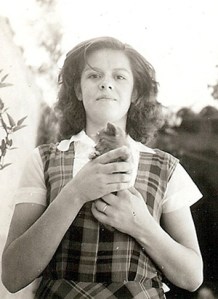
María del Carmen Martínez Valdivia

Well, I sure learned a lot about my family on this trip to México. For one, most of the stories that my mother told me about her family weren’t true! While talking to my cousin, I realized that none of the facts matched most of the stories my mother told me when I was a boy.

For example, my mother would often tell me how when she was a girl, she wanted a life-like doll for her birthday. One that cried like a real baby, drank a bottle, and wet her diapers, etc. And on my mother’s birthday, my tía Jovita was born. That was the birthday present my mother really wanted! Well, I told my cousin this story and she said that tía Jovita’s birthday is on December 24. So, this doesn’t match up to my mother’s birthday on April 27! Later, I discovered that my mother did get her birthday present, but it is my aunt Matilde, not Jovita. I had forgotten the birthday present’s name.

Also, everyone in México always knew my mother as Helen. When I was little that’s what my father called her. I always knew her as Helen, too, until she became a U.S. citizen, and she changed her legal name to Carmen M. Rodríguez. When my mother died, I was surprised to discover that her real name, based on her birth certificate was María del Carmen Martínez Valdivia.

When I was little, my mother always told me how she and her sisters didn’t like their given names, so they changed them to something that they really liked. Mariana Anita became Esthela, María del Carmen became Helen, María became Marusa, Rebeca became Jovita. Unfortunately, I can’t remember her sister Laura’s original name. Their brother Alfredo always remained Alfredo. Go figure!

My cousin also told me that her mother told her how my mother used to dress in boy’s clothes and insisted on being called Alejandro. Of course, I’m not sure how true this story is because it turns out my tía also liked to embellish her stories. But if it is true, what a coincidence that I also liked the name so much that I named one of my sons Alejandro!

DDR

Nostalgia in the future


Passionate about nostalgia on the radio!

I have reached that age where everything reminds me of the past. Listening to the radio, I remember what I was doing when I heard the song for the first time years ago. It reminds me of how I used to be and who I wanted to be, but somehow, I realize that I haven’t changed all that much, and in some ways, I’m still the same boy deep down inside. When I hear an old song on the radio again, I still like (or hate) the song as much as I did back then. I recognize some songs after only three or four notes.

My sons are amazed that I recognize those old songs on the radio. I told them, “You know how you listen to some songs over and over again? Well, I used to do the same thing when I was your age!” And that’s why the songs remind me of my youth. And that reminds me of a Led Zeppelin song whose title I can’t recall: “In the days of my youth, / I was taught what it means to be a man,” which in turn reminds me of my first car and my first “real” girlfriend of that time and how I almost lost my virginity while listening to Led Zeppelin. But that’s a blog post for another day.

My present didn’t quite turn out the way I expected. Perhaps, I should start creating some good memories now so that I may have some good nostalgia in the future. When I recall my memories of how I expected I would be now, my nostalgia sure hasn’t lived up to my expectations, in the past or now. I should have thought of my past for the future in the past and not now in the present where I regret not having created better memories for my future in the past. I wish I could go back in time and do things focusing more on the future. But that’s all water under the bridge now. There’s no use crying over spilled milk.

Sometimes when I wax nostalgic, I wonder why no one uses the word “wax” (as in “to increase in size, numbers, strength, prosperity, or intensity”) anymore. I also wonder why when I refer to the waxing and waning of the moon, I get some strange stares. In fact, the other day I was waiting in line at the supermarket when I was thinking about the cycles of the moon and I accidentally uttered, “I enjoy the waxing and waning of the moon” aloud. Suddenly, I was all alone in the front of the line facing a nervous cashier! They probably didn’t know what I meant by “wax.” I should be more careful when and where I wax nostalgic.

In the future, I would like to recall the past with fond memories of my present “present.” In the future, no more regretting the past and loathing the present. Because today is the first day of the rest of my life!

DDR

Mexican hot chocolate


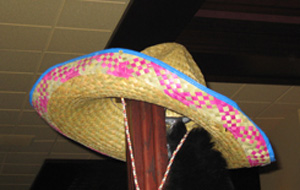
Mexican sombrero in a downtown restaurant

I have always loved Mexican hot chocolate. I mean real Mexican hot chocolate, made by real Mexicans. I generally drink it during the winter months, but I myself have never made Mexican hot chocolate in my life. In fact, I have never heard of a Mexican male making Mexican hot chocolate outside of a restaurant.

Usually, my mother or abuelita made it at home. They would bring the water in the pot to a rolling boil and then drop the brick of chocolate into the boiling water. Stir it with that wooden thing with the wooden rings–okay, I don’t know the Spanish name for it–that cosita until the chocolate brick melted. I loved the hot chocolate! Especially after all the TLC that went into it. You see, whenever my abuelita or mother made the hot chocolate, they would dip a spoon into it to taste it to see if it tasted good. They would dip the same spoon several times after removing it from their mouth. Not very hygienic, but full of TLC.

When I was married, my ex-wife would also like to make hot chocolate, too. Usually, unannounced. Using the same traditional Mexican recipe and Mexican TLC techniques. Well, our stove was next to the water heater and when my son was four years old, I would tell him the water heater was hot, hot, hot. “¡Ay! ¡Ay! ¡Ay!” And he would repeat “¡Ay! ¡Ay! ¡Ay!” and pull his hand back as if he had burned it.

Well, one day, I heard my ex tell my son, “Ask your father if he wants hot chocolate.” My son came into the living room and asked, “Dadá, you want ¡Ay! ¡Ay! ¡Ay! chocolate?” I had a tough time containing my laughter, but I could see the logic of his thought process and it made perfect sense! Now, I only drink ¡Ay! ¡Ay! ¡Ay! chocolate.

DDR

Spanish in Burger King


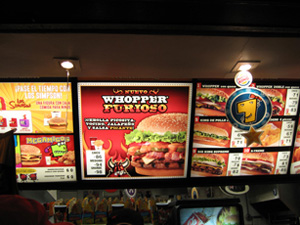
Burger King in Mexico City

Last night, I was in Burger King with my sons. A Mexican family was standing behind me in line. I joked around with the cashier who took my order. We spoke in fluent colloquial English, and I have a Chicago south side accent.

The father of the Mexican family then ordered his food in broken English. Later, while I was waiting for my order, the father spoke to me in Spanish about his son who had just learned to walk the week before. I was surprised! I’m always surprised when total strangers speak to me in Spanish! I told a non-Mexican friend about this, and she said, “But you don’t even look Mexican!” But to another Mexican I do!

As a boy, my father would take us to Burger King a lot. We would order our food and I dreaded waiting to hear my father’s order. After completing the order, my father would always ask, “Do you have hot peppers?” When the cashier would say no, my father would say, “That’s okay. I brought my own!” He would then pull out a jar of jalapeño peppers from his pocket.

My father had hundreds of ways of embarrassing me in public.

DDR