Mexicanas


Ixtapa-Zihuatanejo, México

Mexicanas are incredibly unique women in this world. However, I don’t want to lump them all into one group as there are different kinds of Mexicanas. Sure, they all have the common denominator of Mexico somewhere in their background and that’s enough to differentiate them from women of other ethnicities. So in an effort to educate you, gentle reader, I will over-analyze Mexicanas for you. Yes, there are different kinds of Mexicanas that I like to divide into three groups: 1. Mexicanas, 2. Mexicanas, and 3. Mexicanas. As you can see, UIC didn’t give me my Ph.D. for nuthin’! I learned to categorize just about everything while studying for my graduate degrees. Anyway, if you examine my groups of Mexicanas, you will clearly see that there are three different kinds of Mexicanas: 1, 2, and 3. Is that clear?

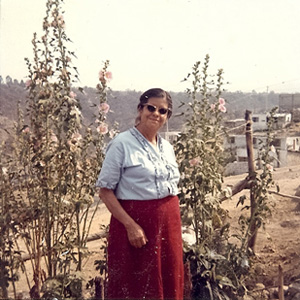
First, there are Mexicanas like my abuelita, born and raised in Mexico, destined never to live anywhere else. And they don’t want to leave Mexico either. Their names are usually María or Guadalupe. Or even Guadalupe María or María Guadalupe. No exceptions. My abuelita María Guadalupe Valdivía came to Chicago only because my mother insisted. Abuelita didn’t like Chicago at all because it wasn’t Mexico. She hated the winters here and she hated the fact that she would have to learn English. She stayed just long enough to have her eye surgery and then she returned to Mexico. And she never came back. And she never missed Chicago at all. My mother would visit abuelita at least once a year in Mexico. And even though she was blind, abuelita lived by herself in Mexico. She was an extraordinarily strong Mexicana.

Second, there are Mexicanas like my strong-willed mother who were also born and raised in Mexico, but not firmly rooted there. They come to America for a while, then go back to Mexico. But return to America even though they always complained about America in Mexico. They just keep going back and forth, never entirely happy in either place. In general, nothing seems to please them. My mother always complained about everything, to everyone in America and Mexico. When her Mexicana friends would visit, they would all sit around complaining about America. And then, to change the subject just a little, they would complain about Mexico. Nothing ever seemed to please these Mexicanas as they sat around complaining and breast-feeding their babies.

Third, there are Mexicanas like my sister or ex-wives, born in America, but unmistakably Mexicana by their accent. I once had a Mexicana girlfriend who had the Mexicana accent but couldn’t speak a word of Spanish! She used to get so mad when people automatically spoke Spanish to her and she would have to admit that she only knew English, albeit the Mexicana kind of English. These Mexicanas love everything about Mexico, the music, the food, the culture, but they wouldn’t want to live there. It’s okay to visit once in a while to catch up with family events, but that’s about it. America is their home, even if they are Mexicanas, and they never hesitate to let the gringos know it.

I’ve known Mexicanas all my life, beginning with my mother, then my abuelita, and finally, my significant others. The more I get to know them, the less I seem to understand them. I do know they are sexual beings from observing them and from my very own personal hands-on experience. I don’t know much about my abuelita’s sex life, but let me say this. She never married my abuelito and they rarely lived together. Yet they managed to have six children together. My parents were always fighting, and I never ever heard them having a normal, civilized conversation. My father was always affectionate with my mother, but she would repel all his amorous overtures, at least that I could see. Occasionally, when my father didn’t work the midnight shift, I could hear him trying to seduce my mother in their bedroom, right next to mine. My father always saying something affectionate and my mother always telling him to leave her alone. Apparently, he didn’t give up and she didn’t resist enough because they had six children together. My youngest brother was born soon after my parents separated.

The Mexicanas that came into my life were certainly very affectionate, if you know what I mean. That’s the thing about Mexicanas: They immediately know if they like you or not, if they will love you or not. I met my first wife Linda when my friend invited me to go with him to a wedding in Merrill, Michigan. We barely spoke and I didn’t see her again for another month–and we spoke even less then. Next thing I knew she moved to Chicago just to be with me–not that I minded, of course.

My second wife Anna chased after me, too. She kept hinting for me to ask her out. I really wasn’t interested in her, but she was persistent. She gave me her phone number and I threw it away. Her friend gave me Anna’s phone number and I threw it away again. She was so persistent that I finally gave in. If a Mexicana is that interested in me, I know we will be happy together. If Mexicanas don’t love you, or at least like you, you better back off because you don’t have a chance and you’re just wasting your time.

From what I’ve seen, the odds are against you if you think you can win a Mexicana over. However, once she yours, you better show her that you need her, and she’ll be yours for as long as she wants you. But that may or may not be till death do you part. One of the fringe benefits of having a Mexicana is having an active sex life. I mean there’s no begging at all. In fact, I was dragged into the bedroom many times, although I must admit that I didn’t put up much of a fight. And the fun doesn’t stop just because it’s that time of month, either. In fact, a Mexicana wants you even more right then. This happened to me many times. And just because you have all these intense arguments during the day, doesn’t mean that you’ll be ignored at night. In fact, that’s usually some of the best lovemaking. And the next morning? She continues being mad at you from the day before. That is, until night falls again.

Well, that’s about all I’m willing to say for my over-analysis of Mexicanas for now. But someday, I’ll truly delve into Mexicanas to try to understand them! Maybe, I’ll discover that there are many more than just three groups of Mexicanas.

DDR

Salsa


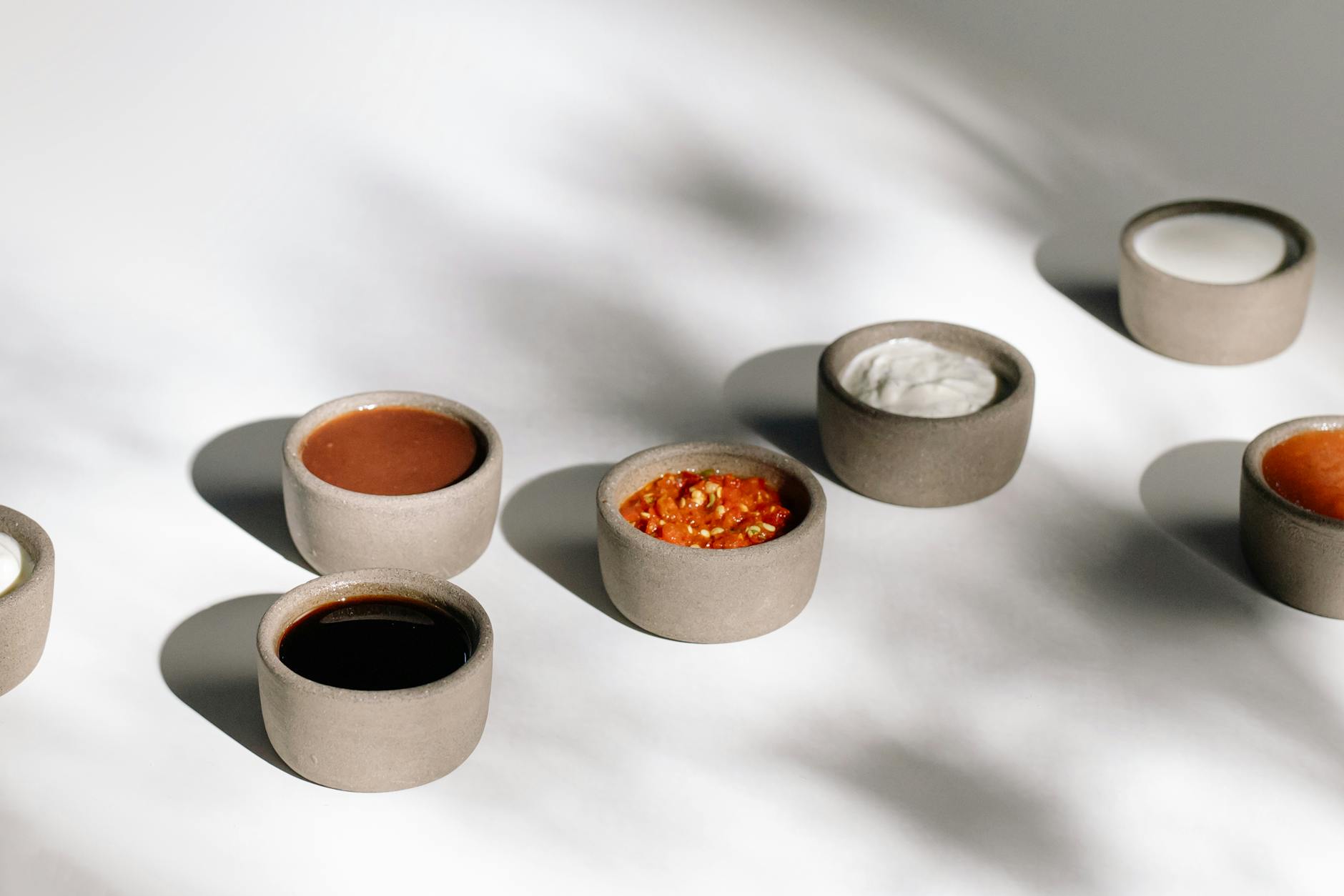
Photo by cottonbro studio on Pexels.com

My father loved his salsa. In fact, he always carried a jar of salsa in his coat pocket just in case of an emergency. By an emergency, I mean that rare event when we ate a non-Mexican house or restaurant that had never even heard of salsa, peppers, or even Tabasco sauce. My father was always at the ready with his jar of salsa. He was prepared for any disaster of this type.

At Burger King, when they asked him if he wanted everything on his Whopper, he said, “Yes, everything. And salsa!” When they would tell him that they didn’t have salsa, he would say, “That’s okay! I brought my own!” And he would pull out his jar of salsa from his pocket. He loved watching their facial expression when they saw that he had a jar of salsa. Some days, he felt that one jar of salsa alone would not suffice, so he would also bring a jar of jalapeño peppers. He ate jalapeño peppers like some people eat olives.

At home, my father tried to instill in us the values of our Mexican heritage. Number one on the list was teaching us how to eat salsa or peppers at every meal with every food that we were served. We always put up an argument every time. He even wanted me to put salsa on my corn flakes once! He loved to make his own salsa, but no one else liked it, not even my mother.

Once he made some salsa and I saw him put a spoonful in his mouth. He had made it extremely hot. It was too hot even for him. He drank a tall glass of water, but it took a while before he cooled off. Then, he offered me some. I said no, of course. But then he gave me the “What kind of Mexican are you?” speech and I felt compelled to try some of his salsa. My father had tricked me into tasting it by telling me that it wouldn’t be that spicy. I did taste it, but grudgingly. He told me to try a piece of diced potato that had been floating in the liquid of his homemade salsa jar. I think, how hot can it be? It’s just a potato. Wow! I bit into this potato, and it was hotter than any jalapeño pepper I had ever tasted.

When I was growing up there were people starving all over the world, but our parish and school decided to collect alms for the starving children in Biafra. They showed us pictures of these Biafran children who were nothing but skin and bones with bloated stomachs. On the one hand, these children so evoked our sympathy for them that we donated our candy money to feed these starving children in Biafra. On the other hand, some boys soon forgot about the starving Biafran children and invoked the name of Biafra for other purposes. In fact, they started calling the skinniest boy in the school Biafra. Biafra, I mean the skinniest boy in the school, happened to be in my class. And whenever someone wanted to poke fun at this skinny boy, he would go up to the Biafra collection can on the nun’s desk, drop a coin in the can, and say, “This is for Biafra.” Of course, he would then take a long look at the skinniest boy in the school.

I’ll never understand why the skinniest boy in the school just took it, instead of exploding and just start pounding someone. Anyway, back to my father and his salsa. Nice segue, no? Sometimes my father would cook our food and put the salsa in it while he cooked, as if we wouldn’t notice the flavor of salsa in the food. And as a diversion, he would put a big jalapeño pepper on the plate, too.

One day, my brothers and I were just sitting there staring at our food on our plates. We were starving, but we couldn’t eat it. Then my father got angry at us and said, “You should be grateful you have food to eat. There are starving children in Biafra!” I said, “Well, why don’t you send the food to them?” But then I realized that no matter how hungry someone was, he or she wouldn’t eat my father’s food anyway. I tried to imagine a skinny boy in Biafra receiving my father’s care package and seeing my plate of food with a big jalapeño pepper on top of the food. How hungry would he have to be in order to eat my father’s spicy cooking? No, I never could imagine a Biafran boy eating my father’s food.

And what did I learn from all this? Well, I learned a valuable lesson that I sometimes share with my own sons. It’s part of our family tradition. So, when my sons are sitting around the table complaining about the meal, sans salsa, that I cooked for them, I tell them, “You don’t know how lucky you are! There are starving children in Africa who would like to have an X-Box 360 Elite!”

DDR

Chicago Auto Show


2008 Chicago Auto Show

My father always loved going to the Chicago Auto Show every year. He would go several times each year and he would always take my brothers, sister, and me the first time he went. He always managed to get free tickets either through work or some promotional event. Somehow, he always found free tickets and took us every year.

When I was older, he would go with just me so we could take our time and really look at all the cars. He loved looking at the cars and we loved collecting bags and bags full of automobile literature, pamphlets, key chains, and anything else they gave away there. My father was a mechanic at Curtiss Candy, so he loved to show off his knowledge of all things mechanical while we were at the auto show. So if they had a motor displaying the internal parts, my father would explain how the internal combustion engine worked. My brothers weren’t all that interested in his explanations, but I always tried to learn something new everytime we went to the auto show.

My father always fantasized about owning all the latest expensive sports cars. He would always insist that we sit inside the car, behind the wheel. Then, he would explain all the features of the car, as if he were a car salesman. My favorite part of the show was the celebrities who made appearances. They were so accessible to everyone. Usually all the Chicago sports teams such as the White Sox, the Bulls, the Bears, the Blackhawks, and the Cubs sent a few players to represent them. I don’t really remember exactly who specifically showed up, but I do remember that if you waited long enough after their presentation, you could walk right up to them, shake their hand, and talk to them. We would always wait to meet the celebrities, but I was too shy to actually talk to them. I was content with shaking their hand and standing close enough to listen to them talk to others. The only Chicago player I really remember meeting there was Walter Payton. I also remember meeting Jesse Owens who came every year. He was always so patient just standing there waiting for everyone who wanted to greet him.

And long after the auto show was over, we still had our bags of automotive literature to entertain us well into the summer.

DDR

Abuelita


Mi abuelita en México.

I remember when my abuelita came to live with us in Chicago back in the 1960s. I liked having my grandmother living with us because she used to take care of me when both my parents went to work. She even protected me from my mother when she hit me a little too hard or a little too long.

I remember once for homework in the first grade I was supposed to read aloud from our reader to one of my parents. My father wasn’t home, so I went to my mother. She said she was too tired from work to help me do my homework. I told her that all she had to do was listen to me read. The reader was quite simple: “See David. See Ann.” And so on. I didn’t even know that much English at the time.

Anyway, my mother didn’t want to be bothered by me. I kept begging her to listen to me. Finally, my abuelita said that I should read to her. I wasn’t sure if she could help me to read this book. At first, I hesitated because not only did she not know English, but she was also blind. One of the reasons she came to Chicago was to get eye surgery.

DDR

My father’s vocation


José Diego Rodríguez Rosiles

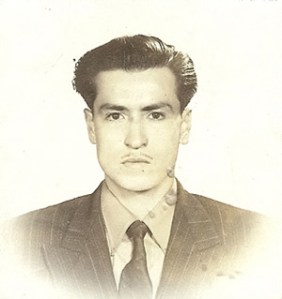
When I was in Celaya, my tío Timio told me about how all his brothers studied at the Montezuma Seminary in New Mexico. Tío Timio was the only brother not to attend the seminary. My father was at the Montezuma Seminary in New Mexico for eleven years. My father wanted to become a priest, but they advised him to go back home to Celaya for a while. They told him to get to know the world before he made a final decision. So, he returned to Celaya and while there he met my mother. Needless to say, my father never became a priest. Pues, como quien dice, en Celaya, se la halla.

DDR