Mexican Doritos


Nacho chips.

There are Doritos. You’ve eaten them before. Nacho flavored tortilla chips, which some people complain are too tangy or too hot.

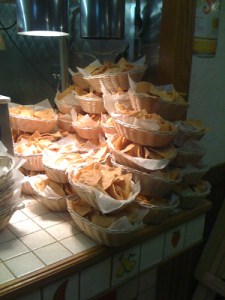
And then, there are Mexican Doritos. In Spanish, they are totopos de maíz con queso y chile. They even have their own website: http://www.sabritas.com.mx/. These Mexican Doritos are more potent than American Doritos. You do not need to dip these tortilla chips into any kind of salsa. Mexicans added jalapeño peppers and other spices to the recipe, so these chips are very, very hot! Of course, a true Mexican would still add salsa and / or a whole jalapeño pepper.

As I was driving home from Mexico, I had to buy gas. So as long as I was in the gas station, I decided to buy some snacks. I naturally grabbed the familiar name brand of Doritos since they are based on the Mexican food of tortillas. But I was surprised to discover that Mexicans would sell an Americanized version of a Mexican food. So, I’m driving in Mexico enjoying the scenery, looking at the cacti, watching for drivers who speed up to my rear bumper, so I move out of there way, etcetera. I decide to eat some of these Mexican Doritos. Wow! What a surprise! They were spicy. However, since I had been eating so much hot stuff anyway, they tasted just right. But I have a feeling that I once I eat American Doritos, they will taste rather bland.

DDR

Sanatorios


Dispose paper in wastebasket.

Just a word of warning if you go to Mexico. Don’t expect comfortable seating in the bathroom if you stray far from the traditional tourist areas. If you don’t have regular bowel movements, the typical Mexican diet will have you visiting the sanatorio regularly. But make sure you always carry loose change because you need two pesos to use most sanatorios. And only after you pay will someone hand you toilet paper if you really need it.

What I noticed in most bathrooms, since I am a regular guy, was that most toilet seats were either broken or missing. Missing, I assume, because someone stole it, or, broken, I assume, because someone caught the perpetrator in the act of stealing it. Of course, this wouldn’t pose any problems for the average woman, since I understand that their buttocks have never actually touched the toilet seat of any public bathroom. And all public bathrooms have a wastebasket next to the toilet for you to dispose of your used toilet paper. If you put the toilet paper in the toilet and flush it, the toilet will back up. However, most people fold the used toilet paper and all you see is white in the wastebasket. Of course, in some homes, you can actually flush the toilet paper.

As gross as all this may sound, this is actually an improvement in sanitation from when I went to Mexico as a boy. I remember having to cut newspapers into small squares that would be placed on a nail near the toilet bowl and the accompanying wastebasket. I really hated wiping myself with newspaper because you had to use extreme caution not to scrape yourself.

However, once I spent a week on a farm in Celaya, Mexico, I stopped complaining about the newspaper. On el rancho, I had to go really bad. I mean I held it as long as I could, until I thought I would burst. You see, we had to go to the pig sty to do our duty and then wipe ourselves with a corn husk. As a nine-year-old boy, this terrified me, especially after the first time. I entered the pig sty, dropped my pants to my knees, and squatted. A few pigs gathered round to watch me. Before my feces even hit the ground, the pigs had gobbled them up! Ditto for the soiled corn husks!

So, if you go to Mexico, be thankful for the improvements in the sanitation system.

DDR

¡Feliz Navidad!


¡Feliz Navidad!

When we went to Mexico when I was little, I remember that Mexicans didn’t really celebrate Christmas. The day for giving gifts to children was January 6, el Día de los Reyes. Occasionally, small gifts were given for Christmas, but the big gifts were given on January 6.

So, I was surprised to see that many Mexicans were Christmas shopping when I was in Mexico before Christmas. I asked my cousin about all the Mexicans Christmas shopping, and she told me that more and more people were giving the big gifts on Christmas and the smaller ones on January 6.

I attribute this to American cultural imperialism and capitalism. Mexico as a country that is adapting to better function in a global economy. And of course, when Mexicans watch television, they get to see all of the American Christmas movies that stress gift-giving on Christmas Day, especially by Santa Claus.

While in Mexico City, I noticed the traditional Christmas decorations featuring a Nacimiento (Nativity Scene), but I also saw other Christmas decorations like Santa Claus, Rudolph the Red-Nosed Reindeer, and Frosty the Snowman, which was ironic since it hardly ever snows in México City. The street vendors even sold reindeer antlers and noses to attach to your car. I was surprised to see that people drove around in these “reindeer” cars.

Meanwhile, my family in Celaya celebrated Christmas in the traditional way by gathering on Noche Buena (Christmas Eve), going to mass at the catedral, and then eating a big dinner. We went to mass and my cousin took a baby Jesus surrounded by candy on a tray that she placed near the altar for the priest to bless during the mass.

After mass, we walked back home with baby Jesus and then ate dinner. Then we took baby Jesus to the Nativity Scene, and everyone prayed and sang songs to him. Everyone then kissed baby Jesus and took a piece of candy from the tray. After this, I placed baby Jesus in the Nacimiento. My cousin later started a bonfire that the children enjoyed because they placed inflated balloons over the flames and watched the balloons fly away. No one received gifts on Christmas morning because in Celaya the children still receive their gifts el Día de los Reyes.

DDR

Spicy México


One thing I noticed about México was that everyone puts peppers and/or salsa on everything! Even small children put spicy sauce on everything. Would you believe even the Lolly pops are spicy?

Last night, I went to a fair and had a Michelada, which consisted of dark Victoria beer, lime, pimento, and a bunch of other cosas that I now forget. Not only was it spicy, but it came in one-liter portions! I wanted a small one, the smallest one they had was one liter. Needless to say, I didn’t finish it. I had about three gulps left.

I would have finished it, but my cousin asked me if I wanted papitas (potato chips) and I foolishly said yes. That’s right, even the potato chips had salsa. I almost OD’d on salsa last night.

DDR

My Mexican relatives


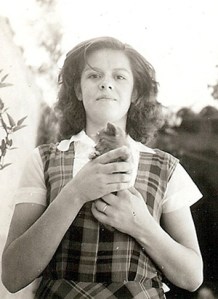
María del Carmen Martínez Valdivia

Well, I sure learned a lot about my family on this trip to México. For one, most of the stories that my mother told me about her family weren’t true! While talking to my cousin, I realized that none of the facts matched most of the stories my mother told me when I was a boy.

For example, my mother would often tell me how when she was a girl, she wanted a life-like doll for her birthday. One that cried like a real baby, drank a bottle, and wet her diapers, etc. And on my mother’s birthday, my tía Jovita was born. That was the birthday present my mother really wanted! Well, I told my cousin this story and she said that tía Jovita’s birthday is on December 24. So, this doesn’t match up to my mother’s birthday on April 27! Later, I discovered that my mother did get her birthday present, but it is my aunt Matilde, not Jovita. I had forgotten the birthday present’s name.

Also, everyone in México always knew my mother as Helen. When I was little that’s what my father called her. I always knew her as Helen, too, until she became a U.S. citizen, and she changed her legal name to Carmen M. Rodríguez. When my mother died, I was surprised to discover that her real name, based on her birth certificate was María del Carmen Martínez Valdivia.

When I was little, my mother always told me how she and her sisters didn’t like their given names, so they changed them to something that they really liked. Mariana Anita became Esthela, María del Carmen became Helen, María became Marusa, Rebeca became Jovita. Unfortunately, I can’t remember her sister Laura’s original name. Their brother Alfredo always remained Alfredo. Go figure!

My cousin also told me that her mother told her how my mother used to dress in boy’s clothes and insisted on being called Alejandro. Of course, I’m not sure how true this story is because it turns out my tía also liked to embellish her stories. But if it is true, what a coincidence that I also liked the name so much that I named one of my sons Alejandro!

DDR