In my never-ending quest to improve my blog, I’ve discovered a new feature in WordPress.com! Yes, if you look below, you will see … Ta da! A slide show!
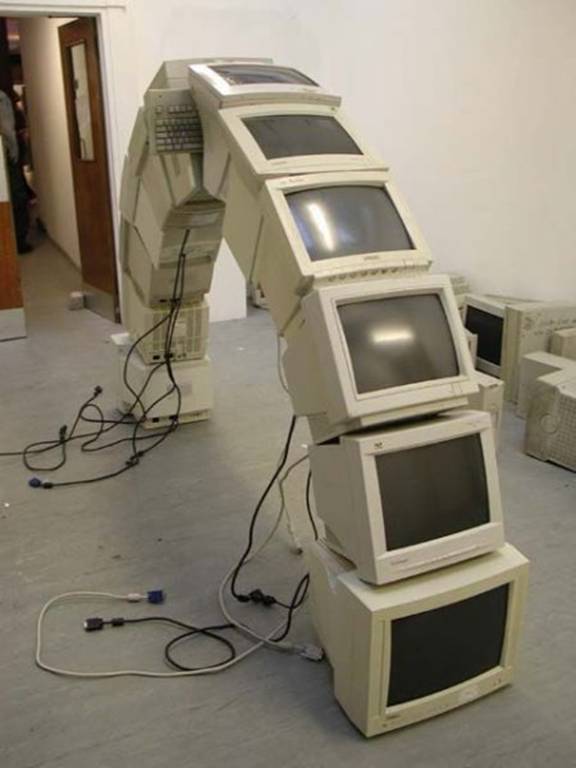
I’m not sure why, but I have a lot of pics that I have saved from the Internet. For some strange reason, I saved a lot of pics with computers in them. What exactly does that say about me? Hmm. I wonder. So, if you look below, you will see some of my favorite PC pics.
I hope to occasionally use this feature in my blog in the future!
I love music! But I don’t know very much about music. In fact, thousands upon thousands of music books have been written about everything that I do NOT know about music. And I am proud to say that I have never read even one of those books! Even though I love music so much.
I really do love music. I listen to music almost every waking moment. But I listen to different kinds of music, depending on where I am. When I’m at UIC, I listen to rock on my iPhone. When I’m driving, I listen to the oldies. However, whenever I’m home, I listen to 98.7 WFMT. All the time! Even when I’m sleeping. And I always crank up WFMT all the way to eleven. Except when I’m sleeping. Listening to classical music allows me to read or write, or even correct Spanish compositions. I don’t know much about classical music either, even though I listen to it all the time.
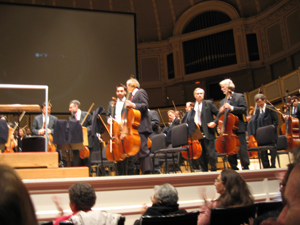
Even though I’m not qualified to critique music, I would like to tell you about a concert I attended at the Chicago Symphony Center. I went to see Beyond the Score that explained the structure and meaning of Sergei Rachmaninov’s Isle of the Dead. The orchestra played the works of other composers who influenced Rachmaninov for this piece. It was a multi-media presentation, so there was a giant screen to show pictures of the painting Isle of the Dead that also influenced this piece as the story was narrated. I sat in the third row right in the middle of the screen. When the conductor Vladimir Jurowski came out, he stood right in the middle of the screen, illuminated by it from behind. This ominous sight made such an impression on me that I wanted to take out my camera and take a picture. But I managed to refrain myself. I regret it now. I should have lived a little more dangerously and taken the picture anyway!
So why do I love music so much? I’m not really sure. Why do I especially love classical music even though I don’t understand it? Okay, you really got me on that one!
However, if I think really hard, I picture Sister Cecilia from my grade school days at Holy Cross. Sister Cecilia was the music director for our school. She would teach the school songs for Sunday mass, for Christmas, and–her favorite holiday–the pastor’s birthday. For Father Edward’s birthday, the school would meet in the assembly hall at least twice a week and we would sing a special birthday song that Sister Cecilia prepared just for him. She would take a current top forty hit and change the lyrics just for Father Edward. For example, one year, she took “Georgie Girl” and we sang “Hey there, Father Edward …” Another year, “What’s It All about, Alfie?” became, “What’s It All about, Father Edward?” Pretty clever, huh? Unfortunately, I can’t remember the rest of the lyrics to these wonderful songs or any of the other songs we sang for Father Edward’s birthday.
Sister Cecilia went through great pains to teach the entire school these songs. When we met to rehearse, she would pass out the sheet music with her new, improved lyrics. She was very demanding. We would stand at attention while we sang, and she would walk among our ranks ensuring that everyone sang. She would tell us, “Open your mouth wide when you sing! I should be able to put a silver dollar in your mouth when you sing!” Things didn’t always go smoothly. Sometimes she would yell at us if too many students sang out of key. She would yell, “Look at the music! If the note goes up, your voice goes up, too!” I always sang at my best when she stood directly in front of me. The rest of the time I merely lip-synced the words. I was ahead of my time.
When we got a new pastor, Father Mikolaitis, she didn’t seem that enthusiastic about his birthday celebration. In fact, we never called our new pastor by his first name.
In the seventh and eighth grades, we took a music appreciation class, taught by none other than Sister Cecilia. I actually enjoyed this class. I don’t remember much from this class. Well, I do remember f – a – c – e and every good boy does fine, but other than that, not much. My favorite part of the class was learning about the orchestra. She would place the phonograph that came in a box that always reminded me of a traveling valise. She would put it on her desk and play a 78-rpm record. The narrator described all the instruments of the orchestra one by one. Each instrument would demonstrate its range and what it could play. I was truly fascinated by this information. To this day, I recognize most of the instruments of the orchestra. Sometimes, I like to amaze my friends with my knowledge of music while we listen to classical music, despite them insisting that we listen to something else. Ever the veritable font of wisdom that I am, I will correctly point out, “Did you hear that instrument? THAT was a triangle!” And they’ll stare at me with their mouth gaping. Because I know that they’re utterly amazed by my knowledge of classical music and the orchestra!
Chicago and Illinois residents awoke this morning to a new set of Chicago ordinances. Mayor Daley called an early morning secret meeting of the Chicago City Council. New city ordinances were enacted under the cover of night, surprisingly reminiscent of the Meigs Field Airport closing. The new Chicago ordinances take effect immediately.
All reporters are hereby prohibited from using the words “clout” and “bribes” in the same sentence with the name of Da Mayor or any council member.
Parking ticket books will be issued to all Chicagoans who purchase a Chicago city sticker.
Richard J. Daley is now formally recognized as one of Chicago’s founding fathers.
Illinois is now officially a suburb of the city of Chicago.
Lawsuits against the city of Chicago will immediately be dismissed if not filed by an attorney with Machine clout.
Four-day school week will become the law for teachers. Students will continue to attend school five days per week.
Old police motto of “To Serve and Protect” on police cruisers will be replaced with “To Curb and Collect.”
O’Hare Airport passengers are now officially Chicago citizens and must pay property taxes while at O’Hare.
Lake Michigan is now Lake Chicago.
St. Patrick’s Day will only be celebrated on March 17.
Days of the week beginning with the letter “R” or “D” are now parking meter holidays.
Alternate Leap Days will be designated “The City that Works” Day, whereupon all city workers must work a full day.
Yesterday’s problems will be deferred to future generations.
When Chicagoans hear the names Palermo’s, Giordano’s, Chesden’s, and Falco’s, pizza comes to mind. Delicious Chicago-style pizza. My thoughts turn to chess. Pizza always reminds me of my days as a high school athlete at Gage Park High School. Okay, I didn’t actually play any sports that involved physical activity at Gage Park, but I did letter in chess and our chess team was awarded athletic letters at the athletes’ award ceremony. For some reason unbeknownst to me, chess was even covered in Sports Illustrated back then.
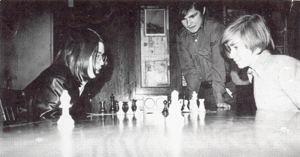
Dr. D. plays Jim Harmon as Ted Rafacz watches.
Anyway, I played chess on the chess team at Gage Park High School with Jim Harmon, Vito Vitkauskas, Dave Johnson, Bill Rozivics, Ted Rafacz, and Nick Polo. We were coached by Mr. Crowe, who also coached the hockey team. I suppose tenacity and mental toughness is required for both chess and hockey, so Mr. Crowe was the perfect coach for both sports. I think he liked the hockey team better, though. He used to brag about how smart the hockey team was. And he would tell us every time a hockey player got a college scholarship. The chess team was a bunch of slackers by comparison. One time, Mr. Crowe complained because two chess players were suspended and couldn’t play in an important chess match. Bill was suspended for low grades, even though he could recite the atomic chart from memory. And I was suspended for fighting. As a member of the chess team, bullies liked to pick on me, but I always fought back. I didn’t know you could get suspended for self-defense. To school officials, fighting was fighting and that warranted a suspension.
But back to the pizza. In order to inspire us to play better chess, Mr. Crowe promised to take us out for pizza every time we won a chess match. If we lost, we had to treat him to a steak dinner. We complained that this wasn’t fair because steak was more delicious and more expensive than pizza. But since he was the coach, we finally agreed with the arrangement reluctantly because he insisted that he was buying a meal for seven chess players while we were only treating one person.
I don’t remember how many matches we won or how many times Mr. Crowe treated us to pizza, but I do remember the one time we lost the match and we went to Chesden’s on Archer Avenue for Mr. Crowe’s steak dinner. We barely had enough to pay for his steak dinner, so we didn’t order pizza for ourselves. But Mr. Crowe was so kind as to keep asking the waitress to keep replenishing the bread baskets. All we ate was bread and water while Mr. Crowe savored a juicy t-bone steak. He insisted that he was teaching us to become better chess players!
The other memorable event of this day was the snowball fight afterward. As we were walking to Mr. Crowe’s car, we started throwing snowballs at each other. Since we were always very competitive, we chose up sides and began battling in earnest. Suddenly, Ted said that he had lost his school ring while throwing a snowball. We must have looked for that ring for about an hour in the snow, in the dark, before we finally found it.
So whenever I think of pizza, my thoughts turn to my days on the Gage Park Chess Team!
As a law-abiding citizen and a patriotic American, I would like to participate in our fight against terrorism. I agree that we must stop the terrorists at the border.
I have crossed the border a few times, so I have an idea that may help. Sometimes the customs agents ask you questions to see if you’re really an American citizen. I don’t think they care how you answer the questions, but rather, they’re just checking to see if you speak English. I heard a story of an American family who was trying reenter the United States, but all their luggage, credit cards, and passports were stolen from their hotel room. They reported the theft and then flew back home without passports. Customs refused to let them through without passports or some form of identification. The customs agent asked them a lot of questions. Finally, the mother lost it and shouted, “We’re Americans! We only speak English!” Well, that was enough for the agent to wave everyone through!
We have a cabinet in our UIC Spanish department where the exams are stored so all the instructors have access to them. The cabinet had a combination lock so we wouldn’t need to make thirty plus keys. Well, even with the combination, not everyone could open the cabinet. On occasion, I had to help other instructors open the combination lock. Then, I noticed a pattern. Only instructors who were foreign-born had trouble opening the lock.
Only Americans are familiar with combination locks. Combination locks are an American rite of passage. I was indoctrinated to the use of padlocks in high school. Combination locks were perfect for adolescents who lose or forget their key. Plus, the school authorities could open any combination lock in the school by looking up the combination or with a little key that fits into the back of the lock. Everyone knew how to open a combination lock, or they would learn quickly enough out of necessity. Turn the dial twice to the right until you reach the first number. Then turn the dial to the left, passing the second number once. Then to the right to the last number. It was that easy! After a while, I would forget the actual combination numbers. I would spin the dial absent-mindedly and the lock would mysteriously open. The locks created the illusion that your property was safe. All those combination locks did was keep the honest people honest.
So back to my fight against terrorism. One of the tests to test for citizenship and reentry to the U.S., in addition to all the previous ones that have been proven to be effective, would be to hand a combination lock to the person requesting to enter the U.S. Tell them the combination: 27 – 32 – 15. If they can’t open the lock, well, well, well! They will require more scrutiny! This will not pick out every terrorist, but it’s a step in the right direction. Don’t be surprised if terrorist camps begin offering training workshops on how to operate combination locks to circumvent the new security measures. But I’m just trying to do my part.










 Chicago USA