The Clout Club


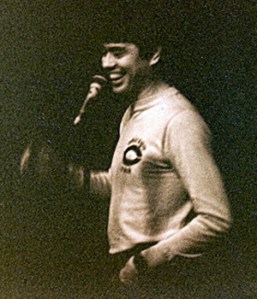
Dr. D. performing standup comedy.

One of the comedy clubs that I remember fondly is The Clout Club. I performed there in late 1986 and early 1987. It was in the back of a bar called the Lounge Axe across the street from the Biograph Theater on north Lincoln Avenue. I went to perform there for the open mic, and I got to know the manager quite well after a few weeks. His name was Jim McManus, but I’m not so sure now. My friend Vito wrote me a joke that I always used there: “I once broke my arm in three places. Halsted, Lincoln, and Fullerton.” Sometimes it would get laughs and sometimes the audience would just stare at me with their mouths hanging wide open, leaving me to wonder why I wanted to be a standup comedian in the first place.

One day, the manager brought in Jim Wiggins who was a TV comedy writer. He had the bright idea to do political humor about the Chicago political scene since the mayoral election was coming up in February of 1987. And thus, The Clout Club was born.

I was lucky enough to be part of it after a few short months of being a comedian. Eventually, I was the emcee for the club. The highlight of my career was when CBS News came to cover one of our shows because it was right before the mayoral primary. I performed my standup act and got big laughs. I was even recorded by the camera for the sake of posterity during my whole performance! Jim Wiggins, Aaron Freeman, Bob Odenkirk, and Bill Gorgo also performed. Many others, Judy Tenuta, Kevin Lampe, Tom Johnson, and Bob Harris also performed back then. The Clout Club soon became the mayoral campaign headquarters for Don Haider on election night of February 1987. I was excited to be part of the entire process. During one performance, Judy Tenuta had Don Haider go up on stage with her. She told him to raise his hands, to put them down, to jump up and down. He did everything she commanded. Finally, she said, “You’re going to make a fine leader of men!”

I remember that Spike Manton was also at the club at the time. He was using his real name Kevin Manton at the time. He told me he was thinking of changing his name to Spike Manton. I told him, “Don’t do it! I don’t think people will like it.” I lost track of him for a while. So, imagine my surprise when I started hearing him introduced on the radio as Spike Manton! I am always amazed at how wrong I can sometimes be about certain things.

Dr. D.’s business card.

Working at The Clout Club was the highlight of my standup comedy career. That eventually led to my only cable TV performance that was forgotten by everyone except me. Sometimes when I recall that epoch of my life, I want to return to the stage. But then I come to my senses.
DDR

Tortillas


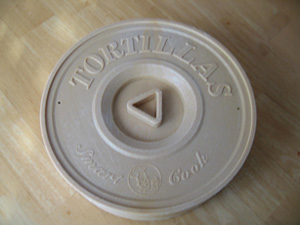
Ancient tortillas in a modern tortilla warmer.

A Mexican meal without tortillas is not really a Mexican meal. You can mix and match different entrees, but you always need tortillas with every meal. Tortillas have been around since Aztec times and are the equivalent of bread in many cultures. The tortilla, tlaxcalli to the Aztecs, is flat, round, made from corn, and may serve as a plate or an eating utensil such as a fork or spoon. When the Spaniards first encountered them, they called it a tortilla because it was circular like their Spanish dish of the same name.

Tortillas have always been part of my life. My father could eat a bowl of soup using only corn tortillas! My abuelita and mother were always heating up tortillas at the stove for every meal. They even made their own. They would use a rolling-pin to flatten the masa out, or in case of an emergency, a Coke bottle. My mother once bought an aluminum contraption that flattened the masa into a tortilla, but everyone agreed that they didn’t taste the same.

When we went to Mexico, I used to like going to the Tortillería to buy tortillas. They had a giant machine that would just make hundreds of hot tortillas for the customers waiting in line. You didn’t need directions to find the Tortillería because you would find it by following your nose. I would always eat at least one or two before I took the rest home.

Tortillas were also good for an after-school snack. I’d sometimes come home and heat up some tortillas on the stove and eat them with butter. I rolled them up very tightly like a flauta. Sometimes I would eat them with just salt inside. Sometimes I would just heat them up and eat them plain. I really loved tortillas. When we kept the tortillas too long and they got hard, my mother would fry them and use them to make tostadas or chilaquiles. No tortilla was ever wasted in our home.

Occasionally, we ate flour tortillas, tortillas de harina, but they were always store-bought. We just preferred the taste of corn tortillas. Mexican restaurants use giant flour tortillas to make burritos. Other restaurants use them to make chicken wraps, where the “wrap” is actually a flour tortilla. Tortillas also evolved into the tortilla chips in Mexican restaurants, Frito’s corn chips, Tostitos, Doritos, thanks in no small part to capitalism.

I still have a comal to heat up my tortillas. Occasionally, I’ll eat them with cheddar cheese inside. Or I’ll eat them plain when I feel like reminiscing. But I definitely eat them when I make huevos con chorizo. I always keep a dozen corn tortillas in the freezer, so I’ll have them whenever I crave them. They keep very well in the freezer and thaw out quickly in the microwave before I heat them up on my comal.

I can’t imagine life without tortillas!

DDR

Learning English


Holy Cross School

Since my parents came from Mexico, Spanish was my first language at home, and we never spoke English. When I started kindergarten at Holy Cross School, I didn’t know any English. So, when Sister Mary Joseph talked, I did what the other kids did. I sat next to Bridget, the smartest and prettiest girl in the kindergarten. I didn’t understand Sister Joseph’s instructions because she spoke English, so I watched Bridget’s every movement. When Bridget took out her crayons, I took out my crayons. When Bridget took a nap, I took a nap. Kindergarten was not that complicated. When Bridget got up and got in line, I got up and got in line. But I got in trouble. Sister Joseph walked me back to my desk. I noticed that the entire kindergarten class was laughing. I had followed Bridget to get in line to go the girls’ bathroom!

I always had a problem learning English. I didn’t quite understand everything correctly. I liked standing outside the corner bar on my block. You see, they had a sign that read, “3 IDs required. No minors allowed.” I was always waiting to see these miners wearing helmets with lights on top to come to the bar. And then they’d get really mad because they weren’t allowed in the bar and start a fight with the bouncer because he wouldn’t let them in. But I never saw any miners try to get in. I guess that sign really worked.

DDR

Bridgeport


Bridgeport, Chicago, Illinois

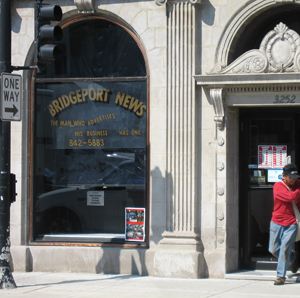
When I first moved to Bridgeport in 1986, I never thought of Bridgeport as a friendly neighborhood. In fact, as soon as I moved in, the Chicago White Sox announced that they were moving out.

Bridgeport is the home to five Chicago mayors. When I moved there, I found out why. When I went to change my address on my voter’s registration card, I found out I had been voting since my date of birth. I had been living on an empty lot.

In Bridgeport, if you didn’t vote a certain way, they did things to you. I didn’t vote the straight Democratic ticket, so they put a parking meter in front of my house. So, I had three hundred tickets. But I didn’t pay them. They put a Denver Boot on my car. It increased the value of my car. There was a bar around the corner that had an icon of the late Mayor Richard J. Daley. Richard Dah First. Every mayoral election, the icon sheds tears.

DDR

Good Night, Pat Brice


Just when I was seriously considering going back to standup comedy, I was suddenly reminded of why I quit standup comedy in the first place. I remember going to a different comedy club every night and driving all over Chicagoland. I performed at the following clubs at one time or another: Comedy Womb, The Clout Club, Sally’s Stage, Who’s On First, Comedy Cottage (Rosemont and Merrillville, Indiana), Chuckles, and a few other places whose names I no longer remember. I enjoyed performing when everything went well, but dreaded those nights when I bombed. I also enjoyed the socializing with the other comedians afterwards. However, as fun and attractive as the Bohemian lifestyle was to me when I was younger, I knew I was living an unhealthy life. I had to undergo a lot of stress for just modest success. Well, eventually I found a safer, healthier job as a Chicago police officer and left the standup comedy scene behind. Of course, I occasionally feel the urge to return to the stage and perform.

So the other day, I read about a young Chicago comedian who died: Patrick Healy Brice, 29, suddenly. He was about to have his own Internet radio program. But I can still recall him as a teenager raking leaves in Mayor Daley’s yard when he still lived in Bridgeport. Since I have lived most of my life in Chicago, I often find that I am somehow connected with a lot of other people in Chicago. Just by coincidence, I used to work with Pat’s father Bernie who was a police officer and bodyguard to the mayor. When Bernie read a Chicago Sun-Times profile of me, he started talking to me about my being a comedian. Somehow he was interested in this little tidbit of information about me.

Years later, Bernie told me proudly when his son started performing standup comedy. He told me all the clubs where his son was performing. When he went to see his son perform for the first time, his son told him, “Dad, I make a lot of jokes about my dad. But they’re not about you.” When Bernie retired from the police department, his son performed at his retirement party and he was very funny. He just kept working at comedy and kept getting better all the time. It’s a sad shame, but Good night, Pat Brice.

DDR