Even though Adrian and I lost touch after our eighth-grade graduation, I often remembered him whenever I went to the Museum of Science and Industry, the Chicago Loop, or walked past the Prudential Building. Because I fondly remembered him from time to time, I mentioned him in one of my blog entries, which is why I’m here today. His daughter Victoria searched for Adrian’s name on the internet and landed on one of my blog posts that mentioned Adrian Stanislovaitis. So, here I am. Thank you for giving me the opportunity to have one last encounter with Adrian and his loving family and friends.
Labas! I learned the Lithuanian greeting of “Labas!” from my Lithuanian friends in Chicago. I attended a Lithuanian church and school in Chicago’s Back of the Yards neighborhood, from kindergarten through eighth grade when I graduated.
I met Adrian at Holy Cross Grade School in the fourth grade. We were classmates from the fourth grade through the eighth grade. Unfortunately, our eighth-grade graduation in June of 1971 was the last time we saw each other.
We spent a lot of time together even though Adrian and his brother Renatas lived more than one mile away from the school. Most of the Holy Cross students lived only a few blocks away from the school. I lived two blocks away at 4405 S. Wood Street.
We spent a lot of time together during those years. We were also altar boys together. We had a lot in common. However, I was the oldest of six children, and I had never done much without at least one of my parents taking me somewhere. That all changed when I met Adrian. He was like the wiser older brother to me. Since he lived so far from the school, he was very independent and knew his way around Chicago.
In grade school, we had school days off for federal holidays like Columbus Day, George Washington’s Birthday, and Abraham Lincoln’s Birthday. When we were in the fifth grade, Adrian suggested that we go to downtown Chicago on our day off. I wondered who would take us there since our parents were working. Adrian said that we would take the bus downtown by ourselves! I had never heard of such a thing! Going downtown without an adult?! We were only twelve years old at the time.
Adrian met me at my house, and we took the Number 9 Ashland-Archer bus downtown. We went to the gift shops and ate at a restaurant downtown. The most memorable event for me involved going to the top of the Prudential Building downtown. We were truly impressed because it was the tallest building in Chicago at the time. Every time I go downtown and see the Prudential Building, I recall going up there with Adrian. Adrian always had great activity suggestions for us!
Once, we went to the Museum of Science and Industry by bus. He had all the logistics figured out. Since it was a school holiday, we had the day off from school. I said I couldn’t go because I had to watch my three younger brothers. Adrian said we could all go together. Since he lived on 55th and Wood Street, right off of Garfield Boulevard, he would walk to the corner of Ashland Avenue and Garfield Boulevard. My brothers and I would take the Ashland bus to Garfield Boulevard where we would transfer buses. We met Adrian on the corner and boarded the Garfield bus that took us directly to the museum. We spent the whole day there. And we spent all our money there, except for just enough bus fare for my brothers and me to be to take the Garfield bus to Wood Street where Adrian lived. And my brothers and I walked eleven blocks on Wood Street to get home. My brothers and I fondly remember that trip.
One day, Adrian was telling me how he saw a very funny movie over the weekend. He told me that on Friday and Saturday nights they showed comedies late at night. He told me I had to see The Marx Brothers in Duck Soup. He described the funny parts to me, and I was hooked. I would stay up late on weekends watching comedies. Duck Soup is still my favorite Marx Brothers movie.
Once when Adrian was at my house, my father took us to visit my uncle in Pilsen. My uncle was frying tortillas and baloney when we arrived. I was kind of embarrassed that Adrian had to see my father and uncle frying and eating baloney tacos. I couldn’t stand the smell of them. I only ate one bite of my baloney taco and said I didn’t like it. My father and uncle said they were really good. I told Adrian that he shouldn’t have any. But my father convinced him to try one. I was so embarrassed by my father and uncle offering a baloney taco to Adrian. But Adrian said the baloney taco was really good! In fact, he ate two more!
Adrian loved his planes, trains, and automobiles. When planes flew overhead, he would tell me everything he knew about the plane. He was able to identify every plane we saw and state the manufacturer of the plane and the model. I asked him why he knew so much about planes. He said that he would be a pilot someday. When I visited his house, he pulled out his Jane’s airplane books and showed me why he could recognize every plane in the sky.
I also learned about model trains from Adrian. Because of him, I started collecting N-gauge trains. Adrian also knew a lot about cars. If a car drove by us, he could tell me the year, make, and model of the car. He could identify a car just by looking at its taillights. He also like to build model cars. He got me to enter a hobby store contest for building car models.
Emily Jane Smith’s Bachelor of Arts diploma from DUH! University
Do you ever feel just plain stupid? Take this little quiz to test your lack of intelligence. What is the only university that has a motto in Pig Latin? DUH®! What is the only university to have a dodo for a mascot? DUH®! What is the only university that has no admission standards? DUH®! Where should you attend college? DUH®! That’s right, attend the Dummies’s’s [sic] Univercity [sic] Hinstitute™ [sic] (DUH®) because we have the best courses just for you. By the way, our motto is “Ummies‑day Ule‑ray, Ains‑bray Ool‑dray.”
Do you want to improve your appearance as an intelligent being without wasting hours on studying? The Scarecrow’s intelligence increased exponentially when the Wizard of Oz awarded him a college degree! Well, degrees are us! We shall award you a slick‑looking diploma, too. Learn how to assert yourself with authority by saying, “I didn’t know that!” with conviction. We will teach you to master the blank stare. Hey, we could write a book on what you don’t know.
The democratization of a university education is finally knocking on your door. In other words, it’s even available to you. Apply at the only university with guaranteed acceptance. DUH® accepts everyone.
Did you drop out of high school? Wow! You have that much education? You are eligible for immediate acceptance! Did you drop out before the third grade? We have a special remedial curriculum that will bring you up to speed within ten easy payments. You say you are completely illiterate? Not to worry! We have a special entrance exam just for you, administered to you by professional mimes. Does that sound easy enough? Yes, it is that easy! Kindergarten was never this easy. There are no college dropouts at DUH®. Tuition is not only affordable, but we also provide financial aid via a major credit card. However, you must be able to provide the card number and expiration date by email or telephone. Supplemental employment is available through the Crash Test Dummies Institute. No degrees will be conferred until all financial obligations are met. Once you enroll, you remain an active student via our mass mailings.
Tired of failing those easy 101 courses at a real university? Well, you are guaranteed to pass every one of our courses since all the courses are at the 000 level. They are not at all very demanding. There are no homework assignments. Attendance is optional. Best of all, you will not fail any exams since there are no exams to take.
If you think registration is easy, just wait until you see our college catalogue full of 000 level courses. Philosophy 000: The Complete Idiot’s Guide to Understanding the Meaning of Life. Computer Science 000: Artificial Intelligence for Dummies. Business 000: In Search of Mediocrity. English 000: The Complete First Lines of Shakespeare.
And in order for you to meet the foreign language requirement, we offer: Spanish 000 for estúpidos, German 000 for dummkopfs, Italian 000 for idiotas, Yiddish 000 for schlemiels, French 000 for American tourists, and English 000 for taxi drivers.
DUH® also offers a dumbed down version of classic literature. You will learn how to comment on the great works assertively. Rather than saying, “I didn’t like it,” you will catchy phrases to create the illusion of actually having read the work. Goldilocks and the Three Bears: “If it does not fit, you must acquit.” War and Peace: “Why can’t we all just get along?” Moby Dick: “See what happens when you don’t follow company policy!” The Rise and Fall of the Roman Empire: “It had its ups and downs.” The Scarlet Letter: “I did not have sexual relations with that woman.” Oedipus Rex: “He was just a mama’s boy. That’s because he had a face only a mother could love. But at least there was no love lost between mother and son. The family that plays together, stays together.” And coming soon from DUH® Press: Famous Dummies for Idiots, The Complete Idiot’s Guide to Dummies, and The Dumbing Down of America: Our Generation’s Legacy.
DUH® also has a perpetual Spring Break. That’s right no matter what the season, somewhere in the world has the perfect conditions for that wild, party hearty Spring Break that you missed because you never attended college. (Notice how we didn’t refer to it as Bacchanalian or Dionysian!) Have fun while you earn valuable credits that count toward graduation. For the real college graduate who has a real degree and had a real Spring Break, DUH® also offers a refresher Spring Break for zero credit hours available year-round.
So where will you go for that college degree you always wanted? DUH®! You may already be a graduate. Please bring a major credit card.
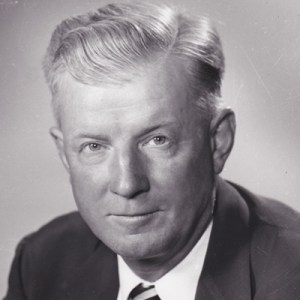
Ted Haydon has coached countless track and field athletes at the University of Chicago since 1950, including many Olympic athletes, average, and not-so-average runners. Ted was elected to the Track and Field Hall of Fame for his promotion of track and field through an open club and open meets, thanks partially to Hal Higdon’s urging as a graduate student.
I felt Ted was truly concerned about me, a runner whom he hardly knew except by sight. I later learned that he took personal interest in everyone who ran for him. He coached me to new PR’s of various sorts. My favorite was my stand-up comedy performance at the annual University of Chicago Track Club Dinner in 1984, with George Young as the guest speaker.
Once on the way home from a track meet, a two-and-a-half-hour drive, someone in the van began telling jokes; Ted told a few himself. Then I told some. Everyone was surprised that the quiet guy around the track knew so many jokes. When they questioned me, I had to admit that I had read numerous joke books since I was in grade school. I also told them how I had performed stand-up comedy and would soon be appearing in a comedy revue.
At the next workout, I asked Ted what I should do.
“How about some stand-up comedy at the track club dinner this year?” he asked.
I wanted to turn him down, but a few months earlier I decided to accept every opportunity to perform standup comedy.
“How about if I do five to ten minutes of comedy?” I asked.
“But you have to tell jokes about track and field,” Ted said.
“Okay,” I said, trying to sound enthusiastic about the whole thing despite of not having a single track and field joke in my repertoire. “I’ll write something for the dinner.”
“Where have you performed before?” he asked.
“The Comedy Cottage, Comedy Womb, and Who’s on First.”
“I figure if I gave Dick Gregory a start,” he said, “I could help you out a little.”
I began telling members of the track club I would be performing for the dinner. Since it was only two weeks away, I felt nervous because I had no track and field jokes. I recruited Mark Wagner, the club clown who gave a humorous slide show at his house party, and his sidekick Chris Coley. Maybe they would help me write some running jokes. I thought of a few ideas I could develop, but somehow, they did not make me feel comfortable. I needed better material.
I told Pat Palmer, one of the track club members, that I would be performing at the track club dinner. He immediately began talking about Dick Gregory’s comedy debut at the dinner. “I was a freshman,” Pat said, “when I met him at the dinner in January of 1960. He was really funny. I had never heard of him before, but after that dinner he became famous.”
That was when I began to feel enormous pressure. When I performed in night clubs, I didn’t care if I bombed because I would never see the audience again anyway, but here I knew about half the audience. I never performed well before people who knew me. Was I ever nervous!
The reason I told everyone I would perform for the dinner was to put pressure on myself in order to accomplish what I had set out to do. Once enough people knew about my plans, I had to perform. Many club members were discovering for the first time my background in comedy. In real life, I don’t come across as a funny person. So, people are surprised when they learn that I’m a standup comedian.
Now I had one minor problem. I didn’t have any running jokes. Okay. One major problem. Comedians without jokes are not funny. I wouldn’t be the exception. Mentally, I began writing a running monologue for the track club dinner. When I told Mark Wagner and Chris Coley the next day, they were willing to help me write some jokes. I told them some ideas I had for jokes. Not only did they like them, but they guessed the punchline before I even said it. To jokes I had written! This would have upset other comedians, but they would be the perfect collaborators since we thought similarly. We agreed to meet the next Wednesday during a track meet. I worried that I did not see them at the workouts the next Monday or Tuesday. I wrote jokes in case I did not see them again before the dinner, which was only a week away now.
I had set a schedule for myself: the first week would be dedicated to writing material and the second week to rehearsing. So when I didn’t see my collaborators at the track, I thought I would get behind schedule.
In the meantime, I saw Ted every day. Whenever I asked him to tell me my workout, he would ask me how my comedy routine was coming along. I always told him I would be ready by the night of the dinner. I wondered if he sensed my insecurities. Ted had always seemed to know when I doubted myself. Once, he told me to run two quarters at my 800 pace, which I would race two days later. I asked how fast I should run.
“Run them under sixty seconds,” Ted said.
My PR for the 400 was sixty-one, so I didn’t think I could do his workout. He did not pressure me to try, although he did encourage me to do them. I wouldn’t have tried without his urging. I ran the first one in 58.2 and the second in 60.0. We were both pleased by the workout. But I was more surprised than pleased!
Prior to the track club dinner, Ted never stopped telling jokes or playfully insulting his runners, a favorite habit of his. I always enjoyed the good laughs Ted provided.
The Wednesday night I was meeting with my collaborators finally arrived. I was relieved to see Mark and Chris at the track meet. Since I had last talked to them, I had written five minutes of material, all of it untested on stage. There are no night clubs where comedians can try out running humor. We were to write during the meet, but we were too nervous because we were both racing. Following Ted’s workouts, I ran a PR of 2:02.8 in the 800. We both ran great races, so we thought we’d celebrate by having a beer at the Woodlawn Tap, otherwise known as Jimmy’s, the infamous bar on the corner of 1172 East 55th Street in Hyde Park.
I hardly considered the conditions conducive to creative thinking, but we began our comedy writing session there anyway. I told him what jokes I had in mind and how I would like to present them. Mark liked the section I had written about Jarmila Kratochvilova. At least we were off to a great start. After I told him the jokes about Ted Haydon, which were actually putdowns on me, we wrote jokes about various members of the track club, although there was nothing too caustic. By the end of our session, including interruptions from friends who asked us what we were doing, we had doubled my material. I really liked the jokes by Mark and Chris. Now all I had to do was polish them and rehearse them. Listening to some of my material, my friend Jim Harmon reworded some jokes which were not sharp enough. I trusted his judgment because he had performed standup comedy for about a year.
I rehearsed the routine, but did not memorize the jokes until four days before the dinner; I was afraid I might forget my lines by the night of the dinner·. As I rehearsed, flashbacks of bombing on stage kept haunting me. Determined to succeed, I worked at my routine that had added up to ten minutes.
Two days before the dinner, Ted asked me if my comedy routine was prepared, I told him I was ready to perform. He asked me in the same tone he used to ask his runners if they were ready to race. He told me a few quick jokes that made me laugh.
I was nervous the night of the dinner. The sight of Hal Higdon at the bar made me jittery even though the story about my bombing would not appear in The Runner. As I drank a beer to relax my nerves, Ted approached me.
“Are you ready?” he asked.
“Yes,” I said. “When will I go on?”
“Right after the jugglers, Zeus Preckwinkle and Mike Nair,” he said. “I’ve billed you as Third City Comedy.”
I laughed. Third City Comedy struck me as funny. I hoped to think of a funny response when I was introduced. Mark, my collaborator, was nervous for me. He could not think of a funny response to the introduction.
I was glad Ted did not wish good luck in the traditional show biz way by saying, “Break a leg.” He might make a habit of telling me that before every race.
The jugglers were great. I was apprehensive when I heard my name. Walking to the podium, I realized this was the most prepared I had ever been for a comedy performance. There were no excuses for bombing tonight.
I felt like a fool when I ad libbed something in response to the intro and no one responded. I stuttered my opening lines. The audience, my largest ever to that point in my comedy career, stared at me expectantly. A joke in which I complimented Carl Lewis only received a chuckle. I thought I was in trouble when I stuttered into the Jarmila Kratochvilova jokes, but then I pronounced her name correctly. I was shocked! I got a few laughs as I worked my way toward the punchline. After delivering the line that should get the Big Laugh, there was a slight pause. A slight pause that cause me to panic inside. A pause only a comedian would notice. But then I got the Big Laugh. Getting the Big Laugh rattled me a little. Looking at the audience I saw everyone laughing very loudly, too. I tried to spot Hal Higdon, but I could not find him in the audience. In the meantime, everyone applauded. I had never been applauded before. “What do I do now?” I asked myself. I looked back at the audience as if I were used to getting this sort of response. I stopped stuttering from that point on.
I continued to get laughter and applause. When I reached the Ted Haydon section of jokes, I looked at him to study his reactions. I planned to move on to another topic if Ted looked offended. I assumed he would not mind.
“I remember when I first met Ted Haydon,” I said. “He asked me what high school I ran for. I was insulted because at that time I was twenty-six. Laughter. “I said, ‘I’m not in high school.’”
“So then Ted said, ‘What high school will you run for?’ Laughter and applause.
“I wanted to join the track club and Ted said, ‘Membership is a state of mind.’ Laughter. When I told him how fast I ran…” Laughter. He said, ‘In that case, membership is a state of mind. And a small contribution.” Laughter and applause.
Ted seemed pleased. These were the jokes I had written. I received a better response from Mark’s jokes about Ted. I continued until I finally ran out of material about fifteen minutes later. The laughter and applause had expanded my routine in a good way. I returned to my seat and chugged a beer quickly, feeling relieved now that the pressure was off me. The podium remained empty for about two minutes–or at least it felt that long. Finally, Ted approached the microphone and said, “Dave’s a tough act to follow!”
I could not help feeling proud of myself. After the dinner, people complimented me on my performance. Many were surprised to discover I was a comedian. Some of the older club members compared me with Dick Gregory. I was flattered to hear that some liked me better. To think I might not have performed this well had it not been for Ted’s encouragement, the same encouragement that allowed me to run a sub-five-minute mile.
I shook Ted’s hand. “Thanks for letting me perform,” I said.
“You’re very funny,” Ted said.
Ted Haydon sure knows how to make his runners perform up to their potentials on and off the track.
You’re probably wondering why I’m not wearing glasses anymore. I recently had eye surgery. I have worn eyeglasses for most of my life. And now people don’t recognize me without my glasses. Lately, people have walked right past me without recognizing me. I finally understand why no one knew Clark Kent was Superman. Now I get it!
In grade school, I was nearsighted, so I had to sit in the front row so I could read the blackboard. Finally, the teacher told my parents that I had to go to an optometrist and get my eyes examined. I remember when I got my first pair of glasses. I was amazed at all the things that I couldn’t see before. I was like, “Wow! Corduroy has lines! Trees have leaves! The Chicago skyline is polluted!”
During my last eye exam, my optometrist told me that I had cataracts. He had seen them developing in my previous eye exams. He explained that with age, the lens beneath the cornea begins to cloud up, and that I would need cataract surgery to improve my vision. On a positive note, I have lived long enough to need cataract surgery.! And I have health insurance to pay for the treatment!
I watched an online video to see the procedure. Needless to say, the video simultaneously reassured me and frightened me.
At first, I was afraid to get cataract surgery. But I felt much better after meeting the ophthalmologist. During the evaluation, I was evaluating the doctor. I kept watching his hands to see if they were steady. Because he was going to perform microsurgery on my eyes. He gave me a firm handshake. Okay, so far, so good. And he wrote all his notes with a very steady hand. I could even read his handwriting. I felt much better. And he didn’t wear glasses.
Now, I have twenty-twenty vision for distance. Which is great. But now I need glasses to read.
Right after the surgery, I couldn’t read anything up close. So, I borrowed my wife’s glasses to read. They were great as long as I was in the privacy of my own home. My wife’s reading glasses are those cat lady glasses, with a cheetah pattern. They were great for reading, but then I forgot to turn off the camera during a Zoom meeting. I was really embarrassed, but I have to admit that I did look fabulous!
So, I bought these cheap reading glasses from Walgreens that I wore until I got my new prescription.
Ideally, I enjoy running one, and only, one lap. However, running is seldom ideal and occasionally we must run more than one lap. Last summer, I found my ideal running course, ideal for me, anyway. About nine miles with gently rolling hills and enough variety in scenery to keep my run interesting. I saw and greeted enough runners on this course to make me feel like I was running with someone else. This course was perfect for me! Especially since it was only one lap long!
However, during the fall, the days became shorter, and darkness covered the course much earlier than I would have liked. The first few runs of shortened daylight, I ended my run in darkness. When I lived in Chicago, this wasn’t a problem because of the streetlights. However, in Glendale Heights and Glen Ellyn, there were no streetlights anywhere except downtown. I was running in the dark. And I could barely see where I was running. I was also blinded by the headlights of oncoming cars. I had to adjust my starting time so I could finish my run by dusk when I could still see.
Then in addition to the shortened days, I also had to contend with one of the wintriest winters of my life. The first snowfall, I was able to run my usual course as the snow was fluffy and fun to run in. However, as the snow melted and refroze into ice, it became a slippery hazard, especially on the downhills. The first time I encountered an icy downhill, I re-pulled my already pulled left hamstring. I had only run about a quarter mile, but I had to limp back home at a slow trot, even slower than my already slow pace. I was able to run my course a few more times until repeated snowstorms struck. Not only was my running course dark by 4:30 P.M., but it was also at least ankle-deep in snow in ice in most places. Not everyone shoveled their sidewalks.
I was just getting into the groove of running, so I didn’t want to slow down during the winter. Before I started running this nine-mile course, I was running laps around our housing complex. Each lap was about 0.9 of a mile. I ran five laps as many times per week as my body would allow for 4.5 miles. I’m quite sure the lap was 0.9 of a mile because I measured it with my iPhone 2, my car, my Samsung Galaxy Note 2, and my car again just to confirm the distance. So, I was sure I was running 0.9 of a mile with each lap. And the reason I was running laps in our complex was that I lacked the self-confidence to go out and run on an out-and-back course. I was afraid I wouldn’t have the endurance to finish, and I would be stranded miles from home.
Anyway, once the snow and ice accumulated on my running course, I began running laps again, out of necessity. What I hate about running laps is that they’re repetitive, but because they’re repetitive, I also find comfort in running laps. Despite the snow and ice outside of our complex, snowplows cleared the street of our housing complex, and the street was salted so I had a good running surface on most days. I ran ten laps on most days last winter. I didn’t run on the coldest day of the year because my wife was told she didn’t have to go to work because of the extreme cold and so she was home to forbid me from exiting our front door. Otherwise, I would have run that day, too. Don’t get me wrong, but I enjoyed not having to brave the elements that day. Thank you, wife! Especially, for the hot chocolate you made me that day.
One thing I learned from running laps is that life is also about running laps. We do many things repeatedly in life and running. In running, it’s left foot, right foot, repeat. And I keep repeating putting one foot in front of the other until I finish running my desired distance. Or, until I can’t run any longer, for whatever reason, extreme weather, or lack of desire or endurance. In life, we repeat many things such as education: grade school, high school, college, graduate school. I have run many laps in my life, in many different areas, but it’s all repetition. I choose to enjoy the repetition of these laps because of the comfort they provide. I enjoy the comfort of life’s laps.
However, when I run, I still prefer to run only one lap!