I have been watching Woody Allen movies for a long time. Once, in the 1970s, we–Vito, Jim, and I–saw four Woody Allen movies for a dollar (Only on the north side!) I remember his earlier, funnier movies, to quote Stardust Memories.
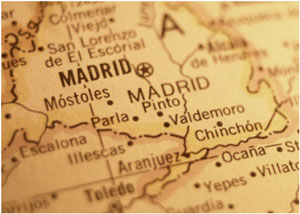
Later, when we lost track of each other, Jim would call us up so we could go out to see his latest Woody Allen movie. Of course, no movie after Annie Hall was as funny for me as his earlier efforts. So, today, I saw Vicky Cristina Barcelona. And it was okay. Certainly not as funny as Annie Hall. I did enjoy the shots of Spain in Barcelona and Oviedo. The movie reminded me of my trip to Spain. I haven’t actually been to Spain, but when I do go, I plan on visiting Barcelona where I know a couple of people. I really will go to Spain someday!
But back to the movie. The plot was easily identifiable as a Woody Allen product of obsessive attention to the minutiae of life. In his typical fashion, he exaggerates details that most normal and sane human beings would overlook. In one scene, Scarlett Johansson apologizes profusely, and I couldn’t help but picture Woody Allen directing her into acting as she did–that is, a Woody Allenesque neurotic tirade complete with the exaggerated hand gestures.
Of course, if Woody looked anything like Scarlett, he would have had a completely different career. The one thing that really bothered me about the movie was the narrator. If you’ve ever taken a writing class, you know that one thing that is drilled into head constantly: Show, don’t tell! Well, the narrator constantly explains the actions that we see on the screen, rather than letting us think about them and contemplate what the characters are thinking about their dilemma.
Okay, the actors were great in this movie, but I guess I was mainly focusing on Woody Allen as the writer and director. For some reason I’m always attracted to his movies even though I don’t think they’re very good. But I will immediately go see the next one that comes out.
My twin sons and I have been talking a lot about movies lately even though they’re only twelve. They’re curious about my favorite movies and about classic movies in general. We try to watch some classic films together occasionally. The last one we saw was Pride of the Yankees, the Lou Gehrig story with Gary Cooper and Babe Ruth himself. I picked this movie for my sons since they love baseball, and it was one of my favorite movies when I was a kid. Well, we all loved the movie. It was much better than I remembered it.
Last summer, we watched all the Star Wars movies together, one per day, and we really enjoyed them. They wanted to know which one was my favorite. I told them that Episode IV was my favorite because it was the first one I saw. I still remember all the excitement and the hype that preceded the premier. I saw it at the show with my friends Vito and Jim.
Of course, everyone was amazed by the special effects right from the beginning when the words floated in outer space across the silver screen. However, we were all dumbfounded to read, “Episode IV.” When I told my sons about this, they wanted to know why Star Wars didn’t begin with Episode I. Well, I explained my theory to them. Novels, epics, plays, and movies are always more interesting if they start in the middle of the action. If the Star Wars series had started with Episode I, Star Wars wouldn’t have been as popular. I told them how movies usually start in the middle of the story and then flashback to fill in the missing information. This is called starting the story in media res, in the middle of things, and it creates suspense and keeps the viewer watching the movie with great interest. Aristotle explained all this about two-thousand years ago in Poetics, but I didn’t tell that to my sons so I wouldn’t lose their interest. But I did get my point across to them. I was so proud that they understood my point. So now we analyze movies together.
They want to see the new Chronicles of Narnia movie, but I hadn’t see the first one yet. Not that I would deprive them of a movie even if I didn’t see the first one, but I would prefer to see the first one before seeing the sequel. So we were at home, watching the DVD of the first movie. Both Adam and Alex loved watching the movie and seemed to know the plot from watching it so much. Adam had to read the book for school, so he’s really into the movie. So, we were watching it, and my sons are concerned that I didn’t get the movie. They asked me if I wanted them to explain it to me. What I didn’t know about the plot was the intentional effect of the director. But my sons insisted that they explain the plot to me, and they were so excited that they understood the movie better than me that I paused the movie and listened to their explanation. (Spoiler alert! There is no plot spoiling here in case you haven’t seen the movie yet. I’m always impressed when someone writes “Spoilier Alert” when describing movies.) They explained the prophecy to me that would eventually be revealed at the correct time in the movie. But I loved hearing their explanation of the movie. Now, I can’t wait to see the sequel!
Labas. That’s right. Labas. To all my Lithuanian friends: Labas! In fact, I’d like to greet everyone reading my blog: Labas! That’s hello in Lithuanian. My Lithuanian friend Vito taught me that word because he always insisted that we greet each other by saying Labas. Now, I always greet Lithuanians with Labas and they always smile. I especially love to greet them with Labas especially if they didn’t think I knew they were Lithuanians. I’m not sure why, but they’re always thrilled to hear me say Labas. So, to all my Lithuanian readers: Labas! I guess sometimes I go on and on, don’t I? Well, my friend Vito taught me another Lithuanian word: tylėk. Sometimes we would go to the show, I would just keep on talking even after the movie started. He would keep telling me tylėk until I finally shut up. That’s right, tylėk means shut up in Lithuanian. But I never did. And I never will.
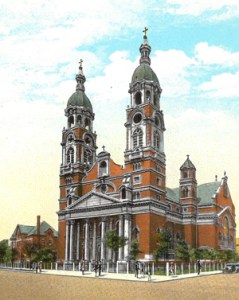
For as long as I can remember, I have always lived near Lithuanians in Chicago. In Back of the Yards, Holy Cross was the Lithuanian church I attended. At Holy Cross School, the nuns always praised The Jungle by Upton Sinclair because the protagonist was Lithuanian, and the novel was set in Back of the Yards. When we moved to Marquette Park, 2509 W. Marquette Road, many Lithuanians lived there, and they even had a street named Lithuanian Plaza Court. In fact, that neighborhood was the unofficial capital of Lithuania during the Soviet era. Maria High School, run by Lithuanian nuns, was at Marquette Road and California Avenue. Right on the same campus was the retirement convent for the Sisters of Saint Casimir at 2601 W. Marquette Road. The Lithuanians also had their own Holy Cross Hospital at California Avenue and Lithuanian Plaza Court. I met my friend Vito when I lived in Marquette Park. Vito and I used to eat at the Lithuanian McDonald’s at 68th and Pulaski. I don’t know if it was actually Lithuanian, but Vito told me that the tiles on the wall were typical Lithuanian colors, so it became a Lithuanian McDonald’s in my mind. When I moved to Bridgeport, there weren’t that many Lithuanians there anymore, but they did have a street named Lituanica Avenue. My favorite restaurant in Bridgeport was a Lithuanian restaurant named Healthy Foods at 3236 S. Halsted Street. When I saw the movie Chariots of Fire, I was thrilled to learn that the family of Harold Abrams were Lithuanian Jews.
When I was a student at Holy Cross, my best friend was Patrick McDonald, but when he moved away, I became friends with Adrian Stanislovaitis and Anthony Kivenas, both Lithuanians. Whenever I was with them, we spoke English, but when they were with their parents, they spoke Lithuanian. I never understood what they said, and it didn’t bother me at all. However, I never even learned one Lithuanian word from them. And when they came to my house, I spoke Spanish with my parents and grandmother. I envied Adrian and Anthony because they got to go to Lithuanian classes on Saturday morning. I wanted to go with them. I wished Mexicans would have Spanish classes for Mexicans. Anyway, Adrian and I spent a lot of time together. For school holidays, we used to take the bus downtown and just wander around, but he showed me a few points of interest, such as the Prudential Building because it used to be Chicago’s tallest skyscraper.
When we moved to Marquette Park, we met more Lithuanians. Marquette Park has a monument for Lithuanian aviators Captain Steponas Darius and Lieutenant Stasys Girenas. This is where I met Vito and other Lithuanians. I went to Lithuanian restaurants and bars with Vito. At one bar on Lithuanian Plaza Court, it might have been Knight’s Inn, we met a Lithuanian improv group that was named Second Village, which is Antras Kaimas in Lithuanian. It was inspired by the name of Second City. We talked to them for a while, and Jim, Vito, and I told them that we performed standup comedy. We ended up making a little skit/song/dance for them sung to the tune of “Skip to My Lou.” I still remember it, but don’t know how to spell it because it was in Lithuanian. Vito wrote most of the song. My contribution to the song? Labas and tylėk! No surprise there!
We once went to a Lithuanian festival on Western Boulevard near the Lithuanian V.F.W. Hall, which if I remember correctly was named after Darius and Girenas. Anyway, there were all kinds of Lithuanian food. One vender was selling empanadas, which really surprised me because as far as I knew, empanadas were Mexican food. The Lithuanian cook tells me that empanadas were invented by Lithuanians. He could tell that I didn’t believe him. He pressed on with his explanation and tried to convince me that I really didn’t know Mexican food. He was so convincing that I almost believed him. Almost, but not quite. Finally, he told me that he learned to make empanadas in Argentina. During WWII, his family went to Argentina before they came to America.
That’s how I think of Lithuanians. They’re always ready to play a friendly practical joke on you. Vito was always the joker and had a great sense of humor that not everybody got. I could tell he got it from his father. Once I went to Vito’s house so we could go to the show. His father answered the door and I asked for Vito. He knew very well that I was asking for his son, Vito, my friend, but he said, “You’re talking to him.” I said, “No, Vito Junior.” He said, “I am Vito Junior!” This went on much longer than was comfortable for me, but Vito’s father was really enjoying this. Finally, he said, “Vito’s not home.” Why didn’t he just tell me that in the first place? Well, he wanted to play a joke on me. I laugh now that I think of it. But that day I learned that both Vito’s father and grandfather were named Vito. What really made me uncomfortable about them was how they greeted each other and how they said good-bye. Vito would always kiss his father on the lips. Talk about culture shock! For a while, Vito lived with his grandfather Vito. Before we would go out, Vito would kiss his grandfather on the lips before he went out. It wasn’t as shocking since I had finally gotten used to him kissing his father. But one day we were talking, and Vito told me that his father was adopted. Suddenly, it hit me. “Vito, you kiss your grandfather on the lips, and he’s not even related to you!” He thought nothing of it. I still can’t get over it!
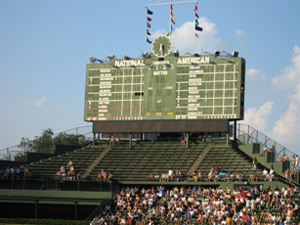
When you learn a foreign language, you can’t help but learn about another culture and its customs. I often remember Vito’s friend Jean-Claude von Bostal who came to visit Vito in Chicago from Belgium. Everything was so different for him. Vito asked me what we could do with Jean-Claude that would be very American. I suggested going to a baseball game. That’s about as American as you can get, if you overlook the fact that most of the players are from Latin America. So we went to Wrigley Field to see the Cubs play. It was a warm day, so everyone dressed in summer clothes.
A woman seated near us wore a tank top. When one of the Cubs hit a home run, she clapped with her hands over her head, revealing her shaved armpits. We couldn’t help but notice her because she was also whooping it up. Jean-Claude immediately noticed her shaved armpits and said, “That’s stupid!” Vito corrected him, “You mean that’s different.” Well, I know for a fact that women don’t shave their armpits in Europe. So I said, “Vito, I think he really means that it’s stupid.” Jean-Claude nodded and said, “Why do they shave their armpits?” Well, you see, there are always cultural differences even when you don’t think of them. They abound everywhere.
Physical distance between people is a common cultural topic of many Spanish textbooks. When you learn a foreign language, you also learn about the culture. The two are inseparable. When associating with someone from a Spanish-speaking country, they usually get very close to you when they speak. They are more likely to greet you by shaking your hand and/or giving you a hug and a kiss. This is something that you’ll have to learn to accept. This happens if you’re in the U.S. or in Mexico.
In the U.S. we’re accustomed to having plenty of distance between us when we speak to someone. And we hardly ever hug someone unless they’re a family member. For me, you have to be a family member on speaking terms. When I was in Mexico, I was hugging and kissing total strangers just because they were close friends to my cousin.
I’ll be perfectly honest. With certain persons of the female persuasion, I squeezed them a little harder with the hug and held the kiss a little longer than necessary. This is something I would never do here in America. I generally don’t like people touching me! Period.
In Mexico, a hug between two male friends is quite common, but in America I never even think about hugging another man. Once, I hadn’t seen a friend for about five years. When I saw him, he immediately ran to me and gave me this big overly friendly bear hug. I said, “Whoa! I wasn’t ready for that.” I needed some distance between us.
Since I grew up on the south side of Chicago, I’m uncomfortable if someone gets too close to me when speaking. I like to have ample distance between my interlocutor and me. I like to be beyond striking distance. At UIC parties, I noticed that the Spaniards used to like to talk to me by putting their face about two inches away from mine and I felt extremely uncomfortable! I usually keep backing up until I bump into the wall and have to stop back pedaling. But then I discovered that if I held my plate of food about six inches in front of me, that offered me a buffer zone that kept me well beyond the striking distance of fists and/or food ejected during conversation. Spaniards like to speak to you face to face, but they respect food and will maintain a safe distance from it in order not to knock it over.
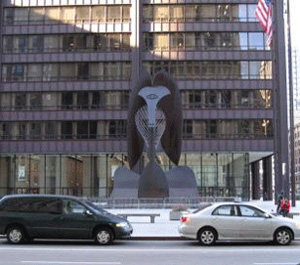
Picasso Sculpture, Daley Center, Chicago, Illinois
Today, I read the The Chicago Way by Tom McNamee in the Chicago Sun-Times in which he talks about jokes that work only in Chicago. Well, I would like to share some of those jokes with you, my fellow Chicagoans. He starts out with “Noel, Noel … So I took the bus.” I remember hearing a different version of this joke at Holy Cross School told by a nun: “Some Christmas carolers are under the El tracks downtown singing, “Noel, Noel …” Along comes a drunk and tells them, “Then take a bus!”
My friend Vito Vitkauskas wrote this Chicago joke that I used to use in my comedy routine: I once broke my arm in three places. Halsted, Lincoln, and Fullerton.
Ken Green, in today’s Sun-Times, wrote two funny haikus, or as he calls them, Chi-kus:
The CTA bus a very rare animal moves in packs of three
In my house we vote Even my uncle votes May he rest in peace
Here are some of the other jokes printed in the column:
How many Chicagoans does it take to park a car? Seven. One behind the wheel and six to rearrange the kitchen chairs.
Why is Chicago known as the city that works? Because whatever the problem–a parking ticket or a murder indictment–it can be fixed.
We all know why the chicken crossed the road, but why did the lady duck cross Walton Place? To get to the Drake.
I heard Mayor Daley has a plan to get crime off the streets. Yeah, he’s going to widen the sidewalks.


 Chicago USA