Joseph


2509 W. Marquette Road, Chicago, Illinois

My youngest brother Joseph’s name should have started with the letter D.

J should have been D. But he wasn’t. He was J. And for an incredibly good reason. My mother said so!

Well, I’ve already talked about my mother’s naming process in my previous blog entries. My parents had six children: David Diego, Daniel, Diego Gerardo, Dick Martin, Delia Guadalupe, and Joseph Luis. All of names started with D–except for Joseph (which starts with J and not D, as I’m sure you probably noticed. I have always admired the intelligence of my readers!).

The other notable oddity in the naming process is Daniel who has no middle name! I was less than two years old when Daniel was born, so I have no idea why he has no middle name. Were we too poor to afford a middle name for Daniel? Was my mother mad at my father for getting her pregnant again and so she denied my father Diego yet again the opportunity of having a son named Diego? I really don’t know because neither my father nor mother ever talked about how Daniel got his name. To this day, Daniel’s lack of a middle name remains one of the great mysteries of our family.

Before my youngest brother Joseph Luis was born, my parents were in the middle of a hostile separation and later a contentious divorce. How my mother got pregnant was a mystery to me even back then because I hardly ever saw them together for about a year. But somehow, she got pregnant. And my father was proud of the fact that he had gotten her pregnant.

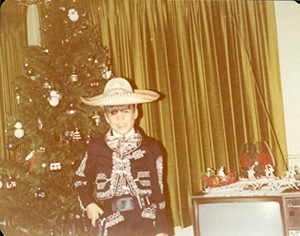
However, there was never any doubt that Joseph was my father’s son because when Joseph was older, many people thought he and I were twins. The resemblance was that strong. So how did he come to be named Joseph Luis? Well, he was born in August of 1968, days after our Uncle Joseph, my father’s much younger brother, died in Viet Nam.

I remember when my Uncle Placido called to say he had to visit us to tell us something particularly important. He came after my brothers and I were already in bed, so I knew he had something important to say. I listened from my bedroom, which was right next to the kitchen where they sat. I heard my Uncle Placido say that my Uncle Joseph had died in Viet Nam. I could hear both my mother and father crying. I cried, too, in my bedroom. So, my mother named my brother Joseph in his memory. That was actually an incredibly good reason not to follow the D rule in naming us.

Our Uncle Joseph was everyone’s favorite uncle. He loved playing with all his nephews and nieces. Everyone cried when he died. It was the longest funeral procession I had ever seen–and I lived by a funeral home, so I saw a lot of funeral processions!

My father was one of his pall bearers. The day after the funeral, my father couldn’t get up out of bed. He was paralyzed from the waist down. Whether his paralysis was physical or psychosomatic was never determined, not even by the doctor who came to our house to treat my father. After about a week, my father just got up out of bed and started walking again. He wanted to go to work again.
DDR

La llorona


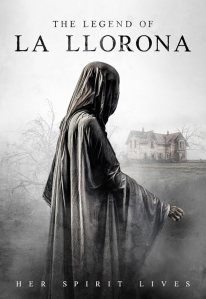
I couldn’t find a picture of la llorona

When I was a boy, one of the scariest people of my life was la llorona. La llorona had no children of her own because she had killed them. So she wandered around after her death looking for her children so she could rest in peace.

I never actually met her, or even saw her, but my mother always told me that la llorona was always looking for me or any boy or girl who didn’t obey their parents. She usually came out after dark looking for children who didn’t listen to their parents and stayed out too long into the night. If la llorona saw us, she would snatch us up thinking we were her children. Apparently she didn’t have very good eyesight.

Who was she? I don’t know since I never actually saw her, although I could always feel her presence. No matter where I went, in Chicago or México, la llorona was always nearby. I know this for a fact because my mother always reminded me.

When I was about six, my mother told me how she actually saw la llorona in Huatusco, Veracruz. When my mother was a girl, her mother told her to go to bed at sunset, which she did. But when my mother thought her mother was asleep, she sneaked out of the house through a window and she went to visit her friend who also went out her window to meet my mother.

They were wandering the streets of Huatusco–there were only two back then–at night and no one was out. That’s because all good boys and girls were home in bed sleeping. Suddenly, they felt a cold breeze and saw an old woman walking toward them. When they finally realized it was la llorona, it was too late to run away. La llorona grabbed my mother and her friend by the wrist and she was taking them away. Somehow, my mother managed to escape. But her friend wasn’t so lucky. She was never seen nor heard from again. My mother ran home and immediately went to bed, but she couldn’t sleep because of the fright she had just suffered.

The next day, the whole town is wondering what had happened to my mother’s friend. Finally, my mother speaks up even though she knows she’ll get in trouble. Well, everyone in the town was satisfied with my mother’s explanation and her mother didn’t punish her because she had been punished enough because she actually felt the cold hand of la llorona.

What about the missing girl? Well, she had it coming to her because she had disobeyed her parents. All the parents in the town made sure that their children knew about what la llorona had done. So, whenever I wanted to stay out late and my mother wanted to go home, she would remind me of la  llorona and how she would snatch me up.

DDR

My mother’s generosity


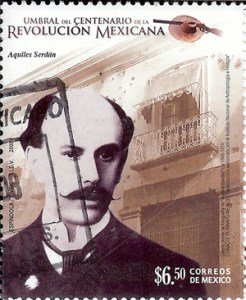
Mexican stamp

My mother always loved to help everyone in any way possible. If she met a family that was down on their luck, she would help them, even though we were just slightly better off than them.

Once when I came home after school, I went to my room to read my comic books and–they were all gone! I asked my mother where they were, and she said she had given them away. She said, “I didn’t think you wanted them.” Of course, I wanted them, but my mother had helped a family and their boys needed something to read! But why my comic books?

When we went to Mexico one winter, we had our fun there for two months. But then, as we were leaving, my mother, with great ceremony, made us give all our clothes that we had brought with us to our cousins.

We went back to Chicago with little more than the clothes we were wearing. I had to give my favorite boots to my cousin. You know the kind: yellow leather high-top construction boots. I argued with my mother the day before we left about this, and I refused to give away my favorite boots. As we were putting our luggage in the car to go to the train station, my mother told me to give my boots to my cousin. Since all the family was standing there giving us a warm sendoff, I didn’t argue. I gave my boots to her, and I hugged her warmly and we kissed each other before we left.

When I went to Mexico last December, she reminded me about the boots that I had all but forgotten. She told me how much she enjoyed wearing them and how she always thought of us because she wore my boots. Only then, did I feel happy about giving my boots to her.

DDR

Patrick McDonnell


Happy Birthday to me! Happy Birthday to me!
Patrick, Adam Méndez, Delia, David, and Rick at my twelfth birthday party.

Patrick McDonnell was my best friend in the second, third, and fourth grades at Holy Cross School. He was the smartest kid I ever knew. He had moved to Back of the Yards in Chicago from Ireland with his father, his brothers James, Leon, and Michael, and his sisters Cora and Margaret. His mother had died in Ireland before they came to Chicago. They lived next door to the firehouse on the corner of 45th Street and Marshfield.

I loved going to his house after school because we had fun visiting the firemen. Since he was a year behind in school because of his move from Ireland, he was older and wiser than me. Whenever I needed the mysteries of the universe explained to me, Patrick was there to explain them to me so that even I understood them.

Once, we were standing in the crosswalk on the corner of 46th Street and Paulina. I was about to cross the street when he stretched his arm across my chest to prevent me from crossing. Much to my surprise, a car drove right in front of our path. I was so amazed that he knew the car was coming our way. “How did you know the car was turning?” I asked him. “I saw his turn signal,” he said. “What’s a turn signal?” I asked. And he explained the Rules of the Road to me, edifying me about another one of the mysteries of the world, as only Patrick could. He performed a visual reenactment of our incident with him as the car and his eyes as the turn signals. He said he knew the car was turning left because he saw a left turn signal. He then winked his left eye repeatedly to represent the car’s left turn signal. For some reason, I always remember Patrick’s freckled face reenacting the left turn signal.

When his family finally moved to the suburbs—I don’t remember which one—he came to my house to say good-bye. In retrospect, I should have gotten his new address and phone number. On the other hand, he didn’t ask me for mine, either.

Rudy


South Side, Chicago, Illinois

Rudy was the consummate pitchman. The last time I met him was at his mother’s funeral when we were both adults. He was telling about his job as a brake pad salesman, and I was thoroughly impressed by his knowledge of brake pads.

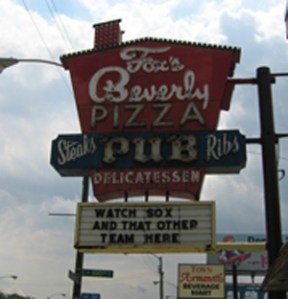
However, I shall always remember how he tried out as pitcher for the Chicago White Sox every spring. He was a Southsider, after all. The coaches always told him to keep working out. In the traditional Chicago fashion, Rudy always reassured us with the words, “Wait till next year!” One of the main reasons he never made the team was because he focused more on spending time with his drinking buddies.

He was a great storyteller who always attracted the attention of everyone within hearing range. He was a very likeable guy who was fun to have around. We spent much more time in bars than on the baseball field. Although he lost interest in his workout plan for much of the year, he never lost the hope of making the team. Come springtime, he would get all worked up again for the open tryouts. After a few years we lost touch, but I always kept watching baseball with the hope that I would see him on the mound someday.

When I saw him again at his mother’s funeral. He still had not lost the hope of playing in the pros even though he was well past the age of a rookie pitcher. He had planned to try out with one of the Texas teams where he was now living. He was a great brake shoe salesman due to his outgoing personality and doing quite well working on commission. After explaining the virtues of his brake shoes in comparison to the competition, I was sold on his. Then I recalled why I always believed he would one day become a Major League Baseball pitcher. He could make you believe in whatever he was pitching.

DDR