Today, I saw the second movie of the Chronicles of Narnia with my sons Adam and Alex. Adam was worried about watching the movie because he had never read the book. I was glad that I saw the first movie last week before seeing this one because I wouldn’t have understood some of the allusions otherwise. I thought the sequel was actually better than the first movie. And my sons enjoyed it even though they couldn’t spoil the plot for me. Although this is a serious movie, I laughed at many scenes that were intentionally funny. I was surprised the humor was successful.
One thing that bothered me about the movie was the depiction of the “bad guys.” In most movies, the plot revolves around the conflict between the good guys and the bad guys. That’s just one of the few available movie plots. However, these bad guys look as if they’re from Spain, they have Spanish accents, and they wear the helmets and body armor of the Conquistadors. I mean, these are my ancestors. Spaniards have always been hated from the Middle Ages on. In fact, until about a few hundred years ago, Spain was considered part of Africa by most Europeans. Some of this residue hatred is still present to this day in the U.S. toward all Mexicans. Many things that happened in Europe carried over to the New World. So, this xenophobia toward Mexicans in particular is just an extension of a trend that began in Europe.
I suppose just analyzing this juxtaposition made watching the movie worth my time. That alone gave me plenty to think about! Of course, I didn’t even discuss this issue with my sons afterwards. But someday I will.
Could I actually live in a condo in a tourist area? I don’t think so.
Over the years, I have had one identity crisis after another. The identity crisis recurs most often is the one in which I can’t decide if I should live in Chicago or Mexico because I’m not sure if I’m Mexican or American.
Sometimes I feel as if I don’t belong here in the U.S. because I feel so Mexican and like a foreigner here. When I’m Mexico, I feel very comfortable there. Of course, that could be merely because I’m a guest there and the excitement and the newness of my being there hasn’t worn off yet. If I stayed much longer, everyone might not be as friendly toward me. I’ve mentioned to some of my friends that I was thinking of moving to Mexico and they immediately offered to help me pack! Wow! What friends!
I went to Mexico when I was 22 and I seriously considered staying there. But then I realized that I would have to get a job in order to support myself. But Mexicans don’t really want foreigners coming in and taking away their jobs. Besides, I didn’t really want to work a back-breaking job in Mexico when I already had a back-breaking job in Chicago. So I went back home to Chicago. However, I often daydreamed about living in Mexico.
Now, I am actually in a position where I can afford to move to Mexico since I have a small pension. I now have to work a job in order to live comfortably in Chicago, but I could live more than comfortably if I moved to Mexico. And I won’t have to work at all if I lived in Mexico. I could sit at home all day writing blog entry after blog entry. Wait, that’s what I’m doing now! But I have to teach in order to supplement my pension.
In Mexico, I would always find something to keep me busy since they do have the Internet down there. And I wouldn’t be lonely because I have a lot of family in Mexico in several cities. Our family, both on my father’s and mother’s side, was very prolific. That’s why Rodriguez and Martinez are some of the most common Spanish last names in the world. So I wouldn’t be lonely.
And even though I’m American, Mexicans–my family in particular–consider me Mexican, sort of. Since I’m American, everyone in Mexico was surprised that I spoke Spanish and ate tortillas. I’m glad that Mexicans thought of me as a Mexican, at least most of the time.
When I go back to Mexico in July, I’ll take another look at where I could possibly live in Mexico. I really love Celaya, Guanajuato, the home of my father’s family. It’s a fairly big city with a small-town feel to it. And, I have an uncle, two aunts, and fifteen cousins who live there! Plus, there’s a university in the city where I could possibly find a teaching position if I ever have the urge to teach again. That would be quite an adventure for me. So now I’m struggling to redefine myself and resolve my latest identity crisis. I’m sure that this time I’ll find myself. Or, maybe not.
Okay, I’ve been preparing my sons to go to Mexico. They’re still excited about going even though I told them that everyone in Mexico speaks Spanish. My oldest son used to speak Spanish when he was little because I always talked to him in Spanish, and he went to Cordi Marian and was taught by Mexican nuns. The twins are learning Spanish in school now.
For the past few years, I’ve tried to get them to speak Spanish at home, but they won’t. If they sneezed, I said, “Salud” and they were supposed to respond, “Gracias.” But they wouldn’t. Ever since I told them that we were going to Mexico, they speak a little Spanish with me. I’m glad their attitude has changed a little bit. If I’m writing something in Spanish, Adam will read it aloud and ask me if he pronounced it correctly. I’m happy that they’re trying because now I know they really want to go to Mexico.
I’ve also tried to explain some of the cultural differences between our two countries. They shouldn’t have any problems, but I want them to know in advance that they shoul expect some differences. They probably won’t play any video games while we’re in Mexico. But my sons are very adaptable. They’ll manage somehow. We’ve taken driving vacations before, and we always adapt to every situation. I’m really not worried about much. Well, except maybe Montezuma’s Revenge. If they get it, I hope they get it right away and they won’t get too ill. After that, they’ll build up their immune system.
I warned them about how the food will be different, too. We won’t be going to McDonald’s or Burger King once we cross the border. They won’t see a burger or chicken nugget until we get back to the U.S. And all the food will be spicy. In Mexico, even the candy is spicy.
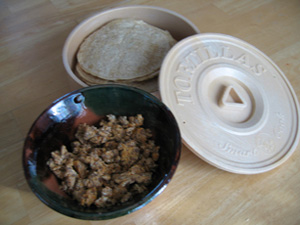
On Sunday mornings, I make huevos con chorizo and tell them to eat them with tortillas because that’s how Mexicans eat–without silverware. So far, they’re still excited about going to Mexico.
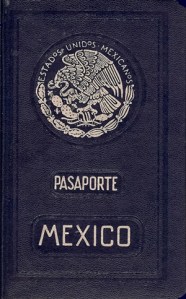
Well, since I always talk about my name, let me get back to the name of David Rodríguez. Well, actually, David Diego Rodríguez. I bring it up again because I plan on going to Mexico in July with my sons. And every American citizen needs a U.S. Passport to return to the U.S.
So, I had to apply for passports for all three of my sons who are natural citizens by virtue of having been born in Chicago, Illinois. Two of the three passports were immediately processed by U.S. Department of State.
The one for my son with my name caused a delay. They needed more documentation for him. There are just too many David Rodríguezes. He’s only eighteen, so he doesn’t have a credit history, a driver license, or a credit card. They needed more proof to verify his identity. I wasn’t sure what they wanted or what other documentation I could provide. One of the enclosures listed in the letter was a Supplemental Identification List, which they had forgotten to enclose. I sent everything I could think of, including photocopies of his state ID, his school ID, his W-2 forms, federal tax return, state tax return, a prescription label with his name and address. I was extremely relieved when they accepted the enclosed documentation. I finally received his passport yesterday. We’re all set to go to Mexico now.
I remember when I went to Mexico in 1978, things were so much different. I had forgotten how to speak Spanish. I still understood it, but I never had to speak it much in Chicago. I stayed in Mexico for about a month and so I quickly learned to speak Spanish again.
However, when I returned to Chicago, I had trouble speaking English again. I flew back on Mexicana Airlines and when I was in Customs at O’Hare Airport the agent asked me for my proof of citizenship. All I had was my driver’s license and birth certificate. I gave them to him and then I worried that they wouldn’t let me go back to Chicago.
You see, my driver’s license didn’t have a picture of me. Back then, they were printed on thin cardboard and only described the driver as 5’8″, 128 Lbs., BRN Hair, BRN Eyes. My birth certificate didn’t have much information on it either and my last name was misspelled as, “Rodriquez” with a “q” instead of “g.” (My mother never thought the mistake was important enough to correct when she received my birth certificate in the mail soon after I was born.) The agent looked at my documents carefully and asked me if I had anything to declare. I understood him perfectly, but I couldn’t form the words in English. I thought for sure that the authorities would detain me because I couldn’t make myself speak my fluent south side English. But miraculously, he let me through. I could then understand how there were so many illegal immigrants from many countries in the U.S.
When I went to Mexico last December, it was a little more difficult to enter Mexico. I handed my passport to the agent, and he entered the information on a computer. He asked me some questions and when I answered them satisfactorily, he let me back into the U.S. Then about sixty miles into the U.S. there was another checkpoint where I had to present my passport again and answer some more questions. They asked me the questions to see if I really spoke English to prove I was a U.S. citizen. The agent spoke quickly and slurred his words together as if to test my knowledge of English. Either that or he was just bored of his job and just going through the motions. He asked me where I was from. When I said Chicago, he asked, “Born and raised there?” “No. I was born in Perth Amboy, New Jersey.” I suppose that if someone didn’t speak English well, they wouldn’t have been able to answer those questions, raising suspicions. I was glad that I didn’t have trouble speaking English this time.
After my first divorce, I moved back home with my mother to 2509 W. Marquette Road. At first, she didn’t even know I was living with her. She lived on the second floor, and I moved back into my bedroom in the basement.
After I had separated from my wife, I lived in the basement for about two months before I finally told my mother I had moved back home. I needed to feel comfortable about telling her. Plus, I thought that the possibility of a reconciliation still existed. I didn’t want to tell everyone I was getting divorced if we got back together again! The reason she didn’t know I moved back home was that she worked the day shift, and I worked the midnight shift.
We hardly ever crossed paths, and not just physically, but also ideologically and morally. Anyway, when I told her I was getting divorced, she said I was making a big mistake and that I would never find another wife as good as her. You know, the usual speech a Mexicana gives her oldest son upon discovering that he’s getting divorced. A speech filled with sentiments that would make any Mexican son feel guilty for breaking his mother’s heart by not giving her grandchildren. I was hoping to get a reception like the prodigal son, but I got The Mexicana Mother Speech! I got over it in about two days.
Once I could freely go upstairs to my mother’s apartment on the second floor–she rented out the first floor to paying tenants–I used to see my mother staring out the window a lot. Our house faced north on Marquette Road, just west of Western Avenue, so there was always plenty of activity to observe.
One day, as I was trying to sneak downstairs behind her back–she always knew when I was in the room–she called me over to look out the window. A young Mexicana holding the hand of a little girl was was walking past our house. They lived in a basement apartment across the street. My mother had noticed her walking past our house previously. I don’t think that my mother would have taken such an interest in them if they hadn’t been Mexicanas.
The next day, my mother saw them again. “They always walk by at the same time,” my mother said to me. “She needs a babysitter. I’ll talk to her tomorrow.” I told my mother to be careful because she might not trust her daughter to a complete stranger, especially one who is waiting for her on the street.
The next day, when I went to my mother’s apartment, the young Mexicana and her daughter were in the living room. The mother was a very pretty Mexicana who was completely bilingual. In fact, when I heard her speak English so fluently, I didn’t think that she could speak Spanish at all, but she was just as fluent in both languages. It turns out that Chayo, her actual name was Rosario, took her daughter Melanie to daycare every morning before going to work. Somehow, my mother talked her into dropping off Melanie at our house before going to work.
How did my mother convince Chayo to trust her with her only child? Well, my mother was waiting outside about the time that Chayo and Melanie walked back home from the daycare and my mother greeted her in Spanish. One thing led to another and they were talking on the corner for about an hour before they went into my mother’s house. Apparently, they both knew some of the same people. So that was the connection! Mexicans always try to find a common bond, whether it be friends, family, or the same place of origin in Mexico. So my mother had a babysitting job now.
So, the next day, Melanie was upstairs when I woke up in the afternoon after working the midnight shift. I love children, so it was nice to have a little girl in the house again. She was like my mother’s daughter and my little sister. We both pampered her.
Melanie looked much happier now than when she walked home from the daycare. Melanie’s first day at our house was very exciting for Melanie and us. Then Chayo, who was about my age, came to pick up her daughter.
We talked for a while and when it was time for Chayo, and Melanie to leave, Chayo asked my mother how much she charged for babysitting. I knew mother didn’t want any money, but she had to name a price, so she said, “One-hundred dollars! Cash!” Chayo’s mouth dropped open. And then my mother laughed. She said that she would babysit for free. Chayo said that she had to pay her something because she was saving so much by not taking her daughter to the daycare. Chayo tried to slip some folded dollar bills into my mother’s hand but she wouldn’t accept them. As far as I knew, my mother never charged her for babysitting.
Melanie took quite a liking to me. She had just turned four and she was at that age where she was so much fun. She had long, deep brown hair, brown eyes, and olive skin. She looked like the cutest Mexican girl ever. She would always anxiously wait for me to go upstairs when I woke up in the afternoon. We played games together and she always sat next to me at the dinner table. When I started working the day shift, she would look out the window waiting for me to come home. She was always happy to see me.
Soon, she wanted to go with me whenever I went out. At first, I didn’t want to take her with me, but my mother said it would be okay. Melanie and I walked to my car hand in hand. I was going to the store to buy some groceries for my mother. Melanie sat in the front seat with me. Actually, she kept standing up and putting her arms around my neck, holding on for dear life. This was in the early 1970s before it was mandatory to have small children in safety seats. Well, I almost got into an accident because Melanie obscured my vision, so I had to swerve and slam on the brakes. Melanie lost her grip around my neck and slid across the front seat until her head hit the passenger door. Luckily, she didn’t even get a bruise. I learned my lesson and from then on Melanie wore a seatbelt. After that, I felt more comfortable driving, too.
Then, my mother started talking to me about Chayo. She was available. I should ask her out. But what about Melanie’s father? He was in jail. I didn’t even want to know what crime he had committed to wind up in jail soon after Melanie’s birth and I didn’t want to know. Besides, he never married Chayo.
No, I never asked Chayo out and she soon met someone else, something I have never regretted. One day, Melanie, out of the blue, started telling me, “I love you.” Somehow, she had become like my daughter. I didn’t mind, either. I like having Melanie around. Then, it all ended when I enlisted in the Marines. My mother told me to look for Chayo’s brother who was also in the Marines.
In one of those unbelievable coincidences that you’re not supposed to write about because no one would believe it anyway, I actually met Chayo’s brother at Camp Pendleton. I wrote about this accidental meeting in a previous blog entry. And in yet another one of those unbelievable coincidences, I met one of Chayo’s sisters at the University of Chicago Track Club. But wait! Here’s another coincidence. When I was a member of the Marquette Park Track Club, Joe Gregory, one of our runners, announced the he was getting married. To whom? To another one of Chayo’s sisters.
After I was honorable discharged from the Marine Corps and I had my own apartment near Marquette Park, Chayo called me. We talked awhile. My mother had previously told me that she would try to set me up with Chayo. So Chayo called me, but I wasn’t really interested. She called me a few more times, but that was the end of it.
My only regret? That I didn’t ask her about Melanie!






 Chicago USA