El Gallo de Oro Mexican restaurant, Chicago, Illinois.
Well, now it can be told. First, you must admit that you have a problem before you can solve it. My problem? I like to retrace my steps all the way back to my youth.
So tonight, I went to El Gallo de Oro, bought a steak burrito, and parked in Marquette Park by the Rose Garden to eat it, as I am wont to do. I used to do it all the time, but tonight I compared scenarios.
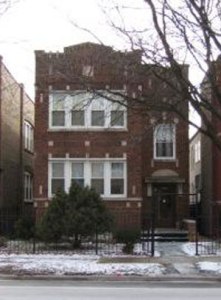
The first time I bought a burrito at El Gallo de Oro, I lived down the block at 3006 W. 64th Street and I only paid $2.25 with tax. But that was twenty-seven years ago. Today, I paid $6.06 with tax. Today, I barely finished my burrito, but twenty-seven years ago, I would also order two or three tacos or tostadas on the side. I would practically inhale all this food and I only weighed 140 pounds, compared to my 180 or so today.
And Marquette Park isn’t the same, either. No one cruises through the park like in days of old. This used to be the place to hang out, to see and be seen by everyone. I don’t think anyone even noticed I was there tonight. Not even the police car that drove past me driving the wrong way.
On the plus side? I felt very safe there in my solitude reminiscing about my days of old when I was young and naïve and didn’t realize that the grease from the burrito had dripped on my shirt until the person I was trying to impress would point out the grease stain. Okay, I don’t miss the dripping grease all that much. I’m much older and wiser now.
When I lived near Marquette Park, there was a lot of racial tension. The neighborhood suffered from panic as the blacks moved closer and closer due to white flight. When my mother bought our house at 2509 W. Marquette Road, the neighbors said, with a sigh of relief, “At least you’re not black.” But we weren’t completely accepted by many in the neighborhood.
No matter where you lived in Chicago back in the 1970s, there would be someone who resented you, regardless of your race. In 1966, Dr. Martin Luther King Jr. had marched in Marquette Park was greeted by whites who threw bricks, rocks, and bottles at the marchers. We moved to Marquette Park in 1973 and people still talked about the Doctor King march. I was a typical teenager in that I wasn’t fully aware about the political events in Chicago or our neighborhood.
So, one Saturday in 1975, I was driving home from work at Derby Foods. When I got close to my house, all the streets were blocked off by the police and I couldn’t drive home. Helicopters flew overhead. I drove around until I found a side street that wasn’t closed. I managed to park my Firebird about four blocks from my house. I had no idea why there were so many police officers in our neighborhood, nor why all the streets were closed.
As I walked home, I could hear people chanting in the direction of my house. When I reached Marquette Road, there were hundreds, if not thousands, of people lining both sides of the street. Reverend Jesse Jackson had led a protest march, but I had just missed it. The street was littered with rocks and bottles. A black man and a boy drove up Marquette Road and people threw rocks and bottles at his car shouting racial epithets. The car sped off westbound where he was greeted by more projectiles.
I had a tough time crossing Marquette Road to get home. When I finally got to my house, there were hundreds of people standing in front of my house. I couldn’t reach my front door, so I watched until the march was over and most of the people left. My younger brother told me how he saw police officers on horses near California Avenue. Someone blew up a cherry bomb near the horse and scared it so that it stood on its hind legs. Someone kicked one of horse’s hind legs and the horse and police officer both fell. The police immediately arrested the offender.
One of my friends told me he was standing on the curb watching all the action when a little old white lady gave him a brick and said, “You throw it! I’m too old!”
When I finally got home, my mother asked me where I was. I told her that I was at work and that I had a hard time getting home. When my mother asked my brother if he was at the march he swore he was at his friend’s house. My mother didn’t believe him. She didn’t want the neighbors to think we were causing trouble. Little did she realize that all our neighbors were out there throwing things. The next day, my mother punished my brother for being at the march and for lying to her. She had seen my brother on the news near where the horse was kicked down. They had more protest marches after that, but that was the only one I saw up close.
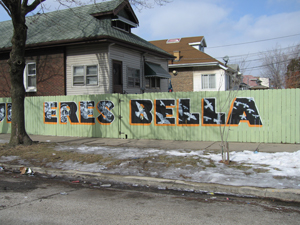
Good fences make good neighbors. Words of wisdom by Robert Frost. Words I can live by.
My neighbors who complained about me not mowing my lawn until Memorial Day also complained to me when the fence between our properties was blown over by intense winds. It was an old wooden fence and the posts rotted at the base from the moisture. Well, her husband put the fence in my yard. They insisted it was my fence, but I didn’t know because the fence was already there when I bought the house.
So I took the fence apart and slowly threw it away with the weekly garbage. The wood was rotted beyond repair. Since I didn’t have any small children or pets, I didn’t think I needed to replace the fence between our yards.
But my neighbor would sneak up behind me while I was doing yardwork to insist that we get a new fence. I really couldn’t afford a new fence and I told her. But she insisted that we had to get a new fence and we would each pay for half of it. I said I wanted a three-foot chain-link fence because it would last longer than a wooden fence.
I had a red cedar wooden fence at my old house and the wind blew it over after about five years. What a shame that I had replaced the thirty-year-old chain-link fence with a wooden one that didn’t even last five years! I insisted on a chain-link fence, because the chain-link fence at my childhood home was still standing after all these years.
But my neighbor ordered a six-foot wooden fence for privacy. And I was supposed to pay for half. I reluctantly agreed, but when I contacted the contractor to pay for half of the fence, he told me that the neighbors had already paid in full. I just didn’t understand. They only paid for half of the fence, so only half of the fence was installed. I would be responsible for installing the rest of the fence.
Normally, I don’t get that involved with my neighbors. If my house would have come with a good fence, I could have avoided dealing with my neighbors on this issue.
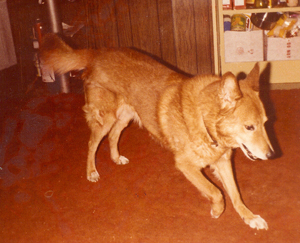
Duke was the best dog that our family ever had. When we lived at 4405 S. Wood Street, he followed my brothers and me home from school. He really did. At first, he followed us at a distance and that was fine with us because we weren’t sure if he would bite us. He was already full-grown, and he was at least part Golden Retriever and maybe a little bit German Shepard and Chow Chow. We were sure that, since Duke got along well with the whole family, he probably was also part Mexican.
He followed us into our backyard, and we went into the house. When we looked out the window later, he was still there. We gave him some bologna and went back inside. The next day, he followed us home again and we gave him some milk this time. He let us pet him and he seemed very friendly. He was too clean to be a stray dog and he didn’t have the battle scars of street dogs, but he didn’t have a collar or dog tags either. We never let him into the house because we knew our mother would get mad at us. But Duke kept following us home after school. He knew what time we got out of school, and he would meet us at the corner of our block and follow us home so we could give him something to eat.
One day, my mother came home from work and asked us about the dog on the back porch. “What dog on the back porch?” I asked, knowing we were about to get in trouble. We didn’t admit to anything. Eventually, my mother brought Duke into the house, and we all started playing with him. He was happy with us and never even growled when my little sister pulled his ears or fur. We asked our mother if we could keep it, but she said he belonged to someone else and they would eventually want him back. We could keep him until someone claimed him.
We were so happy to have a dog again. And the good news was that he was already house broken. At first, my mother would open the door to let Duke go out by himself thinking that he would eventually go to his real home. But he always came back. After a while, I started walking him without a leash. He always stayed close to me, and he would never run away. I walked him all over the neighborhood so that Duke would recognize his original home, but we never found his original owner. Soon I knew I was Duke’s master because one of the neighborhood bullies threatened me with Duke at my side and Duke growled at him ready to defend me.
Duke had some pretty good street cred, too, because when other dogs would see him, they would run away. I didn’t need a leash to control Duke because he so obedient that he listened to my every command. However, he loved to chase squirrels, but he would only do say when I gave him permission. Whenever he saw a squirrel at a distance, he ears would perk up and he would growl, but he would stay by my side until I said, “Go get him, Duke!” And he would run at full speed toward the squirrel. He never once caught a squirrel because the squirrels were usually too far away from us and too close to a tree that they climbed to escape. Only once did I think that Duke would actually catch a squirrel in his mouth. He was rapidly closing in on a squirrel that was foolish enough to try to outrun Duke instead of climbing a tree. I think that Duke slowed down to give the squirrel a running chance and the squirrel got away.
When we moved to 2509 W. Marquette Road, Duke moved with us. By then, he was part of our family. Somehow, I remained Duke’s master. My brothers and I had to be careful when we wrestled because Duke would attempt to bite my brothers in my defense. Even after I married and moved away from my mother’s house. Once I was visiting and I started wrestling with Tato, my brother Jerry, in the basement just like in the good old days. Duke just stood there watching. He was a lot older now and he didn’t growl at my brother as he once did. Well, I could still out-wrestle all my brothers even though we were all about the same size now. I managed to throw my brother down on his back on the sofa. I jokingly said, “Sic him!” and Duke ran and bit my brother’s face. I really didn’t think he would attack my brother. I immediately grabbed Duke by his collar, and he finally calmed down. My brother had some puncture wounds on his face from being bitten a few times. I apologized profusely to my brother. Neither one of us thought Duke would attack. But he did. I was still his master even though I had lived away from him for about a year. I still feel bad about this even now as I described the incident.
Duke lived to be incredibly old, but we never knew his exact age since he was already full-grown when he started living with us. Eventually, he had so many health problems that my sister had him put to sleep. He was such a great dog that I can still visualize him.
I don’t know why, but I always wanted to learn Spanish. Although Spanish was my first language, I wanted to study Spanish formally in school. I wanted to read and write in Spanish, too, in addition to English. Both my father and mother spoke Spanish, but they grew up in different regions of Mexico so they each spoke a dialect that was different enough from each other, whichsometimes confused me. But I knew enough Spanish to communicate with just about anyone. When selecting my classes freshman year at Divine Heart Seminary, I picked Spanish I. The counselor looked at me suspiciously, which I didn’t understand why at the time. It never occurred to me that anyone would think I was trying to get an easy A. After the first Spanish class, Señor Mordini, the Spanish teacher, asked me why I was in Spanish I. I panicked, thinking that he wouldn’t let me take Spanish. I told him that I wanted to learn to read and write Spanish. He told me that I didn’t belong in that Spanish class. He was moving me ahead to Spanish II. I resisted. I told him that I wasn’t ready, but he insisted, and since I would still be in a Spanish class, I agreed. In my sophomore year, I enrolled for Spanish III and French I. No one understood why I wanted to study two foreign languages. I had always wanted to know many languages. I learned a lot of Spanish with Señor Mordini, more than enough to read and write in Spanish. Plus, I was learning French, too.
At Thanksgiving break of my sophomore year , my mother finally agreed to let me leave the seminary; I never wanted to attend the seminary in the first place. However, she didn’t let me enroll in a private Catholic high school as I had expected. I attended a Chicago public school in the Canaryville neighborhood called Tilden Technical High School. Since I transferred in the middle of the academic year and from a private school to a public one, the counselors had problems scheduling classes for me. I insisted that I wanted to take Spanish. The counselor told me, “But you know Spanish!” I said, “But I can’t read and write Spanish.” I persisted and the counselor finally put me in Spanish IV. I was very disappointed the first day of Spanish class because the Spanish teacher taught verb conjugations that most high school students learn in the first year. This class was really behind. After the first Spanish class, the Spanish teacher took me down to the counselor’s office and said that I knew too much Spanish to be in her class. She was afraid I would intimidate the rest of the students. I insisted that I wanted to take Spanish. I even offered to go into a higher level class, if necessary, but that was the highest-level Spanish class, even though they were so far behind. I really wanted to learn to read and write Spanish I told them. They insisted I already knew Spanish. “No, I don’t,” I said. “Why do I have to take English?” I asked. “I already know English.” “You don’t know English!” the counselor told me. “That’s the same reason I want to take Spanish. I don’t know Spanish,” I said. Well, I lost that argument, but the counselor couldn’t figure out how to fill the void left by the Spanish IV class that I wasn’t allowed to take. I said I wanted to take French. “But why?” the counselor asked in disbelief. “You don’t have to take a foreign language. This school doesn’t have a foreign language requirement!” “I want to take French,” I insisted. “I took French I this term at my last school.” Finally, the counselor looks for a French class. “You’ll have to take French III,” she said. “It’s the only French class that fits in your schedule.”
I was glad to at least have a chance to learn a foreign language. At first, I was afraid to say I wasn’t ready for French III, but then I remembered how far behind the Spanish IV class was. However, I wasn’t ready for what I was about to experience. The first day of class, I walk in and greet my classmates, “Bon jour!” My classmates stared at me with their mouths hanging open. It was as if I were speaking a foreign language to them. I soon discovered why. Our French teacher Mr. Hansen never actually spoke French in class. Ever! He didn’t actually teach anything, either. He was a rotund, middle-aged man with gray, balding hair who never had very much energy. He showed up to class on time wearing a suit and tie and sat at his desk at the front of the class while the class discussed everything going on in their personal lives. If Mr. Hansen found the conversation interesting, he would occasionally join in. The students didn’t mind since he wasn’t a very demanding teacher. I started at Tilden near the end of November and in December, the students were worried about their French III grade because the marking period was rapidly approaching. Mr. Hansen reassured us that we were all passing. Then, he made the big announcement. After Christmas vacation, the teachers were going on strike, so we wouldn’t have classes for about a month or two. After the strike, Mr. Hansen planned to have his annual heart attack and he wouldn’t return to school until after spring break. And he kept his word, too. The succession of substitute teachers taught us French just as competently as Mr. Hansen even though none of them had ever studied French! When Mr. Hansen returned to school in April, he said he would have to test us in order to give us our final French grade. The class panicked. No one wanted to study. Then Mr. Hansen announced that in order to get an A, you had to bring in your French-English dictionary to class. I just happened to have mine with me–I always brought it with me just in case we actually studied French in class by some unexpected miracle–and all the class glared at me in disgust. Well, I had my instant A, but the rest of the class was worried. This was French III and no one had ever bought a French-English dictionary! Silly me! I bought mine immediately after the first day of French I!
Then, my mother bought a house near Marquette Park and I had to transfer to Gage Park High School the next year. When scheduling my classes, I knew better than to ask to study a foreign language. So, I didn’t enroll for one. Sometime during the end of the year, the Spanish teacher, Señor Martinez from Ecuador, came to one of my classes and asked me to step into the hallway. He was recruiting Spanish-speaking students for a special Spanish class that he himself would teach the next year. I told him about what had happened to me at Tilden, and he reassured me that this class would be different. So, against my better judgment, I enrolled in his class. The next year, I was actually excited to go my Spanish class because I would finally learn to read and write Spanish fluently. On the first day of class, I see a lot of my friends who are native Spanish speakers. The classroom is filled with Mexicans, Puerto Ricans, Ecuadorians, Filipinos, and others. Then, Miss Brewer walks into the classroom and announces that she is our teacher! What? She wasn’t a native speaker of Spanish. The entire class was disappointed. What happened to Señor Martinez? Miss Brewer repeated that she was our Spanish teacher and that was the end of the discussion. That would have been fine except for the fact that most of the class spoke better Spanish than her. But she insisted that she knew Spanish because she had spent a month in Puerto Rico the previous summer. Spanish was our worst class for most of us that year. Apparently, no one in the class knew Spanish, according to Miss Brewer. Hardly anyone got an A for the class and a few native Spanish speakers actually failed!
When I finally arrived at UIC, I was hesitant to take Spanish, but I told myself, “It’s now or never!” I took a Spanish placement test, which is multiple choice. I scored very poorly because I would choose the answer according to what I remembered hearing in Spanish. Apparently, much of what I had heard was improper usage. Then, I had to take another placement exam in the Spanish department. I was told to write in Spanish about why I wanted to study Spanish. It had been years since I had written letters in Spanish to my Tía Jovita in México. I surprised myself when I wrote. Some things came back to me instinctively. I was placed in the first semester in a class for bilingual speakers. Finally, I would learn to read and write Spanish!



 Chicago USA