

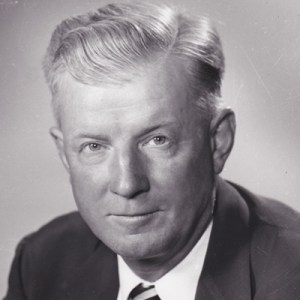
Ted Haydon has coached countless track and field athletes at the University of Chicago since 1950, including many Olympic athletes, average, and not-so-average runners. Ted was elected to the Track and Field Hall of Fame for his promotion of track and field through an open club and open meets, thanks partially to Hal Higdon’s urging as a graduate student.
I felt Ted was truly concerned about me, a runner whom he hardly knew except by sight. I later learned that he took personal interest in everyone who ran for him. He coached me to new PR’s of various sorts. My favorite was my stand-up comedy performance at the annual University of Chicago Track Club Dinner in 1984, with George Young as the guest speaker.
Once on the way home from a track meet, a two-and-a-half-hour drive, someone in the van began telling jokes; Ted told a few himself. Then I told some. Everyone was surprised that the quiet guy around the track knew so many jokes. When they questioned me, I had to admit that I had read numerous joke books since I was in grade school. I also told them how I had performed stand-up comedy and would soon be appearing in a comedy revue.
At the next workout, I asked Ted what I should do.
“How about some stand-up comedy at the track club dinner this year?” he asked.
I wanted to turn him down, but a few months earlier I decided to accept every opportunity to perform standup comedy.
“How about if I do five to ten minutes of comedy?” I asked.
“But you have to tell jokes about track and field,” Ted said.
“Okay,” I said, trying to sound too enthusiastic about the whole thing in spite of not having a single track and field joke in my repertoire. “I’ll write something for the dinner.”
“Where have you performed before?” he asked.
“The Comedy Cottage, Comedy Womb, and Who’s on First.”
“I figure if I gave Dick Gregory a start,” he said, “I could help you out a little.”
I began telling members of the track club I would be performing for the dinner. Since it was only two weeks away, I felt nervous because I had no track and field jokes. I recruited Mark Wagner, the club clown who gave a humorous slide show at his house party, and his sidekick Chris Cole. Maybe they would help me write some running jokes. I thought of a few ideas I could develop, but somehow, they did not make me feel comfortable. I needed better material.
I told Pat Palmer, one of the track club members, that I would be performing at the track club dinner. He immediately began talking about Dick Gregory’s comedy debut at the dinner. “I was a freshman,” Pat said, “when I met him at the dinner in January of 1960. He was really funny. I had never heard of him before, but after that dinner he became famous.”
That was when I began to feel enormous pressure. When I performed in night clubs, I didn’t care if I bombed because I would never see the audience again anyway, but here I knew about half the audience. I never performed well before people who knew me. Was I ever nervous!
The reason I told everyone I would perform for the dinner was to put pressure on myself in order to accomplish what I had set out to do. Once enough people knew about my plans, I had to perform. Many club members were discovering for the first time my background in comedy. In real life, I don’t come across as a funny person. So, people are surprised when they learn that I’m a standup comedian.
Now I had one minor problem. I didn’t have any running jokes. Okay. One major problem. Comedians without jokes are not funny. I wouldn’t be the exception. Mentally, I began writing a running monologue for the track club dinner. When I saw Mark Wagner and Chris Cole the next day, they were willing to help me write some jokes. I told them some ideas I had for jokes. Not only did they like them, but they guessed the punchline before I even said it. To jokes I had written! This would have upset other comedians, but they would be the perfect collaborators since we thought similarly. We agreed to meet the next Wednesday during a track meet. I worried that I did not see them at the workouts the next Monday or Tuesday. I wrote jokes in case I did not see them again before the dinner, which was only a week away now.
I had set a schedule for myself: the first week would be dedicated to writing material and the second week to rehearsing. So when I didn’t see my collaborators at the track, I thought I would get behind schedule.
In the meantime, I saw Ted every day. Whenever I asked him to tell my workout, he would ask me how my comedy routine was coming along. I always told him I would be ready by the night of the dinner. I wondered if he sensed my insecurities. Ted had always seemed to know when I doubted myself. Once, he told me to run two quarters at my 800 pace, which I would race two days later. I asked how fast I should run.
“Run them under sixty seconds,” Ted said.
My PR for the 400 was sixty-one, so I didn’t think I could do his workout. He did not pressure me to try, although he did encourage me to do them. I wouldn’t have tried without his urging. I ran the first one in 58.2 and the second in 60.0. We were both pleased by the workout. But I was more surprised than pleased!
Prior to the track club dinner, Ted never stopped telling jokes or playfully insulting his runners, a favorite habit of his. I always enjoyed the good laughs Ted provided.
The Wednesday night I was meeting with my collaborators finally arrived. I was relieved to see Mark and Chris at the track meet. Since I had last talked to them, I had written five minutes of material, all of it untested on stage. There are no night clubs where comedians can try out running humor. We were to write during the meet, but we were too nervous because we were both racing. Following Ted’s workouts, I ran a PR of 2:02.8 in the 800. We both ran great races, so we thought we’d celebrate by having a beer at the Woodlawn Tap, otherwise known as Jimmy’s, the infamous bar on the corner of 1172 East 55th Street in Hyde Park.
I hardly considered the conditions conducive to creative thinking, but we began our comedy writing session there anyway. I told him what jokes I had in mind and how I would like to present them. Mark liked the section I had written about Jarmila Kratochvilova. At least we were off to a great start. After I told him the jokes about Ted Haydon, which were actually putdowns on me, we wrote jokes about various members of the track club, although there was nothing too caustic. By the end of our session, including interruptions from friends who asked us what we were doing, we had doubled my material. I really liked the jokes by Mark and Chris. Now all I had to do was polish them and rehearse them. Listening to some of my material, my friend Jim Harmon reworded some jokes which were not sharp enough. I trusted his judgment because he had performed standup comedy for about a year.
I rehearsed the routine, but did not memorize the jokes until four days before the dinner; I was afraid I might forget my lines by the night of the dinner·. As I rehearsed, flashbacks of bombing on stage kept haunting me. Determined to succeed, I worked at my routine that had added up to ten minutes.
Two days before the dinner Ted asked me if my comedy routine was prepared, I told him I was ready to perform. He asked me in the same tone he used to ask his runners if they were ready to race. He told me a few quick jokes that made me laugh.
I was nervous the night of the dinner. The sight of Hal Higdon at the bar made me jittery even though the story about my bombing would not appear in The Runner. As I drank a beer to relax my nerves, Ted approached me.
“Are you ready?” he asked.
“Yes,” I said. “When will I go on?”
“Right after the jugglers, Zeus Preckwinkle and Mike Nair,” he said. “I’ve billed you as Third City Comedy.”
I laughed. Third City Comedy struck me as funny. I hoped to think of a funny response when I was introduced. Mark, my collaborator, was nervous for me. He could not think of a funny response to the introduction.
I was glad Ted did not wish good luck in the traditional show biz way by saying, “Break a leg.” He might make a habit of telling me that before every race.
The jugglers were great. I was apprehensive when I heard my name. Walking to the podium, I realized this was the most prepared I had ever been for a comedy performance. There were no excuses for bombing tonight.
I felt like a fool when I ad libbed something to the intro and no one responded. I stuttered my opening lines. The audience, my largest ever to that point in my comedy career, stared at me expectantly. A joke in which I complimented Carl Lewis only received a chuckle. I thought I was in trouble when I stuttered into the Jarmila Kratochvilova jokes, but then I pronounced her name correctly. I was shocked! I got a few laughs as I worked my way toward the punchline. After delivering the line that should get the Big Laugh, there was a slight pause. A slight pause that cause me to panic inside. A pause only a comedian would notice. But then I got the Big Laugh. Getting the Big Laugh rattled me a little. Looking at the audience I saw everyone laughing very loudly, too. I tried to spot Hal Higdon, but I could not find him in the audience. In the meantime, everyone applauded. I had never been applauded before. “What do I do now?” I asked myself. I looked back at the audience as if I were used to getting this sort of response. I stopped stuttering from that point on.
I continued to get laughter and applause. When I reached the Ted Haydon section of jokes, I looked at him to study his reactions. I planned to move on to another topic if Ted looked offended. I assumed he would not mind.
“I remember when I first met Ted Haydon,” I said. “He asked me what high school I ran for. I was insulted because at that time I was twenty-six. Laughter. “I said, ‘I’m not in high school.’”
“So then Ted said, ‘What high school will you run for?’ Laughter and applause.
“I wanted to join the track club and Ted said, ‘Membership is a state of mind.’ Laughter. When I told him how fast I ran…” Laughter. He said, ‘In that case, membership is a state of mind. And a small contribution.” Laughter and applause.
Ted seemed pleased. These were the jokes I had written. I received a better response from Mark’s jokes about Ted. I continued until I finally ran out of material about fifteen minutes later. The laughter and applause had expanded my routine in a good way. I returned to my seat and chugged a beer quickly, feeling relieved now that the pressure was off me. The podium remained empty for about two minutes–or at least it felt that long. Finally, Ted approached the microphone and said, “Dave’s a tough act to follow!”
I could not help feeling proud of myself. After the dinner, people complimented me on my performance. Many were surprised to discover I was a comedian. Some of the older club members compared me with Dick Gregory. I was flattered to hear that some liked me better. To think I might not have performed this well had it not been for Ted’s encouragement, the same encouragement that allowed me to run a sub-five-minute mile.
I shook Ted’s hand. “Thanks for letting me perform,” I said.
“You’re very funny,” Ted said.
Ted Haydon sure knows how to make his runners perform up to their potentials on and off the track.


 Chicago USA