Dave the Obscure


Books are knowledge

I love reading. Especially now that I’m older and have plenty of time to read. I even read candy wrappers lying on the floor.

In grade school, I enjoyed reading in the first and second grades since the sentences were usually two or three words long and the books were very short. Later, I loved reading when the class took turns reading aloud. I remember we read Washington Irving, Hans Christian Andersen, and Mak Twain. I can honestly say that I enjoyed the readings and still partially remember Ichabod Crane, the skaters on the frozen Dutch canals, and the celebrated jumping frog of Calaveras County.

Other than comic books, I didn’t do much reading outside of class. But I did buy books from the Scholastic Book Club through school. The only book I remember buying was Far from the Madding Crowd by Thomas Hardy in the seventh grade. I liked the book cover artwork and the title intrigued me. However, I didn’t actually read it then, but I kept it along with my other prized possessions. Although I did willingly read two books that I borrowed via U.S. mail from Divine Heart Seminary when I was in the eighth grade: Fighting Father Duffy and Father Damien. This was the seminary’s recruiting tool. Father Duffy was a World War II chaplain and Father Damien was a missionary who worked with lepers.

In high school, I never read any of the assigned readings. I was an unhappy teenage student because I was not allowed to attend the high school of my choice. I refused to read anything for homework. My freshman year of high school, Mrs. Shaefer kept after class to tell me that I had to start reading the class texts. I found the class discussions interesting, but not interesting enough to motivate me to read Hemingway, Fitzgerald, or Steinbeck.

I remember my junior year we were assigned to read Macbeth for homework. Of course, I refused to read it. However, the teacher held captivating discussions about the play and William Shakespeare. I was almost tempted to read Macbeth. Then, she announced that we were going on a field trip to see the movie version of Macbeth. Luckily, I was able to follow the storyline thanks to the class discussions. I really enjoyed the movie. I still think of it from time to time. In fact, I have read and re-read Macbeth several times since high school.

So, I didn’t read any assignments in high school, not even Macbeth. I came oh so close to reading Macbeth on my own. It would be years before I finally read it. I didn’t do much homework once I turned eighteen and started working at Derby Foods making Peter Pan peanut butter. I eventually dropped out of high school because I couldn’t manage working the midnight shift and attending classes right after work.

Plus, my high school counselor would not allow me to take the ACT or SAT exams required to apply to universities. He told me I wasn’t smart enough and i would only be wasting my time. Looking back now, I realize that this was a blatant case of racial discrimination. The counselor asked me how I planned to pay for college tuition. I didn’t know. When I told my mother that I wanted to go to college, but that the counselor wouldn’t let me take the college exams, she asked me how I planned to pay for tuition. I didn’t know. My mother also told me, “You already have a job! You don’t need to go to college.” So, I continued working my factory job. I was in the class of 1974, and the class of 1975, and the class of 1976. And I eventually dropped out.

The next year, my friends Jim, Ted, and Nick needed a ride to check out some potential universities they could attend. The had made appointments at Bradley University, University of Illinois Champaign-Urbana, and the University of Chicago. Since I was still working a factory job, I had a new car and was able to take them to several universities in Illinois. I worked the midnight shift then, I was free in the day time to take them. I got by on very little sleep back then.

On the way there, they wondered how they would pay for college tuition. I wondered, too. Well, each university counselor told them not to worry about tuition. If they were accepted, the money would come from somewhere in the form of student loans, scholarships, or grants. No one ever told me about student loans, scholarships, or grants. Why did they provide my friends with this useful information and not me? Well, I forgot to mention that they were white and I was Mexican.

So, I didn’t go to college and continued working in the peanut butter factory. I always felt embarrassed about being a high school dropout. Therefore, I decided to educate myself. By reading. Reading all the books I was supposed to read in high school. So, I read Steinbeck, Hemingway, and many other assigned readings that were long overdue. Eventually, I came across my old copy of Far from the Madding Crowd. It felt rather thick and intimidating, but I was determined to educate myself by reading. I continued reading over the years. If I liked an author, I would attempt to read all their books. This included: Ernest Hemingway, John Steinbeck, Kurt Vonnegut, Herman Hesse, J.D. Salinger, and yes, also Thomas Hardy. Lest we forget, Thomas Hardy coined the phrase, “Lest we forget.”

I decided to educate myself by reading. In the Marines, I bought the Great Books from Encyclopedia Britannica and read them all. I read voraciously. Eventually, I came full circle to Thomas Hardy. I planned to read all his books. They were all very moving, uplifting, and depressing all at once. However, the one book that really seemed to be about me was Jude the Obscure! The protagonist, due to his social circumstances, never obtained a formal university education. Just like me! So, he decided to educate himself by reading and studying books on his own. Just like me!

Spoiler alert! Jude Fawley does educate himself, but he never succeeds without a formal university degree. I found myself in a similar situation when I applied for the position of running coach at a university. I had all the necessary qualifications to coach, but without a university degree, I would not make a good role model for the students. And I was a published writer at the time. All for naught!

Well, I was finally able to get a formal university education with several degrees all they up to and including my Ph.D. The tragedy of Jude Fawley inspired me to go back to school. Every time I read Jude the Obscure, I recall my factory days reading books while I was on break. I realize now that I was also the victim of the social class barriers. Just like Jude Fawley.
caricature of author end of post
DDR

Nihil


Talk about potential!

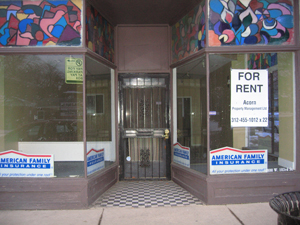
Sometimes I have crazy ideas. Okay, maybe a little more often than sometimes. If you’re a regular reader, you know what I mean. Well, my latest idea–actually, I’ve thought about this one for years–involves renting an empty storefront. I would paint a simple sign in the window: NIHIL. I would set up a desk with a computer where I could write. I would also surround myself with my books in bookcases. There would be inviting desks, tables, and sofas for the curious to come in and be creative. Or, if they’re not creative, reading would also be permissible. If no one came in, I would sit there in public view writing my blog or working on my website. Anyone would be welcome to come as long as no one talks and interrupts the creative process of anyone present.

For the uninitiated who entered and asked, “What does ‘Nihil’ mean?” I would say, “Nothing.” Or perhaps, I would say nothing. And they would catch on to the fact that they were not supposed to talk. I would point to the available furniture. If they left, so much the better. This way I could keep writing. If, however, they stayed quietly, I would feel as if I had accomplished something.

This is a crazy idea for me because I do that at home right now. Whenever I’m at home I sit at my computer writing something or other without any interruptions. Or I read. Some people can’t do anything productive at home, but not me. I’ve always been at my most productive while at home! Besides, I can’t afford to rent an empty storefront.

DDR

Reading


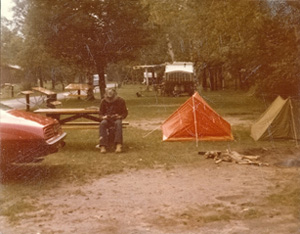
Reading has been my lifelong passion. I have always loved reading! Even when I went camping with my friend Jim, I took books along. He took this picture of me reading while I was so engrossed in reading. 

I loved the first grade when we started reading. At that level, it didn’t matter that I didn’t know English. Our homework involved reading to our parents at home. My mother thought that was too much trouble for her after a long day’s work, so I would read to my abuelita. Unfortunately, not only did she not speak English, but she was also blind. But she loved it when I read to her. And I was grateful to have someone to listen to me read. 

When I was a little older, I used to go to the library to read. I mostly read joke and riddle books, but that still counts as reading in my book. In the seventh grade, Divine Heart Seminary let me check out books from their library via the USPS. I only remember two of the books that I read. One book was about Father Damien who was a missionary on a leper island in Hawaii. And the other one was Fighting Father Duffy who was a U.S. Army chaplain during World War II. Now why would the seminary only send me books about priests? I’ve always wondered about that. Not!

I like reading at the library because I had more privacy. If mother saw me reading comic books or even books, she would criticize me for being lazy. When I finally bought my first car, I would drive to Marquette Park just to read in my car. When I would come home, my mother would ask me what I did. When I told her I went to the park to read, her blood would boil. Then she would tell me about other constructive things I could have been doing around the house. 

In general, the uneducated masses don’t understand why anyone would want to read a book. When I worked in the peanut butter factory, I always carried a paperback in my back pocket. Whenever the production line stopped or I was on break or lunch, I would pull out my book and start reading, even if I had to stand. No matter who my boss was, he would come by and tell me to pick up a broom and start cleaning up my area. No one at the factory really understood why I liked reading so much. 

Ironically, the books I chose to read were the books that I refused to read in high school. In high school, I spent most of my time reading chess books. For two years my life revolved around chess.  But once the assigned books weren’t required reading, they piqued my curiosity. Why were they required reading in the first place? So, one by one, I read all the books I once rebelled against. Suddenly, I felt a certain sense of fulfillment. 

In the Marines, I bought the Great Books set and I would read them every free moment. My fellow Marines thought I was a bit crazy, but that’s why no one started any trouble with me. That and I told everyone I knew kung fu. No one wanted to risk starting trouble with me. 

DDR

Devil in the White City


The audio book I borrowed from the Chicago Public Library.

I just finished reading this terrific book about Chicago and the 1893 Columbian Exposition. And when I say reading, I mean “reading” as in I didn’t actually read the book. Rather, I listened to the audio version of it on CDs while I drove. So, I’ve been doing a lot more “reading” lately because I’ve been doing a lot more driving (No quotes! I was physically driving.) lately. And that’s all thanks to these audio books on CD. For some reason, I didn’t like listening to audio books on cassette and I only listened to a few. Cassettes just seemed like too much work. For a while, I wasn’t reading as much because I was always on the go. But now I can do both at the same time! I love audio books on CD!

I had heard about this book years ago and I had always meant to get around to reading it, but somehow, I never had time. A few weeks ago, I was in my local library, and I saw this book prominently displayed on the shelf. I love reading books about Chicago! This book focuses on the Chicago World’s Fair of 1893, which is represented by one of the red stars of the Chicago flag below. (Note to self: Write a blog entry about the symbols of the Chicago flag.) I learned so much about Chicago history through this one book alone. First modern serial killer was H.H. Holmes who got his start during the World’s Fair.

By being awarded the World Fair, Chicago felt compelled to top the previous World Fair that was hosted by Paris, France, which had set attendance records for a peaceful event. And they also introduced the world to the tallest man-made structure ever built: The Eiffel Tower! Chicago was undaunted in trying to top Paris. From the ashes of the 1871 Chicago Fire, not only did Chicago rebuild itself, but it also topped the Paris World’s Fair. The engineering marvel that topped the Eiffel Tower was the Ferris Wheel that was then the tallest man-made structure. And people could ride it to the top and witness breath-taking views. To this day, most carnivals still have a Ferris Wheel. (In Spanish, it’s call la rueda de fortuna.)

The Chicago World’s Fair, or the World’s Columbian Exposition as it was also known, helped shape Chicago as a modern city and introduced the world to many modern inventions, including electricity on a wide scale at the White City. The main feature of the fair was the White City that was constructed by Daniel H. Burnham and company. This provided the creative spark for the Emerald City of Frank L. Baum when he wrote The Wizard of Oz. And the White City also influenced Disneyland and other amusement parks. The White City is also mentioned in “America, the Beautiful,” as “alabaster cities.”

DDR

On the road


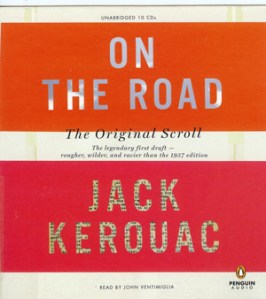
CD Book from the Chicago Public Library.

For someone who spends so much time on the Internet, I also spend a lot of time on the road. Since I’m on the road a lot, I feel like I’m wasting time if I’m not on the Internet. True, I occasionally check my e-mail on my iPhone while I’m driving, and I do study road maps while on the Internet. The best of both worlds! Years ago, I tried listening to books while driving. That was back when most of them were on cassettes. I quickly gave up because it involved too much work changing cassettes. So lately, I once again felt the need to occupy myself productively while driving. While studying Russian, I listened to the oral activities on an mp3 player via my car radio. But it just wasn’t the same as reading. I remembered the audio books. Most books are on CDs now and are much easier to manage while driving. The first one I heard was On the Road by Jack Kerouac. Because I imagined writing a blog entry, titled “On the road”! I also listened to Heart of Darkness by Joseph Conrad, but decided against writing a blog entry titled, “On the River Niger”! How would that be possible while driving my 2005 Pontiac Vibe?

I went to the library to check out their collection of audio books. I immediately gravitated toward Jack Kerouac because On the Road has been on my “To Read” list since the 1980s. I have always heard about that book and any book that constantly attracts my attention deserves to be read–at least in my book. I had no idea what it was about, but I knew I just had to read it. I was intrigued by the fact that it was written on one continuous sheet of paper. I tried to imagine how Kerouac could have written his book lugging his manual typewriter and roll of paper while driving all over the country. To think that I complain whenever I must lug my laptop computer around with me! Anyway, the book was an interesting read because I was disappointed by its plot but enticed enough by the writing style to continue listening to the end. The reader of the audio book made it remarkably interesting in the way he acted out some of the scenes. He added so much to the text. If I were reading the actual book, I would have finished reading it because it captivated me in a way I had not expected.

Kerouac has this enormous vocabulary that occasionally upstaged the action of the novel. For instance–however, I don’t recall all the details nor the exact wording–in one scene Kerouac and his friends find themselves released from jail after a night of heavy drinking, carousing, and fist-fighting. They have no money, and they don’t know where their car is. Jack says, “whereupon we pondered our dilemma.” Somehow, the high diction added to the incongruity of their situation. Of course, I would never associate with such friends for very long, which is why I never wrote my own On the Road.

When I was in high school, I inherited a manual Underwood typewriter that was in the attic where my new bedroom was located. Since I was little, I wanted to be a writer, so this was my perfect opportunity. I spent a lot of time in my unfinished attic bedroom typing away on that typewriter. I also found a roll of paper and inserted it into my typewriter. This was before I even heard of Jack Kerouac! Now I wouldn’t have to stop writing to insert a new sheet of paper! I can’t say what I wrote was remarkably interesting since I spent most of my waking hours cooped up in that attic. I don’t know what ever happened to my manuscript(s) (Depending on how you count everything I wrote on the scroll), or if anything I wrote was any good. But I enjoyed my time as a writer, living in squalor in an unfinished attic, living the Bohemian lifestyle. Minus the Kerouac road trip and alcohol.

DDR