Mayor Daley


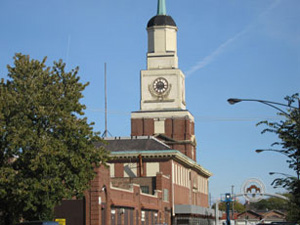
Daley Library, University of Illinois at Chicago

As a lifelong Chicagoan, Mayor Daley has always been part of my life. And by Mayor Daley, I mean both Richard J. Daley and Richard M. Daley. As a boy I lived under the reign of Richard Da First. In Back of the Yards, everyone knew Mayor Daley because his name always appeared on some of our neighborhood programs and in daily conversation. At Holy Cross, the Lithuanian nuns told us how Mayor Daley went to mass every day and was therefore a good Catholic and Chicagoan. Mayor Daley was a man of mythic proportions.

When Mayor Richard J. Daley died in 1976, I, along with many of my family and friends, were in shock. Mayor Daley was the only man we had known as The Mayor of Chicago. The last time I had such a feeling was when President Kennedy was assassinated. There was a period of alienation for Chicagoans during the interregnum until the next Mayor Daley was elected.

All true Chicagoans rejoiced when Richard M. Daley was elected mayor. The present Mayor Daley (Richard Da Second) is always highly criticized and panned for his politics and poor diction (like father, like son), but he always gets reelected, in part because of his father’s fame and reputation as good Chicagoan.

My life has crossed paths with the Daley family on many occasions. And I’m extremely thankful for that connection. Even when I’m not thinking about the Daleys, they remind me of their existence in some surprising way. Of course, there are all the signs at the Chicago airports to which Mayor Daley welcomes you. Then when I least expect it, I see another reminder somewhere totally unexpected. Once, when I was studying at the Saint Xavier University Library, I went to admire a stained glass window. I then noticed a small plaque that dedicated this window to Joseph Daley, father of Richard J. Daley who donated the window.

By good fortune, I was assigned to guard the home of Eleanor “Sis” Daley, the widow of Richard J. Daley, when I was a police officer. No police officer wanted to work the detail because it was perhaps the most boring assignment on the job, so as the rookie, I was assigned to sit it front of the house. I was attending UIC and I used to study while in the unmarked car. No one complained because I was always alert and awake and actually guarding the house. Sis once asked me if I was bored out there, so I told her I was going to school and the guard duty allowed me to catch up on my reading. When I finally graduated, somehow I made it into the Chicago Sun-Times for a Robert Herguth profile. Sis saw my profile and asked me to come into her house. She told me that she was proud of me. She said that her husband wanted to build a university in Chicago for students just like me and that was why UIC existed. She said that UIC was Mayor Daley´s greatest source of pride!

I thought it was a momentous occasion when Mayor Richard J. Daley’s writings went to the UIC library and the library was named after him. Yet another way that Mayor Daley impacted my life!

DDR

Casimir Pulaski Day


Back of the Yards, Chicago, Illinois

Today is Casimir Pulaski Day. Pulaski Day is celebrated the first Monday of every March in Chicago, Cook County, and Illinois. I mean “celebrated” as in Pulaski Day is an official government holiday, but Illinois is the only state in the country where it’s an official holiday. In Chicago, it’s technically also an official holiday. However, it’s not a parking meter holiday, so be sure to feed those meters! That also means I can’t go to the Chicago Public Library today because it’s closed today. Chicago Public Schools and the Cook County offices are also closed today. The United States Post Office just delivered my mail, so it’s not a federal holiday. Pulaski is a particularly important holiday in Chicago because of our large Polish population. In fact, Chicago is the second largest Polish city after Warsaw. 

So, who was Casimir Pulaski? He was a cavalry officer who fought for the U.S. Military during the American Revolution. President Barak Obama, a Chicagoan, signed a resolution that made Pulaski a U.S. citizen last November, 230 years after his death. If you know any Chicagoans, you know that U.S. citizenship is topic that is near and dear to their hearts. Hopefully, President Obama will help resolve the problems of living immigrants next! 

DDR

Bob Bloom Roofing


The south side of Chicago

So, I was at the gas station at 55th and Ashland this morning filling up my tank. The first thing I thought of was how this used to be my neighborhood on the outer boundary of Back of the Yards. I used to wait on this corner for the bus whenever we went to the Museum of Science and Industry. Sometimes we would eat at the Burger King on the corner there. I used to deliver newspapers in that neighborhood. Then, the neighborhood changed, and it became the “bad side of town,” but when I hear that, I have to laugh because it was also called the “bad side of town” when I lived there in the 1960s. So, I’m getting gas there this morning and I’m getting dirty looks from people who think I shouldn’t be on their turf. I just smile at them, knowing they don’t know that I feel comfortable right there on their turf because it’s still my turf.

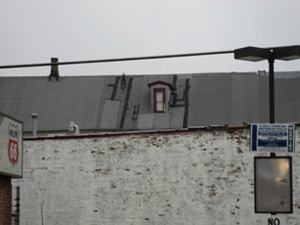
The second thing I thought of was Bob Bloom Roofing. You see, I was pumping gas when I looked up at the roof in front of me, when I wasn’t watching my back. I saw the black tar that repaired a once leaky roof. When I owned my house at 1018 W. 32nd Place, my roof started leaking. At first, I was in denial because I couldn’t afford to get a new roof. I talked to my brother Jerry the fireman because it is a well-known fact that all firemen have a side job because of their work schedule that gives them forty-eight hours off after working twenty-four. In fact, my brother is also painter on the side who will paint apartments, houses, and just about anything else on his days off. In college, he majored in art. So, he’s overqualified to paint your house just in case you’re interested.

Anyway, I told my brother about my leaky roof. Yes, it continued leaking despite my denial. Jerry recommended Bob Bloom Roofing, a fireman who worked with him. Off-duty firemen seem to gravitate toward jobs that involve ladders. Jerry gave me his phone number and Jerry promised to talk to him before I called him. This is how Chicagoans take care of each other. They recommend a contractor who is trustworthy and then they’ll call him up and tell him to take care of his brother, or whomever.

I never actually met Bob Bloom Roofing until years later. To this day, I still think of him as Bob Bloom Roofing because whenever we spoke on the phone, he always, but I mean always, called himself Bob Bloom Roofing. He was always advertising his company. And that’s why I still remember him, I mean his business, all these years later. Anyway, I called him up and explained my roof leak to him. We couldn’t find a mutually convenient time to meet in person at my house because I was busy every day and evening for the next two weeks, but I really needed the leak fixed. Bob Bloom Roofing suggested that he could go check out my roof on the way home from the firehouse. He left me a message saying that it would be an easy repair and he would only charge me about $150. I agreed and within three days my roof was repaired. I mailed the check to Bob Bloom Roofing’s home, and we were both happy with our business transaction.

A couple of years later, another section of my roof leaked, and we went through the same process to repair my roof. I never actually met Bob Bloom Roofing until one day my brother had a party at his house and he invited a lot of his firemen friends. As I wandered through the party, I would introduce myself to the firemen, who are not exactly known for being polite guests. Eventually, I introduced myself to one fireman who responded, “Hi, Bob Bloom Roofing!”

DDR

The Lithuanian Jungle


International Union Stockyards, Chicago, Illinois

So, after I read The Jungle by Upton Sinclair, I read some of the ancillary material at the end of the Norton Critical Edition that added to my understanding of the novel. I read an interesting statement from Wages and Family Budgets in the Chicago Stockyards District: “The Lithuanians, Poles, and Slovaks will work for wages which would seem small to the average American workingman. The standards of living of these workers are comparatively low and over half of them are boarders without families to support, so they can easily underbid Americans, Germans, and Bohemians.” In the novel, we see Jurgis and many other Lithuanians working for low wages that take away jobs from Americans. And they live in deplorable conditions. Well, this accurately describes today’s immigrants, regardless of their origin.

I also read a very interesting book that researched the places described in The Jungle: Upton Sinclair: The Lithuanian Jungle by Giedrius Subacius, whom I met since he is a professor at the University of Illinois at Chicago. This book simply enthralled me because I remembered the areas Subacius describes. When I met him, I had not yet read his book. He described how he went and spoke to people from Back of the Yards. The book has recent pictures of the neighborhood and some from the archives for places that no longer exist. After speaking to him, I tried checking out the book from the UIC Richard J. Daley Library, but it was constantly checked out. I finally checked it out over the summer when no one was using it for class. This book is a must-read for any Chicago history buff.

DDR

Church


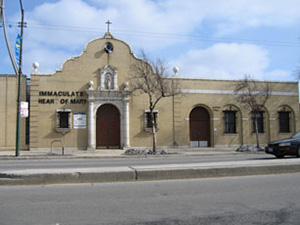
Immaculate Heart of Mary, Back of the Yards, Chicago, Illinois

I don’t often go to church, but when I don’t, I don’t feel guilty at all. When I was in grade school at Holy Cross Church, I went to church at least six times per week. We attended mass before going to our classroom on Monday through Friday. So, now, I don’t feel any real need to attend church.

If I average out my church attendance over the span of my life, I’ve gone to mass more times than many people who claim to be Catholic. Of course, I still go several times a year. This year, I’ve gone every time my son Alex went to mass before his football game. Last spring, I went to my second cousin’s confirmation. Last week, I went to my cousin Shirley’s funeral. But other than that, I haven’t gone to church. I’m not against going to church, but I never think of going on my own without any compelling reason for going.

I suppose the real question for me to answer is, “Do I believe in God?” Well, the answer is, “Once upon a time, I used to.” I was baptized a Catholic and I was confirmed by the time I was three months old. At one time when I was about twelve, I believed in God so much that I really wanted to become a priest. But then I saw the light. I realized that many Catholics were hypocrites, clergy included, and my faith in God was shaken.

When I was in the Marines, I used to go talk to the Catholic chaplain on a regular basis. I’ll be honest: I went to get out of my work detail, rather than discussing any true critical religious crisis. So I figured I had better make it good. I told the chaplain that I no longer believed in God. Which I didn’t at the time. And I still don’t. But I still feel Catholic. Since I was baptized and raised a Catholic, I plan to remain a Catholic and I will never convert to another religion. I’ve known Catholics who converted and became fanatical about their new religion.

I even baptized my sons as Catholics and sent them to a Catholic school. I’ve had friends ask me why I would do that if I’m not really Catholic. I like the sense of tradition. Two of my friends from Spain once grilled me about my Catholicism. “Are you Catholic?” “Yes.” “Do you go to church every Sunday?” “No.” “Then you’re not Catholic!” “I was baptized a Catholic!” “Are your sons Catholic?” “They were baptized Catholic.” “But you’re not Catholic! Why did you baptize them?” “If nothing else, we have something in common.” They were dumbfounded by my logic.

This morning I took my son Alex to his football mass at Most Holy Redeemer Church. I remembered most of the prayers, but there were some new ones. My mind drifted away from the mass several times. I recalled how mass used to be when I was a boy. Things were so different then. When I was an altar boy, only males were allowed near the altar during mass. Back then, there were no altar girls. Only altar boys. And about half of the Eucharist ministers today are women. And the dress code is no longer the stringent dress shirt with a tie and dress pants for males and nice dresses for females with their heads covered. I was shocked to see worshipers coming to mass wearing jeans, shorts, gym shoes, flip flops, and t-shirts. On the other hand, the church was fairly full and most people participated in the prayers and hymns. Overall, I got the feeling that they were true believers.

DDR