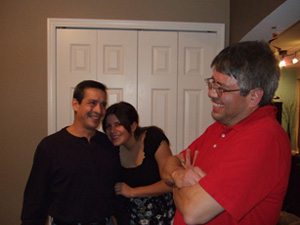
Spanish students


Traffic crash scene at the corner of Clark and Randolph.

Oftentimes, I will meet one of my present or former Spanish students unexpectedly. I’m always happy to see them again, but I usually meet them long after I’ve forgotten their names.

Once I was at the McDonald’s Playland near Midway Airport with my twin sons when they were about four years old and one of my former students greeted me with a loud and friendly, ¡Hola! I was happy to see her again, but this time she was with her young son and she was happy with her life.

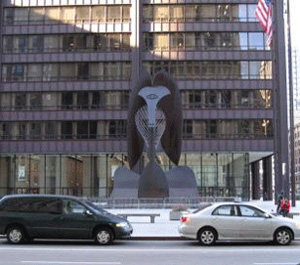
Once while I was on duty as a police officer working in a patrol car, I was assigned to park my squad car with the blue lights flashing so other cars wouldn’t crash into a car that had crashed into the Cook County / City Hall building downtown. This must have been a slow news day because all kinds of cameramen came by to film the car that had crashed into the building while I just sat there in my squad car watching everyone come and go.

Then, I noticed that one cameraman was looking at me as he walked past. I couldn’t help but notice him, too. Then, we both recognized each other! He was in my Spanish class at UIC! He also recognized me. We kind of looked at each other with a look that could only mean, “This is what you do for a living?” I never imagined him as a cameraman. And he definitely never imagined me as a police officer.

Another time I was downtown where an employee of Dunkin Donuts was a theft victim. As I walked into Dunkin Donuts, one of my students saw me. We greeted each other and that was about it. However, I realized afterwards that he saw me in full police uniform walking into a Dunkin Donuts. How cliche! I was actually responding to a radio assignment, but I appeared to be acting like a typical cliché police officer going for coffee and donuts.

Last Saturday, as I was leaving the Burger King in Mount Greenwood with my twins, I saw a former Spanish student in the parking lot. We said hello to each other and then I noticed that he was with Mark Pera who is running for Congress so they gave me a flyer and asked me to vote for him. I responded that I would think about it. When I got home, just by chance, Mark Pera’s campaign office called me and asked me to vote for him. I told the caller that I had just seen him, but she didn’t believe me.

DDR

Man meeting


Dr. D. in México.

Attention, men. The man meeting is now called to order. Wait a minute. I’m sorry but no ladies are allowed. I’m sorry, sir, but she can’t stay. Well, if she won’t let you stay, then you don’t really belong here. Good riddance. Wus! This is a man meeting after all. The man meeting is now called to order.

There really is no such thing as a man meeting per se.

However, I have been involved in conversations that could only have occurred among just men. Usually as we gather around under the hood of someone’s new car. And we’re male bonding over a few beers. These conversations delve into various topics that we males feel comfortable discussing with other males exclusively. And it’s not that we haven’t discussed these topics with women before, but the tone of the conversation is different.

I guess you could say it’s male bonding in action. And it can occur anywhere and under the most unusual circumstances. I’ve had these conversations with total strangers, for example, as we waited for our womenfolk outside the women’s restroom when they have to wait in a long line.

Of course, the conversation ends abruptly as soon as one of our women joins us. Because we can’t divulge our man secrets!

DDR

Newspaper routes


Bridgeport News, Chicago, Illinois

When I was in Holy Cross School, I had several paper routes and I really enjoyed delivering newspapers. My best friend in the fourth grade was Patrick McDonnell. One day he asked me to help him deliver newspapers on his paper route. One of his older brothers had the paper route, but when he got tired of delivering newspapers, he gave the paper route to his brother Patrick. In those days, it was almost impossible to get a paper route on your own. True to Chicago tradition, you even needed clout to get a paper route.

I helped Patrick deliver his newspaper, The Chicago American, for a few days. One day, he asked me if I knew who all the customers were. Of course, I did! “That’s good,” he said. “Because you can have the paper route!” He had gotten tired of delivering papers and couldn’t quit the paper route until he found a replacement.

Well, I was extremely happy to be his replacement because I loved delivering newspapers and I especially loved having some spending money. I’m not sure how long I had that paper route, but it was long enough to see the Chicago American become the Chicago Today. I loved reading the newspaper as I walked door to door delivering it. Then one day, the Chicago Today folded and I was out of a job. But it was fun while it lasted.

Months later, my friend Patrick asked me to help him with his paper route again. He had found another paper route and again he was tired of delivering newspapers on his bicycle. He immediately thought of me as his replacement. This route had many more customers than the other one and you needed to deliver the papers on a bicycle because this route covered our entire neighborhood. This paper route was the most memorable one for me. Paper route number 9! I really learned a lot about life while delivering newspapers on this route. And I also truly learned a lot about the Back of the Yards and its residents. On this route, I delivered the Chicago Daily News, the Chicago Zgoda, and the Chicagowski, the last two were newspapers published in Polish. I tried to read the Polish newspapers, but they seemed be written in a foreign language to me. And most of the Polish subscribers hardly knew English, but we always understood each other.

There were two facets to delivering newspapers. One was the actual delivery of the newspapers. Some subscribers wanted it delivered in a certain way. Folded without a rubber band, or with a rubber band. On the front porch, or on the back porch. Between the screen door and the door. There were considerate customers who didn’t mind if I just rode past on my bike and threw the paper on their front porch. And my aim was true, most of the time.

One day, as I was approaching a house next to the alley, I was about to throw the newspaper on the porch when suddenly a car sped out of the alley. I was shaken a little and when I released the newspaper, it broke the glass on the storm door. I was so scared that I kept riding and delivering papers. When I returned to the newspaper agency, the subscriber had already reported me to my boss, Ernest Pressman. I swear. That was his real name. She knew it was an accident and she only wanted me to pay for the broken window. I remember I had to pay about four dollars for a new window, roughly my weekly salary before tips.

Sometimes delivering the newspaper could be downright dangerous. One customer wanted the paper delivered in the rear hallway. What I didn’t know was that sometimes she kept her German Shepherd there. One day, I open the hallway door and saw the German Shepherd lounging at my hand that was attempting to drop the newspaper in the hallway. I quickly shoved the newspaper in his mouth and slammed the door shut. I was waiting for another reprimand from Mr. Pressman when I returned to the newspaper agency, but I was never reported for this.

The second facet was collecting the money for the subscriptions. Collecting money from some customers required an excellent memory, ruses, and stratagems. All this just to collect a measly fifty cents! I had to remember what day they got paid so I could go collect the money that day before they squandered it away on rent, food, utilities, and other such nonsense. And I also had to make sure I had enough change so they could pay, and I could give them change. They wouldn’t pay unless I gave them correct change.

One woman once asked me if I had change for a five. Of course, I did. So, then she upped it to ten dollars. I told her I had change for a ten, too. Then, she said for a twenty and I said yes. She then told me she had a fifty-dollar bill and I showed her that I had enough change. I was ready for her because she had tried this before. She then paid me in exact change and gave me a nickel for a tip.

I mean I got to know all of my customers very well. One woman told me to collect the money on Saturday morning at 8:00 a.m. and then wait for about ten to fifteen minutes until she opened the door. Not a problem, I told her. All I wanted to do was collect my money, and hopefully, a small tip. The reason she wanted me to knock on her door so early was that I was her Saturday-morning alarm clock. And she took so long to open the door because she went to the bathroom first. I always hoped she washed her hands.

I delivered the Daily News to a bar on the corner of 43rd Street and Wolcott. When the bartender paid for the subscription, he would tip me fifty cents and tell me to take a bag of Mrs. Vitner’s potato chips, any candy bar of my choice, and a pack of gum. One customer I never saw. She left me a note on her door in the rear hallway saying she would leave the money hidden in a crack in the wall. I was pleased by this arrangement because this mystery woman tipped well.

One little old Polish lady always wanted me to deliver both the Zgoda and Chicagowski directly into her hands. So, I had to get off my bike, go knock on her door, she would say something in Polish that I didn’t understand, I would say I was the paperboy, and then she would open the door. I did this every day! Actually, I didn’t mind doing it, either. Of course, she wasn’t a big tipper, either, even though she considered herself extremely generous. On the day I had to collect the money for the subscription, she would tell me to enter her apartment and lock the door behind me. She would give a crisp brand-new dollar bill to pay for her bill of ninety-nine cents. I would then give her her change of one cent, which she would give back to me immediately as my tip and insist that I put the penny in a different pocket because that penny was for me and not the newspaper agency. Most subscribers would tip a nickel or a dime and that was extremely generous in all reality. But I really loved going through this weekly ritual for my one-cent tip! Sometimes I had to run out of the apartment so she wouldn’t hear me when I couldn’t contain my laughter anymore. I really loved this little old Polish lady!

There was another little old Polish lady on paper route who received the Chicago Daily News, the Zgoda, and the Chicagowski. Her bill was about $1.50 per week. She wasn’t as demanding about her delivery, either. When I went to collect the money for her subscription, she would tip me 100%. I told her that $1.50 was way too much money for the tip, but she insisted. Well, being the polite Mexican boy that I was, I would pocket the money, in a different pocket, of course, so the Mr. Pressman wouldn’t get my tip. Sometimes, she would feel really guilty about the tip and slip me an extra nickel or dime before I walked out!

DDR

Holy Cross


Holy Cross Church, Back of the Yards, Chicago, Illinois

I spent a significant number of years during my coming of age at Holy Cross Church and Holy Cross School. This parish was founded in the 1890s by Lithuanian immigrants. In the 1930s, there was a large influx of Mexican immigrants to Back of the Yards, which is one of the main reasons our family moved to the neighborhood in the 1960s after having lived in Pilsen.

I attended Holy Cross School from kindergarten through eighth grade and I graduated on June 6, 1971. The study habits I developed during this time served me well the rest of my years in school, especially college. Of course, it helped that all the teachers were strict Lithuanian Catholic nuns, with exception of Mr. Hovanec the history teacher. Nothing instills healthy study habits better than the fear of being disciplined with corporal punishment by a nun wielding a yardstick and a man’s name such as Sister Joseph or Sister Bartholomew.

Of course, during the 1960s there was a movement to convert U.S. to the metric system and move away from the English system of measurement that even the English didn’t use anymore. Our nuns participated in the metric system conversion by trading in their yardsticks for meter sticks when they hit us. That meant 3.37 more inches of pain. These nuns really wanted us to learn so we would go on to excel in high school and college. The school was very strict and if the corporal punishment didn’t straighten out a student quickly, expulsion was imminent. Once the principal, Sister Cecilia, lectured us on the importance of behaving well because our school record now could affect us later as adults. Recently, she told us, a former Holy Cross student applied to become an FBI agent and the FBI came to Holy Cross to see what kind of student he was. Well, that was enough to scare me into being a good student.

At school most of my friends were either Lithuanian or Mexican. Everyone had to learn English. Everyone had to become a good American citizen. In fact, the nuns constantly reminded us that any one of us could one day grow up to become the President of the United States. We always had to study hard and be on our best behavior. But somehow someone always got in trouble. I used to get in trouble for laughing at the class clown. When the nun would ask me what was so funny, I would tell her and she didn’t understand why I would laugh at such a thing. Looking back, I see her point.

Above all, they taught us to be good Catholics. We went to church everyday before going to school. If we were late for morning mass, we were considered late for school. Back then I thought the whole world was Catholic. Everyone I knew was Catholic. My parents, my brothers, my aunts, my uncles, my cousins, the nuns, our pastor, I mean everybody. Even famous people were Catholic. Mayor Richard J. Daley was Catholic and he was well-known for stopping at St. Peter’s on Madison Street to hear mass before going to City Hall. President John F. Kennedy was Catholic. The nuns would proudly remind us at every opportunity. To me, the whole world was Catholic. Even the Pope was Catholic! So why did he wear a yarmulke?

Of course, attending a private school meant paying tuition and having fundraisers. As I recall, we had one fundraiser after another all year, culminating in the parish carnival in June. We had raffles for everything. One year, the raffle prize was a brand new station wagon, and miraculously, one of the nuns had the winning ticket. There were bake sales, rummage sales, Christmas card sales, movie showings, and sometimes just outright petitions for donations for certain goals either at school or church.

I remember that I liked selling the Christmas cards door to door. My brother Tato and I teamed up one year on a cold, snowy day. We carried our boxes of Christmas cards with us and didn’t have much luck selling them at first. Then, we were at one house on the icy porch of a woman who had just refused to buy a box of Christmas cards from us. As my brother started walking down the stairs, he accidentally slipped on the ice and rolled down about eight stairs all the way to the bottom. Well, the woman asked if he was okay–he was because we always bundled up in multiple layers on cold days like this. Then she bought a box of Christmas cards from us. I think she was afraid of a civil lawsuit. At the next house, the woman didn’t want any Christmas cards either, until my brother “accidentally” fell down the stairs again. This was my brother’s brilliant idea and he kept falling until we had sold all our Christmas cards!

DDR

U.C.T.C.


Ted M. Haydon 1912-1985

I once belonged to the University of Chicago Track Club that was famous for its coach Ted Haydon because of his humorous personality and his uncanny ability to attract word-class runners and mediocre runners alike. He was the U.S.A. track coach for the 1968 Mexico City Olympics, but back home in Chicago he coached all comers regardless of ability. He took a personal interest in all his runners and remembered personal details about all of them. He actually knew everyone’s name and at least one personal detail  about every runner in his track club. All his runners loved him.

I remember him because he took a personal interest in my standup comedy. He told me about how the very famous comedian Dick Gregory had once belonged to U.C.T.C. and had performed his comedy routine at the annual track club dinner. Ted offered me the same opportunity to perform at the dinner in 1984 and 1985. I was extremely nervous, but I performed anyway, with moderate success. As a result of my first performance, I was asked to write the humor column “Dear Dr. Sidestitch” for the CARA Finish Line. Of course, I was really thankful to Ted for this opportunity because from then on I took comedy more seriously.

Once, I noticed that some of the club members began wearing T-shirts that had the letters “FYMNITH” on the back. I tried unsuccessfully to decode this cryptic message. Finally, someone told that when Ted was a student at the University of Chicago in the 1950s, his friends would approach strangers on campus and shout, “Fuck you!” As they ran away, they would say, “My name is Ted Haydon.” Hence the letters on the back of the T-shirts. When I asked Ted if he approved of this new track club apparel, he merely smiled, but said nothing.

Click here to read an article that I wrote about Ted Haydon for the Illinois Runner in May of 1985:

http://davidrodriguez.us/docs/haydon.html 

DDR