Believe it or not, I once used to be a joke writer. Of course, I’m exaggerating when I call myself a joke writer. In high school, I sent off a few dozen jokes to some of the magazines I used to read. I was actually paid five dollars for a joke that they printed. But I can’t even remember the joke.
Before I built up the courage to be a standup comedian, I wrote a lot of jokes. My mother and I loved to tell each other jokes, so one Christmas she gave me a subscription to a joke magazine called Ribticklers and Kneeslappers. I really loved reading that magazine because of the jokes in there. Of course, I soon thought up a few jokes and sent them in. They published one and printed my name in the magazine, but I don’t remember if they paid me anything or not. However, I do remember the joke, the only one they published: The receptionist tells her boss, “You have a client on the phone.” And the boss says, “Well, tell him to get off of it before he breaks it!” With jokes like that, I still can’t figure out why I never made it as a professional comedy writer.
As a comedian, I wrote my own jokes, but I also had some help from my friends. I also helped tweak jokes for my fellow comedians. During this time, I responded to an ad for a comedy writer for a comedian in California. She described herself and her act and I sent her about twenty-five jokes. Out of all those jokes, she eventually bought one for five dollars and returned the rest. I was also going to write for a local cable TV comedy sitcom. We met a few times and then the show was cancelled. Of course, because I was a standup comedian, I was offered to write a humor column for the Chicago Area Runners Association in their magazine, The Finish Line. For about two years I was Dear Dr. Sidestitch who offered runners humorous advice, which led to me publishing a few humorous running stories in the Illinois Runner and other publications.
At Derby Foods, our parent company Beatrice had a caption contest in the company publication. They provided four historical photos of the factory scenes and we had to provide a caption. I submitted captions for all four pictures and I was sure that I would for all four pictures. But alas, I only won the caption contest for only one picture. I don’t really remember the caption now, but everyone at work thought it was funny. And I received fifty dollars for my caption!
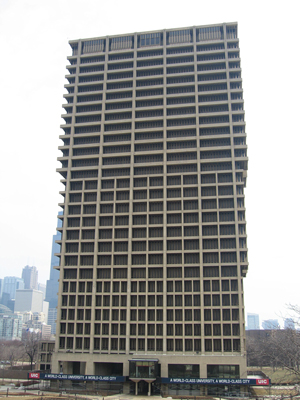
I graduated from the University of Illinois at Chicago (UIC) with many degrees in both English and Spanish. I had always wanted to learn Spanish formally and UIC turned out to be the ideal place for me because I also worked full-time. First, I liked the difference here at UIC from my high school Spanish classes. In high school, when I asked to take Spanish, the counselors thought all I wanted was an easy A. At UIC, the Spanish department taught a Spanish class for Spanish speakers. And no one questioned my motives. These classes were difficult, but I did learn Spanish. I learned to read, write, and speak Spanish properly. I also learned about the different dialects of Spanish from various Spanish-speaking regions, including the United States with the fifth largest population of Spanish speakers.
I also earned an M.A. in English and an M.A. in Spanish from UIC. I knew then that I wanted to study for my Ph.D. But I was planning to stay at UIC and getting it in English. However, the Spanish department started a doctoral program in Hispanic Studies. I was torn over what program to choose. I wanted to continue studying Spanish, but I also loved American and English literature. I thought of going to another university for my Ph.D., but since I worked full-time, my options were limited. A classmate of mine told me that she had visited the Northwestern University Spanish department to see about applying for their doctoral program. One of the professors there told her that she was better off staying at UIC. I decided to look elsewhere. I also thought of applying to the University of Chicago since it is a very prestigious university, and besides, it was remarkably close to my house. At the time, those three were the only universities in Chicago with a doctoral program in Spanish.
UIC seemed to be my best option. So, I looked at their Spanish department more closely. I was incredibly surprised at my discoveries. Despite the usual bureaucratic problems from which no university is immune, I liked what I saw. In fact, I was impressed! Graduate students came from all over the Spanish-speaking world to study Spanish at UIC! Every class that I took at UIC was taught by a native Spanish speaker. UIC had Spanish professors who were famous in Spain and Mexico and other Spanish speaking countries. So, the choice was obvious. I am proud to say that I earned my Ph.D. in Hispanic Studies with an emphasis on literature from UIC!
When I attended Divine Heart Seminary, I made the best of the situation even though I didn’t want to be there. First of all, I’m a freshman living in a seminary dormitory away from home for the first time in my life. Second of all, my daily chore after morning prayers is cleaning the lavatory that is located near the refectory. These two words were not part of my everyday vocabulary. At Holy Cross School, Sister Cecilia called the bathroom the “lavatory,” but we only used “lavatory” when we were mocking her far away from school–lest we get caught by her and she inflicted physical pain upon us. I actually had to ask what a “refectory” was. That was the seminary dining hall where the entire seminary ate all their meals together. Eating in a refectory made me feel as if I were sent away to a medieval monastery. All I need was the monk’s cell and robes.
So we would wake up, shower, dress, go to the chapel for morning prayers, go to the refectory to eat breakfast, and then we would do our morning chores. As luck would have it, I had the most undesirable of all the available chores at the seminary. I was assigned to clean the lavatory by the refectory. To me, there is no worse chore than cleaning the bathroom, especially if on top of that you have to call it a lavatory! And Eric Chronister the senior in charge of supervising the underclassmen would make sure that I did a very thorough job. He was such a warm, friendly person that when he explained how he wanted me to clean the bathroom, I mean lavatory, he would actually make it sound like I had received a plum assignment. So I actually didn’t mind cleaning the lavatory by the refectory anymore. On the plus side, I discovered that I enjoyed reading the graffiti before I wiped it away. The only interesting one that I remember now is, “Flush twice. It’s a long way to the kitchen.” I wasn’t sure why the seminarians complained about the food because it was some of the best food I had ever eaten. Students complained that it wasn’t as good as their mother’s food, but I liked it because my mother rarely cooked before I went away to the seminary.
Oh, yes, back to my cleaning of the lavatory. When I mastered these newly learned lavatory cleaning skills, I had time left over during chores to tour the immediate vicinity of my lavatory. The laundry room was right around the corner. The kitchen and bakery were down the hall across from the refectory. I really wished I had the chore of sorting laundry. That seemed like a fun and easy job. But then I stumbled upon a series of remarkable coincidences.
I joined the Explorers who went on camping trips on weekends. I’m not sure why, but I always wanted to go camping at least once in my life so I joined. On our first camping trip, I learned that Eric my chores supervisor was also in the Explorers and he went on the camping trip with us. Just by chance, we are the last two awake one night sitting around the campfire. I was afraid to talk to him since I was a lowly freshman and he was a senior and had a lot of power since he assigned all the chores. We talked of many things before he asked me how I liked the seminary. I was very honest and explained my whole situation to him. He was genuinely concerned about me. I then explained to him how much I hated cleaning the lavatory and I asked how he could assign that chore to me. He was very apologetic and explained to me that I was just a name on the list when he made the assignments. He didn’t even know me at the time. But in order to make it up to me, he asked me what chore I would like the next time the assignments were made. He felt so bad about assigning me to the lavatory that he said I could choose any chore and he would give it to me. I said I wanted to work in the laundry room and sure enough the next month I was sorting laundry to my heart’s content!
At the seminary, everyone had name tags sewn on to every item of clothing that was dropped down a laundry chute to be washed. We sorted out the clothes by name and placed them in cubbyhole shelves for everyone to pick up. The clothes were washed in the next room, but I really couldn’t see who washed the clothes. It’s like it was supposed to be a great mystery for us. Eventually, I learned that we had nuns in the seminary who did the laundry. I was really surprised because no one told there were nuns at the seminary. I thought only males were there. One day, one of the nuns starts talking to me and I respond. It wasn’t until a few sentences into the conversation that I realized that we were speaking Spanish. Why, I wondered, was she speaking Spanish? Well, she was from a Catholic order of nuns from Mexico. They lived at the convent on the seminary campus.
Soon, I was talking to other nuns in Spanish. These nuns spoke very little English. I was amazed that these Mexican nuns were at a seminary in Donaldson, Indiana. That’s the thing about Mexicans. There turn up out of the blue where you least expect them. To this day, I’m not sure why these Mexican nuns were at the seminary. They were there to cook and bake in the kitchen and bakery and wash and mend clothes. And since they were from Mexico, they didn’t really understand the American way of life.
For example, several athletes dropped their jockstraps down the laundry chute to be washed. Well, since they had never seen a jockstrap in Mexico, and since they were nuns who had taken vows of chastity, they didn’t know the intended purpose of a jockstrap. They really had lived a sheltered life. So when I was sorting laundry, I was putting away what I thought were a pair of men’s briefs. At first, they looked like men’s underwear, but then I realized that I was holding a jockstrap with cotton material sewn all around to cover wearer’s buttocks and other exposed parts of the human anatomy. They had sewn sides and rears to all of the jockstraps!
Well, since I was in the laundry room, a few of the nuns used to come to talk to me during chores because they liked talking to me in Spanish. One day, one of the nuns who cooked suggested that I try to get assigned to the kitchen for chores so we could talk in Spanish. She said she wanted me to practice my Spanish, but I think that she liked talking in Spanish to someone else besides another nun. She said I could peel potatoes in the kitchen and she showed me how easy it was. First, we washed the potatoes, then we put them in this big machine that spun them around and removed most of the peel. I would only have use the potato peeler to remove the eyes that the machine couldn’t remove. I would them put them into a giant pot filled with water and baking soda so the potatoes wouldn’t turn brown. We would peel a potful everyday.
This job was a little more difficult than the one in the laundry room, but I liked talking to the nuns. On the very next camping trip, I asked Eric if I could be assigned to peel potatoes. He was surprised because no one liked this chore. The next month, I was peeling potatoes to my heart’s content! The beauty of this chore was something I had not anticipated. Some days, instead of peeling potatoes, I would peel apples so the Mexican nuns could bake good old fashioned American apple pie. I always looked forward to peeling apples even though I couldn’t peel them in the automatic peeler because the apple would bruise in there. Well, I knew I would be offered the first slice of apple pie by the nuns! They told me I could come in at any time to eat apple pie. Of course, I would have to sneak in so no one else could see me.
One day, everyone at the seminary was excited that a TV station would present the world premier of Love Story, a movie that was apparently all the rage. However, I didn’t understand why everyone was so excited about this movie, as usual. Of course, I watched Love Story with everyone else because I didn’t want to be the only person at the seminary who didn’t watch Love Story. That would have made me more of an outcast than I already was.
Yes, I watched Love Story and liked it, but I didn’t cry like everyone else. Most of the boys watching the movie in the rec room of the new gym building were actually crying and looking around to see if anyone actually saw them crying. Of course, I didn’t cry. I mean, it was just a movie! Anyway, I bring up Love Story because during chores for about the next two weeks all the nuns talk about is Love Story. I was so glad that I watched it because I would have hated to disappoint the nuns. They loved discussing the movie with me. They even asked me if I cried at the end. Of course, I did, I told them, because I knew that’s what they wanted to hear.
One nun actually hugged me and told me that I was a good Mexican boy! One day, one of the youngest nuns invites me to visit her at their convent. I go because I enjoy the company of these nuns. I wasn’t sure what to expect, but I went anyway. The young nun who invited me answers the door and invites me to sit in their receiving room. We talk awhile, in Spanish, of course. We talked about Love Story a little. Then she asked me if I liked music. When I said yes, she said that she’d be right back. I had no idea why she left, but then she returned with a guitar and a songbook of lovesongs. She was learning to play the guitar and she wanted me to tell her what I thought of her musical ability. Since we both cried at the end of Love Story, she plays the movie’s theme song on the guitar and sings, “Where do I begin? To tell the story of how great a love can be.” But that was the only time I ever heard her speak English. She was very good, in my humble opinion. She sang and played every song in songbook. I felt so much love that evening! After that, I would visit her regualarly.
Soon, I left the seminary because I didn’t want to be there in the first place. But I did miss the nuns. I occasionally think about the youngest nun, even though I don’t remember her name. I was sixteen at the time and she was probably only two or three years older than me. But I went away. And I never heard from the Mexican nuns again.
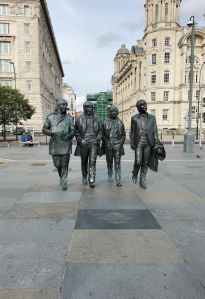
I’m not sure what happened to me, but I was the last kid in Holy Cross School to learn about the latest phenomenon sweeping the country known as the Beatles. To this day, I’m not sure how I remained so oblivious for so long.
One day in the third grade, Sister Francine announced that the Beatles had come to Holy Cross and everyone one in class started screaming hysterically–except for me. I almost panicked since I didn’t understand the true nature of this Beatles invasion.
Luckily, my best friend Patrick who was wise to the ways of the world informed me that the Beatles was a British rock band and that I could come out from under my desk now. Later during the school day, there was a mysterious knocking on the classroom door and Sister Francine opened the door and shouted, “The Beatles are here!” And again the whole class screamed hysterically–except for me, again. But this time I didn’t dive under my desk.
Four girls with black hair who had bangs and their hair tied back were dressed in black turtleneck shirts and black pants. They had electric guitars and a couple of snare drums. They were the Beatles. They also brought in the school phonograph that looked like a small suitcase and played some 45 rpm records of the Beatles on it. The only songs I remember are “She Loves You, Yeah, Yeah, Yeah” and “I Wanna Hold Your Hand.”
They lip synced the words and the whole class swarmed around them and screamed continuously. I was the last student sitting until Patrick cued me in to swarm around the band, too. When the Beatles finished playing their set, everyone asked for their autographs. I really didn’t understand what they were doing until Patrick explained everything to me and handed me a pencil and a piece of paper. He pushed me toward the Beatles in order to get an autograph. I approached the drummer since no one was near her and I knew her as Teresa Rosiles from the neighborhood. She signed my paper as Ringo Starr. I didn’t even know who Ringo Starr was, but Patrick explained all about the Beatles and Paul and John and George and Ringo to me. To be truthful, I don’t know where I would be today if I had never met Patrick McDonnell.
A few years later when I delivered newspapers on the 4800 block of south Honore Street, I saw a poster in the window of one of those mom and pop grocery stores in the middle of the block. The Beatles were advertising their concert in Comiskey Park in August of 1965. Every time I saw that poster, I would remember fondly the time I went to my first Beatles concert at Holy Cross School!
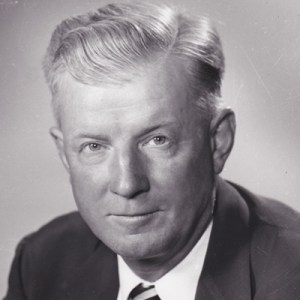
I once belonged to the University of Chicago Track Club that was famous for its coach Ted Haydon because of his humorous personality and his uncanny ability to attract word-class runners and mediocre runners alike. He was the U.S.A. track coach for the 1968 Mexico City Olympics, but back home in Chicago he coached all comers regardless of ability. He took a personal interest in all his runners and remembered personal details about all of them. He actually knew everyone’s name and at least one personal detail about every runner in his track club. All his runners loved him.
I remember him because he took a personal interest in my standup comedy. He told me about how the very famous comedian Dick Gregory had once belonged to U.C.T.C. and had performed his comedy routine at the annual track club dinner. Ted offered me the same opportunity to perform at the dinner in 1984 and 1985. I was extremely nervous, but I performed anyway, with moderate success. As a result of my first performance, I was asked to write the humor column “Dear Dr. Sidestitch” for the CARA Finish Line. Of course, I was really thankful to Ted for this opportunity because from then on I took comedy more seriously.
Once, I noticed that some of the club members began wearing T-shirts that had the letters “FYMNITH” on the back. I tried unsuccessfully to decode this cryptic message. Finally, someone told that when Ted was a student at the University of Chicago in the 1950s, his friends would approach strangers on campus and shout, “Fuck you!” As they ran away, they would say, “My name is Ted Haydon.” Hence the letters on the back of the T-shirts. When I asked Ted if he approved of this new track club apparel, he merely smiled, but said nothing.
Click here to read an article that I wrote about Ted Haydon for the Illinois Runner in May of 1985:


 Chicago USA