Restaurant


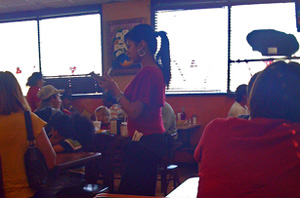
Today, my sons and I went to a restaurant for supper. I often take them out to eat when they visit me. One, I’m not a very good cook. Two, I’m too lazy to cook and then wash the dishes afterwards. And three, I want my sons to know proper restaurant etiquette and protocol. My oldest son who is eighteen hardly eats out with us anymore because he’s at that age where he prefers to be with his friends. My twelve-year-old fraternal twins and I go to a restaurant at least once a week. I always make sure they learn some new fact about restaurant dining. Today, we discussed how the restaurant pays the waitress a very low wage, so she depends on tips for most of her income. Why do I do this? Because when I was a boy, we never went to restaurants. Mexicans just didn’t go to restaurants. It was cheaper to eat at home or bring your own food to the park, to the beach, to wherever. I want to save my sons from some of the embarrassment that I endured the first few times I went to restaurant because my parents had never taken me to one. I had to learn the hard way.

I must have been about eleven or twelve years old the very first time I went to a restaurant. I had found a dollar at the park and I thought that I would like to go to a restaurant. Since my parents would never take me, I would go by myself. I knew exactly which restaurant, too. There was one on the corner right by Peoples Theater at 47th and Marshfield. This restaurant caught my attention the very first time because a car had crashed halfway into its front door. I actually saw the accident, which made it all the more exciting. The next summer, I rode my bike past the restaurant minutes after another car had crashed into it. About two months later, yet another car crashed into it. Somehow, this seemed like a restaurant where I wanted to eat. Often, I would ride by on my bike and stop to look at the menu in the window. Of course, I would always listen for cars that were about to crash into the restaurant. So when I found the dollar I knew I could afford to eat there. For sixty-five cents, I could order the cheeseburger with fries and a Coke. And still have change leftover.

Well, since I had never eaten at a restaurant, I walked in and didn’t know what to do. I was staring at everyone in the restaurant when a waitress approached me. She asked me if I was lost. I said that I came to eat there and showed her my dollar. Well, actually, I handed it to her because I didn’t think she would serve until I paid first. She put my dollar back in my pocket and asked me where I would like to sit. I said, way in the back somewhere, away from the front door and windows, lest another car come crashing through.

The waitress was very nice to me, took my order, and later brought out my food. She kept coming back to ask me if everything was fine. When I finished eating, she asked me if I wanted anything else, which I didn’t, since I couldn’t afford anything else. Later, she brought me this little piece of paper which I didn’t understand. It said check at the top, but since I didn’t speak English that well, I recalled that the only time I heard the word check was when my parents talked about getting paid for work with a check.

After the waitress left me the check, I never saw her again. I waited for her to come back so I could pay her. I looked all over for her. I went to bathroom and I didn’t see her anywhere. I didn’t understand why she would give me a check when I didn’t do any work. I waited for her patiently. I’m not sure how long I waited, but it was a very long time because I started feeling hungry again. Finally, I just left–with the check and my dollar.

To this day, I feel embarrassed about what I did that day. But, hey, I didn’t know any better. In order to atone for that faux pas, I teach my sons the proper way to eat at a restaurant and the importance of tipping. When I explained this ritual to my sons, Alex told us how his friend Jack didn’t understand tipping. Jack’s family went to restaurant eat. There were a lot of people, so Jack’s father left a hundred-dollar bill on the table for the tip. When they got home, Jack told his dad, “You forgot this on the table,” and handed his dad the hundred-dollar bill!

DDR

La llorona


I couldn’t find a picture of la llorona

When I was a boy, one of the scariest people of my life was la llorona. La llorona had no children of her own because she had killed them. So she wandered around after her death looking for her children so she could rest in peace.

I never actually met her, or even saw her, but my mother always told me that la llorona was always looking for me or any boy or girl who didn’t obey their parents. She usually came out after dark looking for children who didn’t listen to their parents and stayed out too long into the night. If la llorona saw us, she would snatch us up thinking we were her children. Apparently she didn’t have very good eyesight.

Who was she? I don’t know since I never actually saw her, although I could always feel her presence. No matter where I went, in Chicago or México, la llorona was always nearby. I know this for a fact because my mother always reminded me.

When I was about six, my mother told me how she actually saw la llorona in Huatusco, Veracruz. When my mother was a girl, her mother told her to go to bed at sunset, which she did. But when my mother thought her mother was asleep, she sneaked out of the house through a window and she went to visit her friend who also went out her window to meet my mother.

They were wandering the streets of Huatusco–there were only two back then–at night and no one was out. That’s because all good boys and girls were home in bed sleeping. Suddenly, they felt a cold breeze and saw an old woman walking toward them. When they finally realized it was la llorona, it was too late to run away. La llorona grabbed my mother and her friend by the wrist and she was taking them away. Somehow, my mother managed to escape. But her friend wasn’t so lucky. She was never seen nor heard from again. My mother ran home and immediately went to bed, but she couldn’t sleep because of the fright she had just suffered.

The next day, the whole town is wondering what had happened to my mother’s friend. Finally, my mother speaks up even though she knows she’ll get in trouble. Well, everyone in the town was satisfied with my mother’s explanation and her mother didn’t punish her because she had been punished enough because she actually felt the cold hand of la llorona.

What about the missing girl? Well, she had it coming to her because she had disobeyed her parents. All the parents in the town made sure that their children knew about what la llorona had done. So, whenever I wanted to stay out late and my mother wanted to go home, she would remind me of la  llorona and how she would snatch me up.

DDR

My mother’s generosity


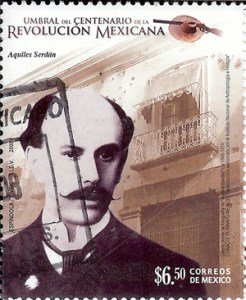
Mexican stamp

My mother always loved to help everyone in any way possible. If she met a family that was down on their luck, she would help them, even though we were just slightly better off than them.

Once when I came home after school, I went to my room to read my comic books and–they were all gone! I asked my mother where they were, and she said she had given them away. She said, “I didn’t think you wanted them.” Of course, I wanted them, but my mother had helped a family and their boys needed something to read! But why my comic books?

When we went to Mexico one winter, we had our fun there for two months. But then, as we were leaving, my mother, with great ceremony, made us give all our clothes that we had brought with us to our cousins.

We went back to Chicago with little more than the clothes we were wearing. I had to give my favorite boots to my cousin. You know the kind: yellow leather high-top construction boots. I argued with my mother the day before we left about this, and I refused to give away my favorite boots. As we were putting our luggage in the car to go to the train station, my mother told me to give my boots to my cousin. Since all the family was standing there giving us a warm sendoff, I didn’t argue. I gave my boots to her, and I hugged her warmly and we kissed each other before we left.

When I went to Mexico last December, she reminded me about the boots that I had all but forgotten. She told me how much she enjoyed wearing them and how she always thought of us because she wore my boots. Only then, did I feel happy about giving my boots to her.

DDR

Pobre pero honrado


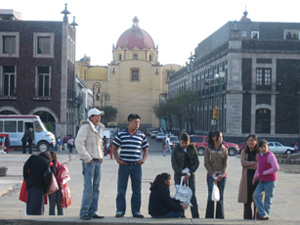
Toluca, México

That’s the thing about Mexicans. They have a different standard for measuring success. For as long as I can remember, Mexicans take great pride in being hard workers. Nothing else matters to them. And that’s why they’re destined to remain in the ranks of the middle class. Pobre, pero honrado means poor but honorable. So as long as a Mexican works hard, he or she is respected and nothing else matters. Through hard work, a Mexican will never starve to death. He or she may never get ahead in life, but at least these Mexicans are honorable. If they have two or three jobs just to feed and house la familia, so much the better. Whenever I met a Mexican girlfriend’s parents, they would be impressed by the fact that I had a good-paying factory job. They liked the fact that I was hard worker. However, I learned early in life that if my girlfriend’s parents liked me, that was the kiss of death for our relationship.

The greatest compliment you could pay to my father was: You’re such a great worker! Every time someone told him that at work, he would be sure to tell us as soon as he got home. My mother was also proud to be called a hard worker. In fact, she never rested. She worked a full-time job in a factory and then she would come home and work around the house. When my father came home, he would rest because he already did his work for the day. My mother would then call my father lazy and he would feel insulted. Saturday mornings, no one slept in. My mother believed that Saturday mornings were meant for everyone to sleep in until seven in the morning and then wake up to work around the house. Something always needed cleaning or fixing around the house. We couldn’t see our friends until every last chore my mother assigned us was done. She didn’t want anyone talking about how she had raised lazy children.

Growing up, I loved to read. I could read for hours everyday. This really bothered my mother because I would just be lying around the house “doing nothing.” What would her friends say if they came over now and saw me “doing nothing”? She was so embarrassed to have such a lazy son! All through high school, she insisted that I find a job after school. But no one would hire me because I looked like I was about twelve years old. My mother wanted to take me to different stores to find me a job. I told her that no one would hire me if I applied for a job with my mother. So she left me alone for a while.

When I was seventeen she found me a job in a peanut butter factory. You had to be eighteen to work in a factory according to federal labor laws, but the company made an exception for me. You should have seen my mother’s face glow whenever she told someone that I had a full-time factory job. She was so proud of me! Especially, since I earned more money than her. Unfortunately, I was still a junior in high school at the time and I had to work the midnight shift. I’d come home from work and immediately change clothes so I could go to school. I often fell asleep in my classes.

Finally, I told my mother that I couldn’t do both–work full time and go to school full time. She was so disappointed in me! I told her I wanted to quit my job so I could graduate from high school. She told me that if I quit my job, I couldn’t live with her anymore. I tried to do both for as long as I could, but I eventually dropped out of school. My mother was happy that I decided to keep my job. I would be pobre, pero honrado the rest of my life and that suited her just fine.

She couldn’t understand why I would want to go to school. If I graduated high school, I would probably want to go to college. I couldn’t understand my mother’s point of view: Why pay to go to college when the factory will pay me to work for them? It was as simple as that, but I just didn’t get it back then. I still don’t.

Looking back on all this after so many years, I’m actually not at all bitter about having to work in the factory for twelve years and not going to college until much later in life. When I compare myself to some of my friends, I find that we’re all in about the same place in life. I now fully understand the value of working hard and being pobre, pero honrado. Actually, I’m quite happy with my life now. 🙂

DDR

My father


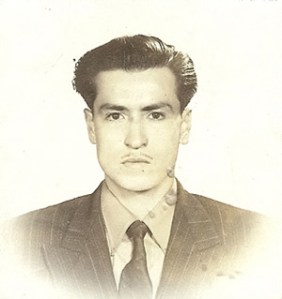
José Diego Rodríguez Rosiles

My father is a very unique person who has his own way of doing things. He was a factory mechanic who could work wonders with duct tape. No matter where we were, he always had some tools in his pocket. He was proud of being mechanic. If someone had some sort of mechanical problem, my father would volunteer to fix whatever needed fixing. No problem was too small for him. A squeaky door? He carried a little oil can with him. Door knob keeps falling off? My father would attach it with his tools and extra screws that he always carried with him just in case.

I should write a novel about him: My Father, the Super Fix-It Handyman. Or maybe make him into a comic book superhero who can fix any problem no matter how small. My father was always fixing bicycles, skates, skateboards, and automobiles for everyone on the block. He had just enough mechanical aptitude, talent, and expertise to keep him trapped in the middle class the rest of his life. And, it turns out that I’m not much different than him, although I’ll never be able to make repairs just like my father.

When I was a boy, my father often embarrassed me. He always liked to attract attention to himself by telling jokes in his broken English. I was afraid to bring home friends when my father was home because then he would want to get in on the conversation with them and he didn’t speak English very well. So most of the conversation would involve a lot of repetition because he didn’t understand everything that was said, but he wanted to show that he was eager to learn English. It’s now forty years later and he still does this. He has never stopped trying to learn English. If I talk to him in Spanish, he still insists that I speak to him in English so he can learn English. In fact, if I talk to him in Spanish, he doesn’t understand a word I say.

Another thing about my father was that he was always so Mexican. He could just stand there silently and everyone would know that he was Mexican because he always stood there looking so Mexican. He was about 5’6″, thin, with black hair slicked back with vaselina, brown eyes, and a Cantinflas mustache. Plus, you could see the tools bulging from his pants pockets, along with a small jar of salsa or peppers, just in case.

Whenever we did something together, he would always preface it by saying that he used to do that activity in Mexico when he was a boy. When we played basketball in our backyard at 4405 S. Wood Street in Back of the yards, he told us that he always played basketball with his brothers in Celaya, Guanajuato, Mexico. When I was eight, I actually thought that basketball was a Mexican sport. While playing, my father told me that once I stopped dribbling the ball, I couldn’t dribble it again. I had never heard of such a rule. I told him, “I don’t want to play the Mexican way.” Of course, I didn’t know any better at the time even though there is a rule against double dribbling.

For breakfast, my father would prepare this concoction that he learned to make from his father in, you guessed it, Mexico. He would pour some Mogen David grape wine into a glass, put in a raw egg, and mix it up together.  He would drink the first glass to show me how it was done. Then, he would hand me a glass and I would force myself to drink it. At first I didn’t like it and I told him that I didn’t want a Mexican breakfast, but I eventually learned to like it. I also learned to eat raw eggs right out of the eggshell by poking to holes at either end of the egg. I learned this from my father because this is how he ate breakfast in Mexico. This was long before I had ever heard of salmonella. I guess God does protect children and idiotas. 🙂

DDR