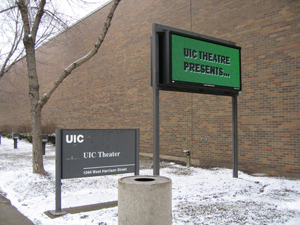
Today I went to the UIC Theater to see Tom Stoppard’s Rosencrantz and Guildenstern Are Dead. I really wasn’t sure what to expect because I had no idea what the play was about other than I knew that the title characters came from Shakespeare’s Hamlet.
Well, last week I saw Hamlet at the UIC Theater and I liked the production so much that I decided that I would see Stoppard’s play today. Okay, so I’ll never make a living writing reviews, but I thought today’s play started out rather slowly. There were some witty interchanges between Rosencrantz and Guildenstern, but sometimes it didn’t hold my interest. Well, I actually dozed off for a couple minutes in the beginning of the play.
I supposed it wouldn’t have been so bad if I weren’t sitting in the very front row in the middle right in front of the actors. So there I was front and center. When I woke up, Rosencrantz was staring at me. I felt so embarrassed! After that I tried not to fall asleep again. But I dozed off again–at least two more times. However, no actor noticed me this time.
So about the play, well, since it is a spinoff of Hamlet and it was also produced by the UIC theater department, I was happy to see the same actors reappear. Some of Hamlet’s scenes were repeated for Stoppard’s play. It was very interesting, even though I fell asleep a few times.
Cougar. No, not that kind of cougar! Read on see what I’m talking about.
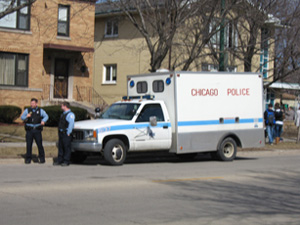
Despite the lopsided score, the winners continued their losing streak in Chicago. That’s right. The police were criticized for shooting the cougar in a residential neighborhood, not far from Lincoln Park Zoo. Well, the police are up against overwhelming odds in situations like this.
In Chicago, when all other city agencies refuse to answer to calls that are technically their responsibility, the 911 center dispatches a police car to assess the situation. The police department is Chicago’s last line of defense–basically, to protect the city against civil law suits. All other city agencies may refuse to respond to calls, including the fire department, but the police have to respond to every single call they receive regardless of how absurd it may seem to the average citizen.
I’m sure many residents who saw the cougar in their neighborhood called 911 to report it. And I’m sure they were surprised to see the police responding to the scene. Where was the Animal Control Unit? Certainly nowhere near the cougar. So the police show up, but it’s not like they could call the Animal Control Unit on their police radio to report a stray cougar because they are on a different frequency, in more ways than one.
When I was a police officer, several citizens reported some kind of wild cat on the lakefront in a residential area near some railroad tracks. I actually saw it running at a distance, but I couldn’t tell if it was a bobcat or a lynx or a lion, for that matter. There was nothing I could do as a police officer other than call the Animal Control Unit. When someone there answered their phone, they gave me the third degree over the phone. They wanted to know what I had seen. I said that it was either a bobcat or a lynx. But, no, they wanted to know exactly what kind of cat it was. I didn’t know. So they didn’t take me as seriously. Then they told me that they wouldn’t come out until I had secured it. What? How was I supposed to secure it? I even asked them to tell me how to secure it thinking they would actually know since they do work for Animal Control. Well, they never responded to the scene because I couldn’t secure the cat, or whatever it was.
Another time, some citizens called 911 and the police responded because there was a stray raccoon wandering around–but not just anywhere! This was in Mayor Daley’s neighborhood! This time I actually saw the raccoon up close on some rooftop patios right next door to the Mayor’s house. As I approached the raccoon, I could tell he was up to no good because he was wearing a mask. I cornered it, but I had to let it run past me because he tried to bite me. I cornered it again, but this time I didn’t approach it. I called Animal Control on my cell phone. Once again, they asked me to describe the raccon and they wanted the raccoon to be contained so they could just come by, scoop it up, and take it away. Then, I thought that they would come out sooner if I told them that the raccoon was next to the Mayor’s house. The voice at the other end immediately told me that they weren’t coming no matter what, especially now that they knew Mayor Daley lived close by. Once again, they refused to respond.
Why? Because their union was in negotiations with the city and the city wouldn’t give in on some of the issues. Well, I let the raccoon go because I sure wasn’t in the mood to get bitten by a raccoon that day, especially after that unpleasant interchange.
So, I can just imagine what the police were up against when they received this call about the stray cougar. The officers probably asked for the Animal Control Unit to come to the scene, to no avail. They probably asked the dispatcher to call the nearby Lincoln Park Zoo to send a zookeeper with a tranquilizer gun to the scene of the cougar, all for naught. Then, suddenly, an officer sees the cougar rapidly approaching him, so he opens fire, sadly, in self-defense. The officer had no other recourse but to shoot or possibly, nay, more than likely, be attacked.
Of course, the news cameras interviewed several residents who questioned why the police didn’t shoot the cougar with a tranquilizer gun. Well, because it wasn’t possible, citizens! The police are not issued tranquilizer guns! Not in Chicago, the City That Works.
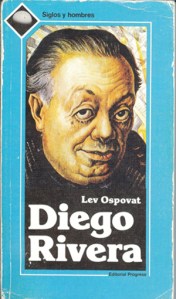
Translated into Spanish, published in Moscow, Russia
When I moved from Marquette Park to Bridgeport, I really missed having a bookstore a mere block away. Bridgeport had the reputation of being the center of city politics, rather than being an incubator of intelligence. So, needless to say, Bridgeport had no bookstores at all! Even their Salvation Army lacked a book section!
One day in the early 1990s, I was shocked when I saw an empty storefront on the 3100 block of South Halsted Street open as Modern Bookstore. For a neighborhood bookstore, it was very big. I was there the very first day it opened. The woman who greeted me let me browse for a while. I wasn’t sure what to expect from this bookstore, especially for one in the heart of Bridgeport. Imagine my surprise when I saw that most of the books were about socialism, communism, and labor unions. The woman asked me if she could help me find something. I asked to see the fiction section, but there was none. Then, even though I was sure that she would say no, I asked if they had a foreign language section. I told her I was interested in buying books in Spanish. Would you believe it? They did have a Spanish section that was actually bigger than most of the others in Chicago bookstores I had visited. And they actually had books by authors and biographies of political figures that I had actually heard of.
I bought a poetry anthology by Nicolás Guillén. Later, when I read the book, I discovered that the book was published in La Habana, Cuba, and probably shipped to the U.S. violating at least one embargo law. But wait, I also bought biographies about Diego Rivera, Benito Juarez, Benardo O’Higgins, and a few others that were written in Spanish. Much later, I realized that the books were written by Russian writers and later translated into Spanish. All these books were published in Moscow, Russia. I wondered if there would be any trouble if our local politicians had actually visited the Modern Bookstore and realized what kind of books the bookstore was selling there. But then I realized that’s why there wasn’t a bookstore in Bridgeport in the first place. No one in Bridgeport reads!
As I sit down to write this, I know I won’t finish this blog post tonight. The cast of characters keep changing, but the title is always the same. I’m referring, of course, to Mayor Daley of Chicago.
Well, actually, Chicago has had two Mayor Daleys. For anyone who has lived in Chicago for as long as I have, you know that Mayor Daley and his clan are part of the fabric of Chicago politics. Mayor Daley was the only mayor, or Da Mare as he is known in Chicagoese, that I knew since I was in grade school until his death in 1976. And just when I thought the Daleys were out of my life, his son Richard M. Daley ran for Chicago mayor unsuccessfully. Eventually, we had a second Mayor Daley, henceforth referred to as Richard da First and Richard da Second, respectively. And I just have a feeling that someday we may have a third Mayor Daley when Richard da Second’s son Patrick Daley returns from the army after he fulfills his enlistment. Yes, we could possibly have a Richard da Third.
When I was a boy, sometimes Richard the first would show up in our neighborhood unexpectedly. If we had award ceremonies for our park district tournaments, Mayor Daley would be there to pass out trophies. As I grew older, he was always in the news. His name was on just about every sign in the city of Chicago. One day, I was at the library at St. Xavier University on the south side of Chicago. I looked out the stained-glass window and I noticed a little plaque underneath. The window was donated by Richard J. Daley in memory of his father. I often went to the library at UIC to study. Then one day, they changed the name to the Richard J. Daley Library. Just like that.
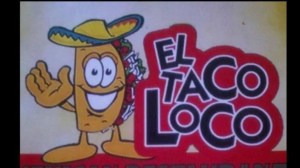
You can’t go to Taco Loco anymore. But I often do. If only in my mind. I remember it well. On the corner of the public parking lot at the northeast corner of Wabash and Balbo, in the shadow of the Conrad Hilton Hotel. Sacrificed to expand the parking lot and Chicago’s dwindling parking availability with four more parking spaces. I should post a picture to show you where it used to be. In the 1960s, we often drove past it.
We, as Mexicans, always wondered who would name a Mexican restaurant Taco Loco. We never ate there because Mexicans didn’t eat at Mexican restaurants in the 1960s. They only worked there. In fact, I never even heard of any Mexicans ever eating in a restaurant. If we ate outside of the house it was at someone else’s home or we brought our own tortillas, bolillos, carnitas, peppers, and salsa. When my parents divorced, my father would pick us up for visitation in his fluorescent-avocado-green 1971 Ford Maverick. Sometimes we would drive southbound on Wabash past Taco Loco. I was always curious about Taco Loco, a small, white brick building that didn’t look very well-maintained. In fact, it always looked like it was about to fall over until they actually knocked it down.
As an adult, when I could finally do everything that was prohibited by my parents, I finally went to Taco Loco. I loved their food. Let’s just say that forbidden fruit tastes the best! No one who worked there was a native English speaker, if you know what I mean. Luckily, I spoke Spanish. I ate there whenever I was downtown. The food was really cheap, too, especially if considered that this was a downtown restaurant. In 1992, during the World Cup semifinals, I was eating, sitting near the window. I saw some drunken soccer fans across the street, waving German flags and singing German songs. Suddenly, they ran out of songs to sing and they started shouting, “Baseball sucks!” They were scaring me. Luckily, they didn’t see me and their bus came right away.
When I taught Spanish at Columbia College Chicago, I often ate there after class. Then one day, the Spanish coordinator told me that I had to take my Spanish classes on a field trip. I wasn’t sure where to take them. When I tried to arrange a trip, we couldn’t agree on a time because every student was a full-time student. And many of them also worked. Talk about complications. So I’m sitting in Taco Loco eating enchiladas when it occurred to me that I could take them to Taco Loco! We were only a block away from our classroom and we could meet in Taco Loco instead of going to class. This actually worked out well for everyone. Since Taco Loco was open 24 hours, we met there for our 9:00 a.m. class. Everyone ordered their food in Spanish from the non-English-speaking waitress and they spoke Spanish as much as possible. Even the Spanish coordinator liked our destination for the field trip. No one else had ever thought of going to Taco Loco. I guess I’m just a trailblazer. I can’t help it. 🙂



 Chicago USA