My tía Matilde was quite a character. Once when we were visiting México, we stayed with my abuelita who was blind. All our relatives would always visit abuelita, especially when we came from Chicago. Matilde was still single at the time, so she lived with my abuelita.
While we were there, my mother decided to fix up my abuelita’s place a little. That meant everyone there had to work, vacation or not! We cleaned and painted, and when my mother saw the freshly painted walls, she decided to hang up some family pictures. Only one problem. My abuelita didn’t have a hammer. So, my mother sent tía Matilde to get a hammer from a friend’s house.
That sounds easy enough, no? Well, not to a Mexicana. Somehow the simplest errands became a complicated quest. Tía Matilde sets off on the simple errand of bringing back a hammer so my mother could hang up some pictures. My aunt should have returned in ten to fifteen minutes tops. Well, a half hour went by and tía Matilde didn’t return.
My mother looked down the street and saw no sign of her sister. An hour passed, then another, and still no sign of tía Matilde. My mother sent me to the friend’s house to see if Matilde ever went there. No, they hadn’t seen her all day. No one really worried about her because in México sometimes people get distracted and forget their original mission, in this case, the quest for the hammer.
Tía Matilde finally returned about three hours later! My abuelita and my mother started interrogating her. “Where did you go? What took you so long?”
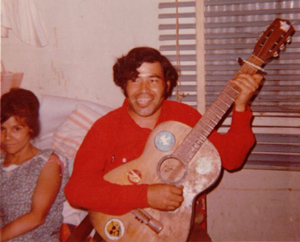
Well, she met this certain Samuel. He was standing on the corner playing the guitar and he started serenading her. They went for a walk and before she knew it, three hours had passed. Then, she remembered about the hammer! She returned, finally, but without the hammer!
My abuelita and mother were mad at my tía Matilde, but they also couldn’t help laughing at the whole situation. Matilde and Samuel eventually married and had six children.
I’ve been teaching college Spanish for twelve years now. Every student has his or her own reason for studying Spanish. Most college students take Spanish because of the foreign language requirement. I remember one of these students who barely passed the course. When I corrected the first exam, I felt bad for her because she had only earned a D. When she saw her exam grade, she shouted, “Yes!” I was worried that perhaps I had given her the wrong grade. The entire class turned to look at her. She then shouted, “Yes, I got a D!” She was so proud of herself. She went through this ritual after every exam. I gave her a final grade of D for the course. The next semester, I saw her in the hallway, and I was hoping she wouldn’t see me because I thought she was unhappy about her grade. But alas, she saw me and approached. Suddenly, she smiled and said, “Thanks for the grade you gave me!” And she was genuinely happy about it. Then, she added, “I had a lot of fun in your class.” I was shocked by all this, but I must admit that it was all very rewarding.
So, I was thinking of other reasons that my students took Spanish. Here are some:
I’ve always wanted to learn Spanish.
My wife speaks Spanish.
My husband speaks Spanish.
It’s a beautiful language.
I want to go to Mexico on vacation.
Most of my customers speak Spanish.
My parishioners speak Spanish.
I want to move to Mexico.
I want to go to a Mexican restaurant and order food in Spanish.
I want to see Penelope Cruz movies in Spanish.
There are so many Mexicans here, we’re all going to have to learn Spanish anyway.
I want a sexy Mexican girlfriend.
I’m Mexican and I can’t speak Spanish.
I think the cooks in the kitchen are talking about me.
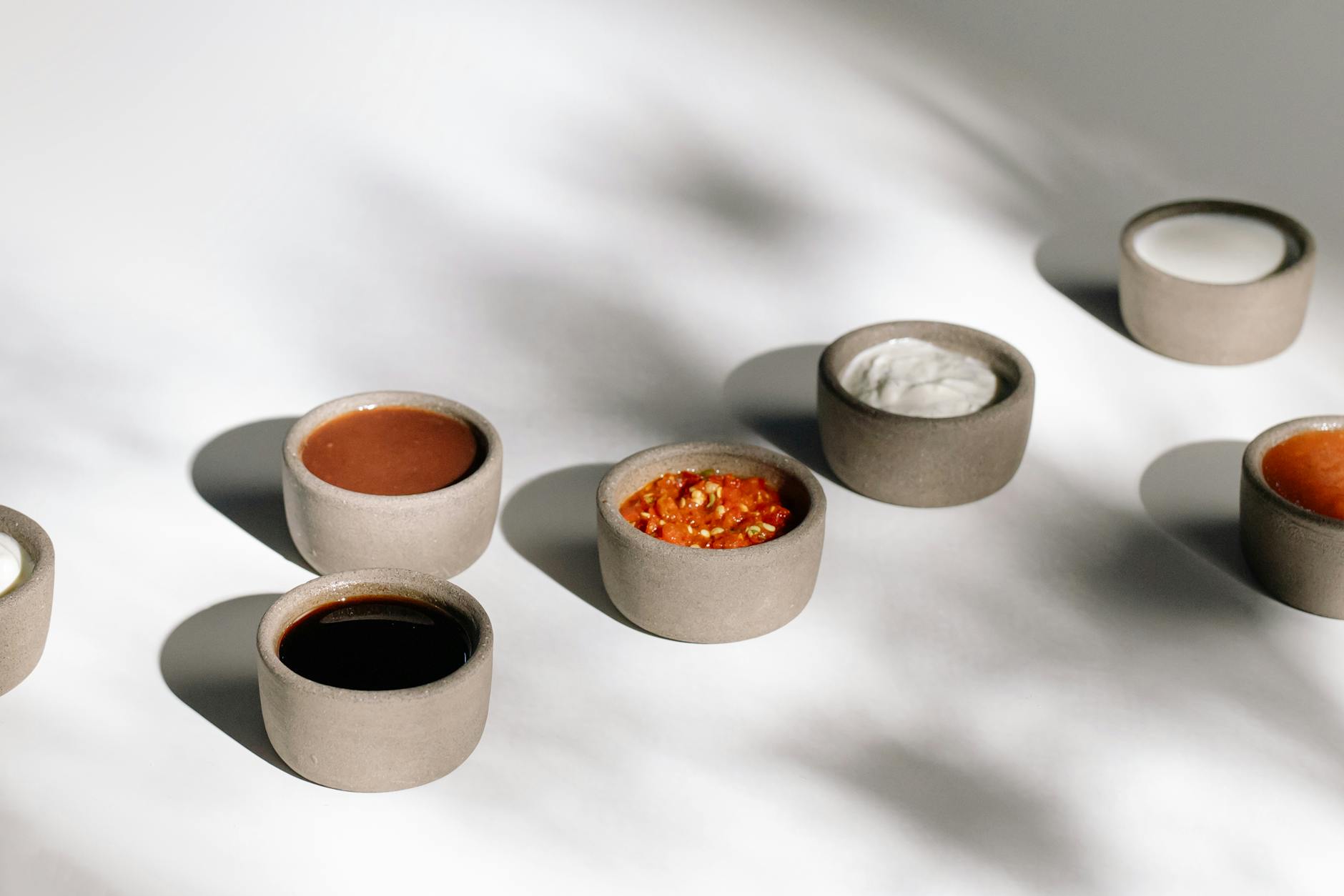
My father loved his salsa. In fact, he always carried a jar of salsa in his coat pocket just in case of an emergency. By an emergency, I mean that rare event when we ate a non-Mexican house or restaurant that had never even heard of salsa, peppers, or even Tabasco sauce. My father was always at the ready with his jar of salsa. He was prepared for any disaster of this type.
At Burger King, when they asked him if he wanted everything on his Whopper, he said, “Yes, everything. And salsa!” When they would tell him that they didn’t have salsa, he would say, “That’s okay! I brought my own!” And he would pull out his jar of salsa from his pocket. He loved watching their facial expression when they saw that he had a jar of salsa. Some days, he felt that one jar of salsa alone would not suffice, so he would also bring a jar of jalapeño peppers. He ate jalapeño peppers like some people eat olives.
At home, my father tried to instill in us the values of our Mexican heritage. Number one on the list was teaching us how to eat salsa or peppers at every meal with every food that we were served. We always put up an argument every time. He even wanted me to put salsa on my corn flakes once! He loved to make his own salsa, but no one else liked it, not even my mother.
Once he made some salsa and I saw him put a spoonful in his mouth. He had made it extremely hot. It was too hot even for him. He drank a tall glass of water, but it took a while before he cooled off. Then, he offered me some. I said no, of course. But then he gave me the “What kind of Mexican are you?” speech and I felt compelled to try some of his salsa. My father had tricked me into tasting it by telling me that it wouldn’t be that spicy. I did taste it, but grudgingly. He told me to try a piece of diced potato that had been floating in the liquid of his homemade salsa jar. I think, how hot can it be? It’s just a potato. Wow! I bit into this potato, and it was hotter than any jalapeño pepper I had ever tasted.
When I was growing up there were people starving all over the world, but our parish and school decided to collect alms for the starving children in Biafra. They showed us pictures of these Biafran children who were nothing but skin and bones with bloated stomachs. On the one hand, these children so evoked our sympathy for them that we donated our candy money to feed these starving children in Biafra. On the other hand, some boys soon forgot about the starving Biafran children and invoked the name of Biafra for other purposes. In fact, they started calling the skinniest boy in the school Biafra. Biafra, I mean the skinniest boy in the school, happened to be in my class. And whenever someone wanted to poke fun at this skinny boy, he would go up to the Biafra collection can on the nun’s desk, drop a coin in the can, and say, “This is for Biafra.” Of course, he would then take a long look at the skinniest boy in the school.
I’ll never understand why the skinniest boy in the school just took it, instead of exploding and just start pounding someone. Anyway, back to my father and his salsa. Nice segue, no? Sometimes my father would cook our food and put the salsa in it while he cooked, as if we wouldn’t notice the flavor of salsa in the food. And as a diversion, he would put a big jalapeño pepper on the plate, too.
One day, my brothers and I were just sitting there staring at our food on our plates. We were starving, but we couldn’t eat it. Then my father got angry at us and said, “You should be grateful you have food to eat. There are starving children in Biafra!” I said, “Well, why don’t you send the food to them?” But then I realized that no matter how hungry someone was, he or she wouldn’t eat my father’s food anyway. I tried to imagine a skinny boy in Biafra receiving my father’s care package and seeing my plate of food with a big jalapeño pepper on top of the food. How hungry would he have to be in order to eat my father’s spicy cooking? No, I never could imagine a Biafran boy eating my father’s food.
And what did I learn from all this? Well, I learned a valuable lesson that I sometimes share with my own sons. It’s part of our family tradition. So, when my sons are sitting around the table complaining about the meal, sans salsa, that I cooked for them, I tell them, “You don’t know how lucky you are! There are starving children in Africa who would like to have an X-Box 360 Elite!”
El Gallo de Oro, 2952 W. 63rd Street, Chicago, Illinois
When I lived at 3006 W. 64th Street, I always used to eat at this great Mexican restaurant that was exactly one block away. El Gallo de Oro, 2952 W. 63rd Street, 773.737.8101, has been there since at least 1981 when I moved back to Marquette Park after being honorably discharged from the Marines.
This Mexican restaurant serves real Mexican food cooked by real Mexicans to other Mexicans who patronize the restaurant. That’s how you can tell if a Mexican restaurant is really good: by how many Mexicans eat there. I remember once going to Milwaukee and my girlfriend suggested that we eat at a Mexican restaurant, either La Perla or La Fuente, but she didn’t know which one was better. We ate at the one where all the Mexicans ate! And it was great Mexican food! So, are you wondering which restaurant was better? Well, I honestly can’t remember because I drank a few too many bottles of Negra Modelo. Anyway, El Gallo de Oro has great Mexican food, and I say this after having come back from having eaten Mexican food in many Mexican restaurants and Mexican homes in Mexico. Well, lately, I’ve been going to different Mexican restaurants in the Chicagoland area, or Chicagolandia as I like to call it since we have so many Spanish speakers here, and I’ve been ordering the enchiladas de pollo. Today, I tasted the enchiladas at El Gallo de Oro, and they were ¡sabrosísimas! This is a great Mexican restaurant.
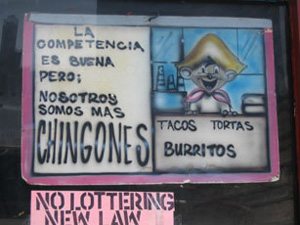
When I still lived in the neighborhood, I ate there several times a week. Of course, everything I needed in the neighborhood was within a two-block radius. The cleaners, the gas station, the locksmith, the used bookstore, my barber Aldo of Italy, and of course, El Gallo de Oro. I went to the locksmith exactly once, but it was nice to know that he was always available even though I dreaded the day that I would actually need him. Aldo of Italy cut my hair once a month before I ate at El Gallo de Oro. Aldo always loved speaking to me in Spanish while he cut my hair until I fell asleep. Anyway, again, I loved the attitude of the Mexican cooks at El Gallo de Oro. They were typical Mexicans who loved to brag about their food and service. I especially loved their sign in the window: “La competencia es buena, pero nosotros somos … ¡más chingones!” In English, “The competition is good, but we are … ” Okay, I’m not sure how to translate the last two words, but you could tell who was Mexican and who wasn’t by how they reacted to the sign. Of course, at that time the FCC let a lot of profanity get aired on all the Mexican radio stations. So the sign remained in the front window for many years until about two years ago. I rather miss that sign. That’s the thing about Mexicans. They have chutzpah!
One time, I told my father, brothers, and sister that I had a special surprise for them for our Thanksgiving dinner that year. They were so curious that I caved in to all their questions and told them my surprise beforehand. “We are eating Thanksgiving dinner at … ” and I paused for dramatic effect … “El Gallo de Oro!” “But we want turkey,” my sister shouted. “Yo quiero guajolote,” said my father. “Un momento,” I said. “El Gallo de Oro is serving turkey burritos on Thanksgiving Day!” After a little grumbling, they finally agreed to my Thanksgiving dinner plans! Everyone got to eat turkey, I got to eat at El Gallo de Oro, and my father got to eat so many jalapeño peppers that sweat poured from his forehead profusely and he had to keep asking for more and more water. Well, El Gallo de Oro managed to satisfy yet another finicky Mexican family–again!
I just saw the play Machos written and directed by Coya Paz and performed by Teatro Luna at the 16th Street Theater in Berwyn, Illinois. Teatro Luna is the only all-Latina theater group in Chicago area, and I have seen many of their previous productions that were incredibly good, but this one is by far their funniest, and, also their most serious.
Machos is based on interviews with men about how they feel about being men. The men in the play describe what it’s like to be a man and how much pressure society, family, and peers place on them in their quest to be men. This play truly analyzes all aspects of society’s expectations of men in general and the Hispanic expectations of being macho, as the play’s title implies. Since all the men are portrayed by women dressed as men, there’s a tongue in cheek attitude about the whole analysis. They honestly complain about how they don’t understand women without sounding like a David Mamet rant against bitches.
If men were to put on this play, the tone would certainly come off as more hostile toward women. However, since the play is written and directed by a woman, the men portrayed seem more human and their problems and behavior seems more plausible. The play is a comedy about many serious subjects such as love, infidelity, sex, and homosexuality, but there also many poignant scenes also, like the one about the Mexican father who drinks alone at home listening to old Mexican music on vinyl LPs. Even though he’s at home with his family, he’s also alienating himself from them and therefore drinking alone instead of eating supper with family. It’s a vicious circle of which he’s oblivious.
Okay, my favorite scene occurred after the play was over near the restrooms. A cast member stood between the doors to the Men’s and Women’s room and said, “Which one do I use?” She, I mean He, I mean, S/he went into the Women’s room. I highly recommend this play.




 Chicago USA