Speedtraps


My brother Rick in East Mesa, Arizona, was having problems with speeding cars in his neighborhood. He contacted the local police, and they investigated the problem. He then wrote the following letter that was published in the East Valley Tribune:

Speeding — Necessary traps

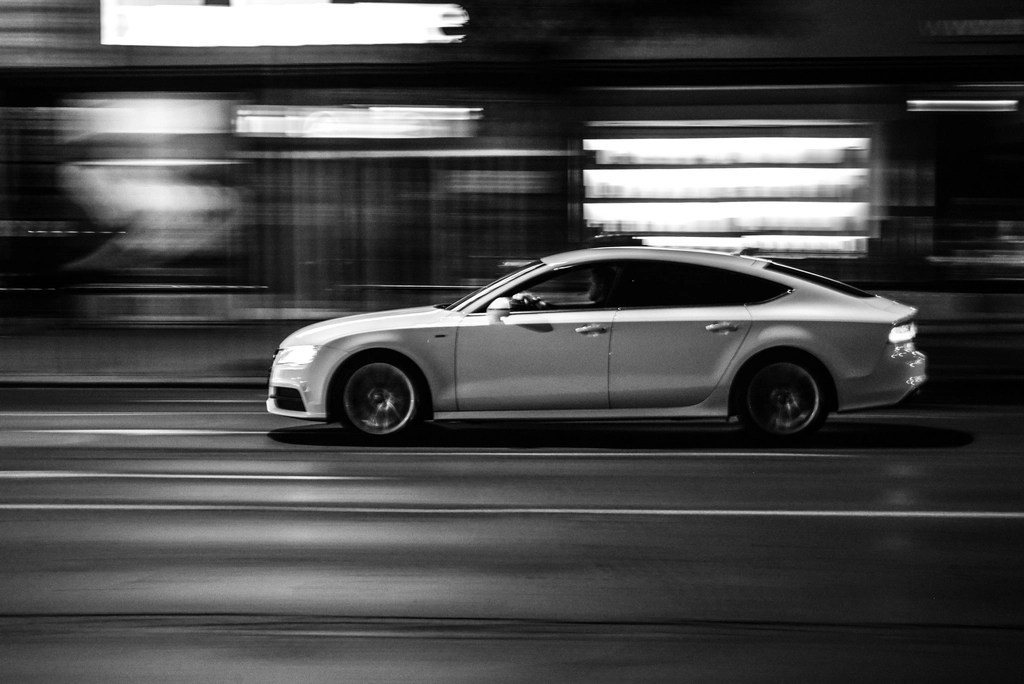
People need to stop and think! Do they call it a “murder trap” when police arrest a murderer? Do they call the mall a “shoplifting trap” when police arrest a shoplifter? Do they call a bank a “bank robbery trap” when police arrest a bank robber? So why do people call it a “speed trap” when police ticket speeders? When people speed, they are breaking the law. Plain and simple. Speeders endanger the lives, property of others, and pets, within their vicinity. A neighborhood with frequent speeders is less desirable to potential buyers, thus diminishing property values, which increases blight. Speeding automobiles are less efficient, thus increasing fuel consumption, and further contributing to impending global warming. Bring on the “speed traps” — I welcome them. People need to stop and think (or at least slow down).

Rick Martin
Mesa
DDR

Dee


Of all of my Spanish students, Dee had to be the coolest! She was a non-traditional university student in that she already had a nursing degree and other university degrees. She was older than me, she was born and raised in Ireland, and she still spoke English with an Irish brogue. She was an attractive woman despite being in an electric wheelchair.

She had studied French when she was younger, but now wished she had studied Spanish. In her assisted-living home, she spoke Spanish with the workers there, which really improved her Spanish. I would often see Dee outside smoking cigarettes before she came to class. I liked her because she would always liven up the class. If she didn’t understand something, she would ask questions without hesitation. If she thought that there was too much homework or the exams were too difficult, she was very vocal about that. All the students loved her because she would make us all laugh.

Every time I gave a pop quiz she would mutter things under breath, but not so softly that we couldn’t tell that she was cursing me in her own unique way. It was all very comical because she would eventually do everything required, but only after some grumbling.

Sometimes she would jokingly accuse me of picking on her because she was a woman, or a foreigner, or something or other. I learned to have a witty repartee to defend myself. We went through these mock arguments quite often, so the students looked forward to them. The students loved it! She was so comical! One day, Dee tells me, “You’re just doing this to me because I’m a cripple!” Then she gives me a big smile. The students laughed. I said, “That is so lame!” And students laughed even more. Dee said, “You don’t care about needs of the handicapped.” And I said, “You don’t have a leg to stand on!” Everyone laughed aloud, including Dee.

DDR

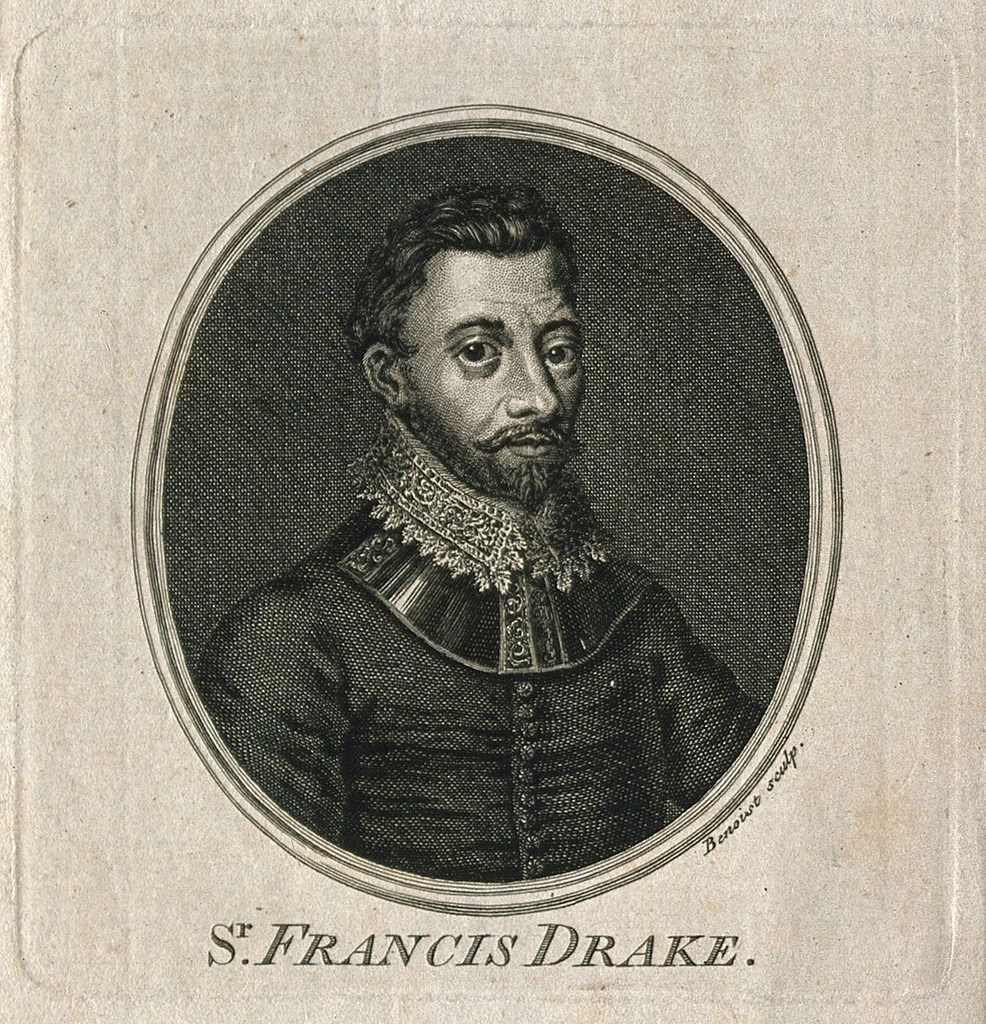
Francis Drake


Sometimes perspective affects how we see things. As a Chicago sports fan, I can give you a specific example. When Dennis Rodman played for the Detroit Pistons, Chicago Bulls fans despised him. However, when he was traded to the Bulls, he suddenly became our savior and Chicago won three more NBA Championships with his help. So, perspective makes an enormous difference.

In Spanish textbooks, we see a different perspective regarding history and cultural aspects. When I was in grade school and studied history, I remember learning about Sir Francis Drake as a naval hero who was second in command when England defeated the Spanish Armada in 1588. When I started taking university Spanish courses and reading history books in Spanish, I discovered that he was Francis Drake el pirata because he helped loot Spanish colonial cities and ships taking gold and silver to Spain. In the Spanish textbook Sueña that I’m using now, the book mentions that the governments of England and France financed these pirates. So, you see, perspective changes a person’s status in history.

DDR

Written Spanish


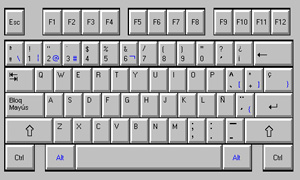
Spanish keyboard map.

I’ve already mentioned how when I went to Mexico everyone seemed to comment on my American accent when I spoke Spanish. Well, my written Spanish is much better than many of my Mexican relatives. I often get letters from Mexico and some relatives just don’t use accent marks that are necessary when writing in Spanish. When I e-mail my cousin in Mexico, she is always amazed that I write much better in Spanish than her, even though she’s a native speaker. Another cousin constantly IMs me. Every so often, she asks me how her Spanish is. I tell her it’s surprisingly good, even though she doesn’t spell very well, doesn’t capitalize at the beginning of sentences, and doesn’t use any punctuation. Some of my Spanish students have seen these types of writings in Spanish and then question why I insist that they use accent marks and ñ and all things Spanish. Well, the main reason is to show that you have been educated. It works for me because my cousins take more seriously when I write proper Spanish.

DDR

La Humita


The flag of Ecuador.

After the play last night, I ate at La Humita, which serves Ecuadorian cuisine, at 3466 N. Pulaski Avenue, 773.794.9672. I had never eaten Ecuadorian food, or at least I don’t really remember if I did. I ordered the pork chops, and they were delicious. So were the vegetables. They have live music on Fridays and Saturdays and karaoke on Thursdays and Sundays. Okay, so my review is a bit terse. Now you know why I don’t write restaurant reviews. Anyway, here is their website:

www.lahumita.com

DDR