Speed Racer


Great movie theater snack!

I love going to the show. And I love to spend quality time bonding with my sons. If I can do both simultaneously, I feel like I have accomplished greatness. At least in my own eyes.

When I compare myself to my twelve-year-old twins, I realize that they’re much more mature than me because emotionally I’m ten. When Horton Hears a Who came out as a movie, I wanted to see it with my sons, but they refused to see it because was a kiddy movie. I was rather disappointed to miss seeing Horton Hears a Who because I remembered really enjoying reading the Dr. Seuss book and watching the TV special as a boy. So I’ve missed out on some very good movies just because my sons thought they were childish. But I never once threw a tantrum.
Speed Racer

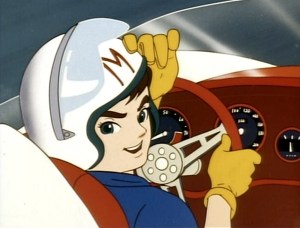
Anyway, last week I brought up going to see Speed Racer and my sons instantly refused. I was rather disappointed because I remembered watching Speed Racer as a cartoon show on TV when I was a kid. Today, I finally talked them into seeing it. As we drove to the show, they didn’t seem too happy. I knew I was pressuring them to see it.

Well, that got me to thinking about how I used to watch Speed Racer after school. Then, I remembered that I didn’t actually like watching Speed Racer. But my brothers and I had this policy that whoever arrived home first from school could pick the first show to be watched. After that we would all vote on the next show to be watched. If Danny arrived home first, he would watch Dark Shadows. I was the only one who didn’t like Dark Shadows. I liked comedies. After that, everyone except me voted to watch Speed Racer.

I remember now! I hated watching Speed Racer! And now I was driving with my sons to see the movie version of Speed Racer at the show.  Well, it was too late to tell them that I didn’t want to see it. However, as I drove, I realized that I liked the show, but I was just upset that my three brothers had voted against me.

But back to the movie today. My sons didn’t seem too happy about going to see Speed Racer today.  Well, I wasn’t either after I recalled all the surrounding cirmcumstances. However, I was determined to have fun with my sons. So we watched the movie with mixed feelings.

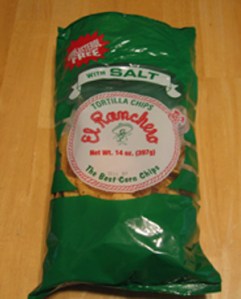
Once the movie started, we were captivated by the music, the story line, and all the color graphics. Plus, I snuck in a bag of authentic tortilla chips for us to eat during the movie. (I’m becoming more like my father with each passing day!) We talked about many of the movie details afterwards. We really enjoyed the movie! We were all surprised at how much better it was than we had expected. Plus, I think we all grew a little closer through this bonding experience!
DDR

Tony


Back of the Yards, Chicago, Illinois

I met Tony Jr.–his full name was Anthony Borkowski Jr.–when I worked at Derby Foods, 3327 W. 47th Place, home of Peter Pan Peanut Butter and Derby Tamales. His father, Anthony Borkowski Sr.–also called Tony–wanted his son to work while he attended school at DeVry. Tony Sr. thought his son was getting too lazy by just going to school and not working. Tony Jr. was already twenty-two, but still had not graduated from college. He was a student at the University of Illinois Circle Campus–before it became the University of Illinois at Chicago (UIC)–and belonged to a fraternity, so he partied a little too much for his father’s liking. So Tony Jr. transferred to DeVry and started working at Derby Foods.

Tony Jr. towered over me whenever we talked. He had dark blond hair and wore round wire-rimmed glasses. He looked flabby, but was actually rather muscular. He could do any job at Derby Foods, including unloading the 135-pound bags of raw peanuts from the railroad boxcars (something I could only do for more than a few days at a time because that job exhausted me). He was always on time for work because his father always woke him and they went to work together, even if Tony Jr. had been out partying all night. Tony Sr. would pull off the blankets and announce, “Time to go to work!” with his heavy Polish accent. If Tony Jr. still didn’t get up, his father would push him out of bed and shout, “If I have to go to work, you have to go to work!” Some mornings, Tony Jr. was a walking zombie.

Tony Sr. was a miniaturizad version of his son who never missed a day of work because he loved his job. He was quite a character in his own right, a man who was quite liked by everyone because he was friendly, had a good sense of humor, and could take a joke. Of course, people often tired of his standard greeting that always made him laugh, but no one else. In the morning, he would greet the women by saying, “Hey, good looking! What you got cooking?” No one ever responded to his question, so he would answer it himself with either, “Chicken! You wanna neck?” or “Bacon! You wanna strip?” The first time someone heard Tony Sr. say that, they laughed. Then after about the third time, they were just tired old jokes. After about the hundredth time, those lines became funny again when he used them on new employees. But everyone humored him because he was such a friendly guy.

On the other hand, he was disliked because he was a foreman and always wanted to earn his annual bonus by increasing productivity on the peanut butter production line. Number one on his agenda at work was that his peanut butter production line produce at least 100%. Sometimes, he would work harder than his workers rather than just stand there idly and merely supervise. He also was concerned about job security–so much so that he never told anyone how to start up the peanut butter processing machinery. He was so afraid that he would be replaced if someone else learned his trade secrets, so he would come in early Monday morning before anyone was at the factory to start everything up. He even did this while he was on vacation.

But back to Tony Jr. who was promoted from laborer to mechanic because he was intelligent, a DeVry student, and had great clout because his father was a foreman. He would have preferred to remain a laborer while he was in school, but his father insisted he get ahead at Derby Foods in case he wanted to make a career of it. Because of his father’s encouragement, Tony Jr. spent less time drinking and more time studying. It was about this time that Tony Jr. and I became fairly good friends at work. Sometimes we would go out to lunch together. The very first time we went, I had to laugh for two reasons. First, he said we should drive to the hot dog stand that was a block away, but he pointed out that we only had thirty minutes for lunch, so it was actually a very practical suggestion. Second, I laughed when I saw his car. He drove this tiny little Honda Accord. When I explained to him why I laughed, he told me that since he was so tall and husky, he had to shop around for car in which he would fit comfortably. The Accord offered him the most room. He was always very practical like that.

Once he was so deathly ill that he didn’t come in at 3:30 a.m. as he usually did. The shift started at 7:00 a.m. and there was no sign of Tony Sr. who had not called in sick. Since he had never missed a day of work, not even due to illness, everyone thought he had died. Even Tony Jr. was MIA. The assistant foreman drove to the Borkowski home and Tony Jr. answered the door. His father was so sick that he had overslept. Tony Sr. immediately got dressed and went to Derby Foods rather than reveal how to start up the machinery to his assistant foreman. The plant was then up and running, albeit a little later than usual.

And no one learned how to start up the machinery until about two months before Tony Sr. retired. Tony Sr. insisted that it would take a lifetime to learn what he would attempt to teach in a mere two months. In order to avoid another plant startup fiasco due to illness, the plant superintendent decided that Tony Sr. would train three people to learn the startup procedure. Tony Sr. then started bragging, “See how important I am at Derby Foods. It takes three people to replace me! Maybe I shouldn’t retire.” But everyone insisted that he retire.

One day, Tony Jr. asked me for help with a composition he was writing for his composition class. I was surprised he asked me because I was not known for my intelligence at Derby Foods. In fact, everyone thought of me as the kid who dropped out of high school in order to work in a factory. Anyway, I told Tony Jr., “Why do you want my help? I only have a GED! You’re a college student!” I really thought I had him there! But no! He said, “You’re a published writer!” Okay, he had me there. I had some local publications. Whenever I was at Derby Foods, I often forgot about my accomplishments. But the main reason he wanted my help was because he had once seen me reading a grammar book. I can read grammar books the way most kids read comic books. This really impressed him, so he asked me for help. Needless to say, he got an A on his composition!

DDR

Marina


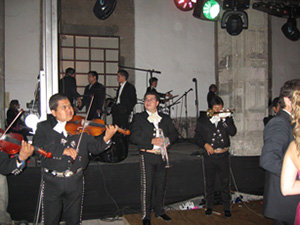
Mariachis

Marina was a Mexicana whom I met when I was in the police academy. We met just by chance because the Chicago Police Department, in its infinite wisdom, divided all the new recruits into four different classrooms based on race, ethnicity, and sex to be politically correct. There we were, in the police academy gym, and the instructors asked all the white males to step forward. They were immediately divided into four groups. Next, they called the females who were sorted out based on their gender regardless of their race or ethnicity. Then, the African American / Black males were equally divided into the four groups. And last, but not least, the Hispanic / Latino males were assigned to a classroom. The department tried to avoid racial and sexual discrimination lawsuits using this system for hiring new police officers.

Anyway, Marina and I were assigned to the same classroom where the entire class was assigned desks by alphabetical order. Since her last name was Perez, she sat directly in front of me. Well, we became good friends because we were partners for many of the training activities. She was a very pretty Mexicana, but a little on the plump side. However, she could meet all the physical requirements for calisthenics, running, and self-defense. I was single at that time, but she had a boyfriend then, so we remained just friends.

One day during self-defense class, we had to practice applying a wrist lock on each other. We had to command each other to walk in a certain direction, lay face-down, and then handcuff our “arrestee.” If the arrestee didn’t obey, we applied more pressure on the wrist lock until they complied. By then, I knew Marina well enough to joke around with her. The instructor observed everyone to make sure they were applying the wrist lock properly.

Well, when I had Marina in the wrist lock, the instructor told me that I did it well and then walked away. I took advantage of the fact that he wouldn’t be back for a few minutes. So, I steered Marina around the mat by tightening my grip on her wrist. I told her to get on her knees and she did. I told her to lie down, and she did. Then, I asked her if she wanted to go out with me. I was just joking, of course. She immediately said “No!” I applied a little more pressure on her wrist, and she changed her answer to “Yes!” even though she had a boyfriend. Then, I told her to tell me that she loved me. With a little bit more pressure, she did. I just had to smile.

When I released her, she said, “You’re gonna get it!” Now it was her turn to restrain me! Well, I immediately apologized, but it was too late to be sorry. But I was surprised when she applied her wrist lock on me. I was able to control the pain. You see, I would just recall all the times that my mother used to hit me with the belt, the broom, the extension cord, or whatever else was within reach whenever I angered her. Thanks to my mother, I had a high tolerance for pain and Marina couldn’t make me do anything I didn’t want to do. Eventually, I just went through the motions and let myself be restrained. After classes were over, we saw her boyfriend and I told him what I had done. He wasn’t very amused, but I thought it be better if I told him instead of Marina.

Eventually, we finished our academy training, but I always saw Marina at traffic court since they assigned our courtrooms by alphabetical order. She later broke up with her boyfriend and invited me to go to her family Thanksgiving Dinner, which I did. Later, I went to her family Christmas party, but we remained merely friends. I didn’t see her again for a couple of years.

I met her again through her fiancé who happened to work in my district. We just started talking one day after roll call and I learned that he would soon marry Marina. We became friends after that. He was Lithuanian so he had lived in the same neighborhoods as me. We had a few things in common. Well, when they married, they invited my wife and me to their wedding. When I asked Marina about his family, she told me that they weren’t too happy that he was marrying a Mexicana. They wanted him to marry a nice Lithuanian girl. So, at the reception, the hall was evenly divided with the Lithuanians on one side and the Mexicans on the other. They had hired a DJ for the music, but they had also hired some Mariachis to play while everyone ate dinner to show everyone how wonderful Mexicans are. However, the Mariachis were late! And his side of the family was upset. Eventually, the Mariachis showed up, but dinner was almost over. The police had pulled over their van for running a redlight and the driver didn’t have a driver’s license or auto insurance. So, it took a while before they got to the reception. Well, the Lithuanians were upset at the Mariachis and the Mexicans were embarrassed by them!

DDR

Passport issues


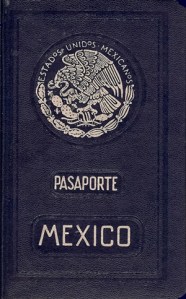
My Mexican Passport

Well, since I always talk about my name, let me get back to the name of David Rodríguez. Well, actually, David Diego Rodríguez. I bring it up again because I plan on going to Mexico in July with my sons. And every American citizen needs a U.S. Passport to return to the U.S.

So, I had to apply for passports for all three of my sons who are natural citizens by virtue of having been born in Chicago, Illinois. Two of the three passports were immediately processed by U.S. Department of State.

The one for my son with my name caused a delay. They needed more documentation for him. There are just too many David Rodríguezes. He’s only eighteen, so he doesn’t have a credit history, a driver license, or a credit card. They needed more proof to verify his identity. I wasn’t sure what they wanted or what other documentation I could provide. One of the enclosures listed in the letter was a Supplemental Identification List, which they had forgotten to enclose. I sent everything I could think of, including photocopies of his state ID, his school ID, his W-2 forms, federal tax return, state tax return, a prescription label with his name and address. I was extremely relieved when they accepted the enclosed documentation. I finally received his passport yesterday. We’re all set to go to Mexico now.

I remember when I went to Mexico in 1978, things were so much different. I had forgotten how to speak Spanish. I still understood it, but I never had to speak it much in Chicago. I stayed in Mexico for about a month and so I quickly learned to speak Spanish again.

However, when I returned to Chicago, I had trouble speaking English again. I flew back on Mexicana Airlines and when I was in Customs at O’Hare Airport the agent asked me for my proof of citizenship. All I had was my driver’s license and birth certificate. I gave them to him and then I worried that they wouldn’t let me go back to Chicago.

You see, my driver’s license didn’t have a picture of me. Back then, they were printed on thin cardboard and only described the driver as 5’8″, 128 Lbs., BRN Hair, BRN Eyes. My birth certificate didn’t have much information on it either and my last name was misspelled as, “Rodriquez” with a “q” instead of “g.” (My mother never thought the mistake was important enough to correct when she received my birth certificate in the mail soon after I was born.) The agent looked at my documents carefully and asked me if I had anything to declare. I understood him perfectly, but I couldn’t form the words in English. I thought for sure that the authorities would detain me because I couldn’t make myself speak my fluent south side English. But miraculously, he let me through. I could then understand how there were so many illegal immigrants from many countries in the U.S.

When I went to Mexico last December, it was a little more difficult to enter Mexico. I handed my passport to the agent, and he entered the information on a computer. He asked me some questions and when I answered them satisfactorily, he let me back into the U.S. Then about sixty miles into the U.S. there was another checkpoint where I had to present my passport again and answer some more questions. They asked me the questions to see if I really spoke English to prove I was a U.S. citizen. The agent spoke quickly and slurred his words together as if to test my knowledge of English. Either that or he was just bored of his job and just going through the motions. He asked me where I was from. When I said Chicago, he asked, “Born and raised there?” “No. I was born in Perth Amboy, New Jersey.” I suppose that if someone didn’t speak English well, they wouldn’t have been able to answer those questions, raising suspicions. I was glad that I didn’t have trouble speaking English this time.

DDR

Al


On the road somewhere in the USA.

In the 1960s, Chicago was very much a segregated city. Neighborhoods were categorized by race and/or ethnicity. When people moved to Chicago, they pretty much stuck to their own kind. This was in an era before anyone could foretell the coming of Political Correctness and everyone called every race and ethnic group by their corresponding slur.

Sometimes, people would be offended by such name calling, but oftentimes, most people merely accepted it as part of life in Chicago. Those neighborhood boundaries could only be crossed when going to work or when shopping, as long as no one over-stayed their time where they didn’t belong. No one ever commented on these inequities back then. That was Chicago.

When I lived in Back of the Yards, no blacks ventured there except to go shopping at the stores on Ashland Avenue between 45th Street and 51st Street. There was name calling and such, but basically there was never any trouble.

Al at the Sinclair gas station.

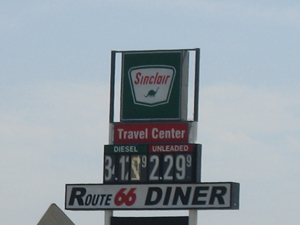
When I lived at 4546 S. Marshfield Avenue, there was a Sinclair gas station, whose logo was a green dinosaur, on the corner across the street. It had one gas pump that was directly in front of the building on the sidewalk. Whenever I needed air for my bicycle tires, I went across the street for it. As a ten year old, I often needed help fixing my bicycle when my father wasn’t home, so I would go to the gas station where Al would help me.

Al had the reputation for being the very best mechanic around, not just in our neighborhood, but anywhere. Everyone respected him for his mechanical skills and brought their cars to him if they needed repairs. Al also dispensed free mechanical advice to anyone who asked for it. After a while, no one even noticed that he was black. That’s right, a black man was working at our gas station beyond the allowable shopping district boundaries. But it was acceptable because he was at work. However, Al was accepted amicably by all the neighborhood residents. He was a hero to all my friends and me because he could fix our bikes no matter what was wrong with them. And he never charged us anything.

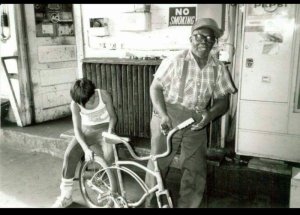
Al in action!

I used to like to hang out with him when I had nothing to do. He just seemed like the wisest man on earth because he could fix just about anything anyone brought in. I would ride my bike over and sit on his bench and watch him fix flat tires. He explained everything he did to me every step of the way. I was always fascinated by the machine that removed the tires from the rim. It was loud and menacing, but Al had tamed it to obey his every command. When business was slow, which was rarely, he would sit next to me on the bench and we would talk small talk. “How’s it going, buddy?” “Great! How are you, Max?” We were buddies. Then all Sinclair gas stations started giving out free passes to the Riverview amusement park with a gas fill-up. Since we were buddies, Al gave me enough passes for my entire family and my father took us to Riverview several times. Al was really popular with all the boys after that.

There was an older boy on the block that I often avoided. I always afraid of this boy because he was rotten to the core and he often scared me. He had that look that threatened physical violence to anyone who returned it. Then one day, he told me that Al was black. Looking back, I’m not even sure if I ever even noticed. He was just Al the mechanic at Sinclair to me. He was a very nice guy and he was always very helpful to me.

Anyway, this boy told me that Al was a “nigger.” I didn’t understand what he was talking about. He explained to me that Al was inferior to us because of his skin color. We rode our bikes to the corner and Al was standing in front of the gas station. The boy told me to call Al a “nigger.” I refused because Al was my friend. We stopped our bikes directly across the street from Al and the boy insisted that I shout “nigger” to Al. I just couldn’t. I knew that Al could hear our conversation, but he acted as if he were oblivious to us. Then the boy said he would beat me up if I didn’t call Al “nigger.” He punched me in the arm really hard, he gave me his patented menacing look, and said, “Then call him a Fudgecicle!” I refused at first, but then I was so afraid to get beat up. So I half-heartedly said, “Fudgecicle.” Al didn’t betray any form of acknowledgement that he had heard me. I felt so bad. I was sure my friendship with Al was over. But I didn’t get beat up.

The next day, I felt too guilty to visit Al as I usually did. After a few more days, I went back to the gas station and I tried to act as if nothing had happened. Al greeted me as he usually did. And we had our normal conversation of small talk. As if nothing had ever happened! Al was such a great friend!

DDR